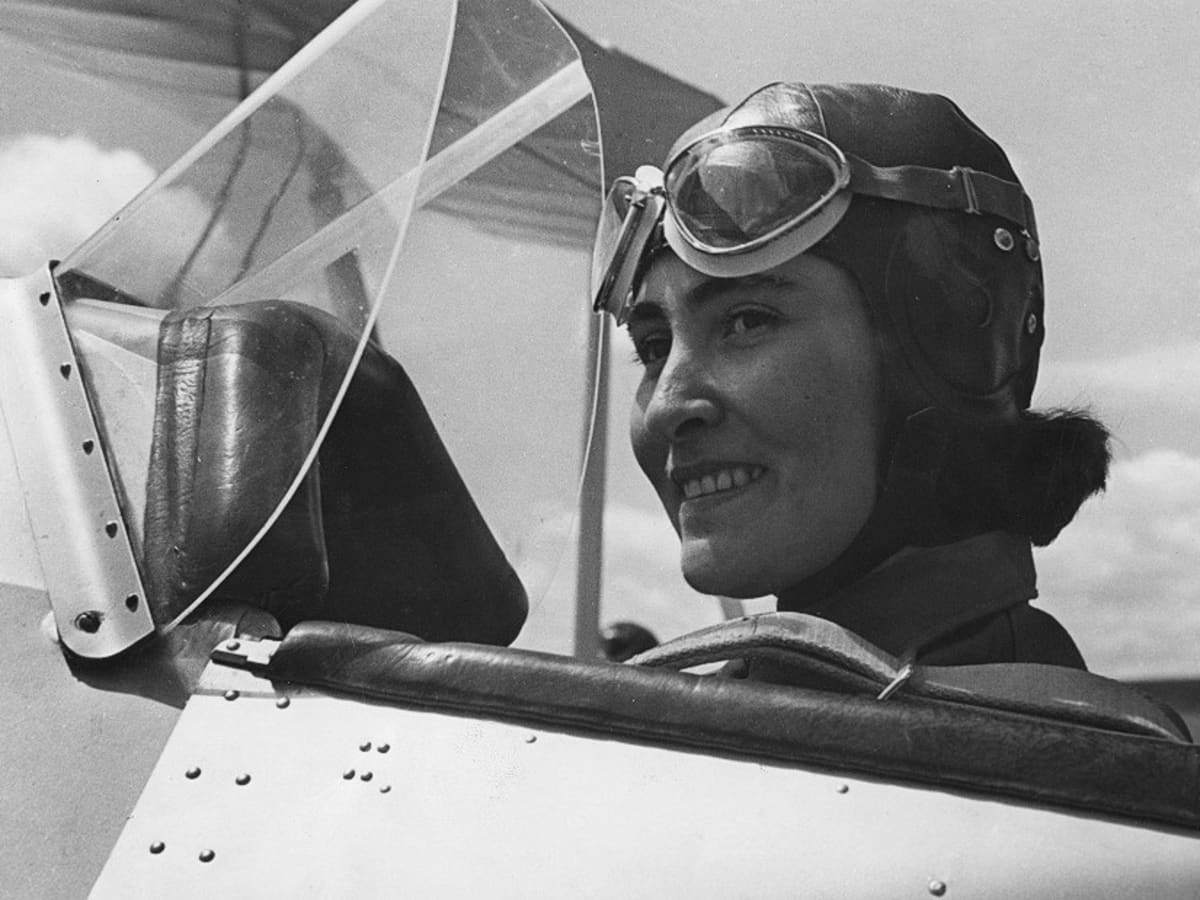
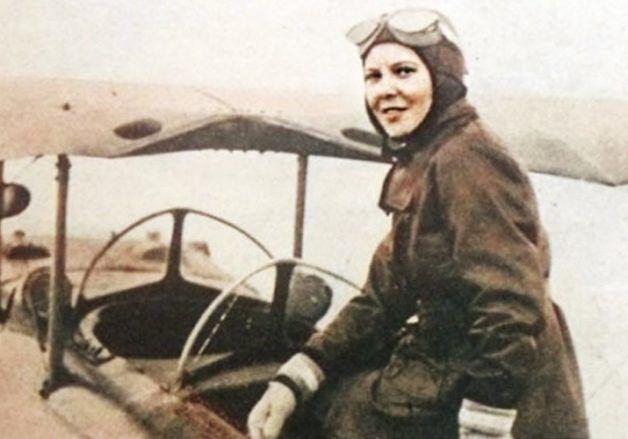
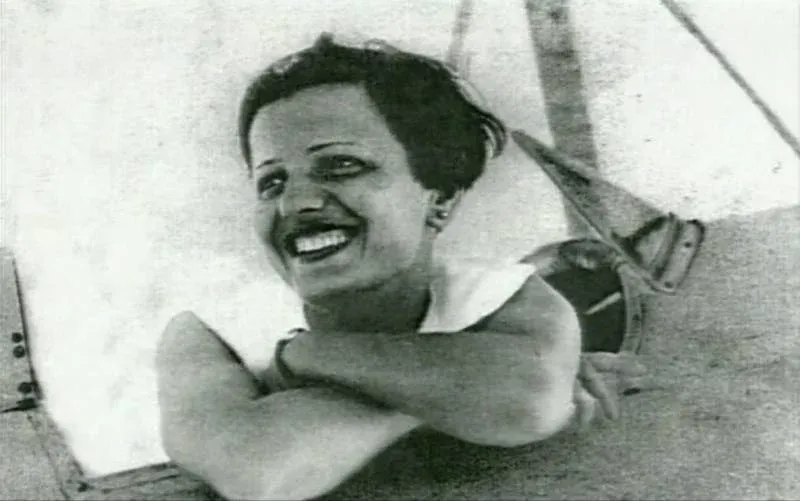
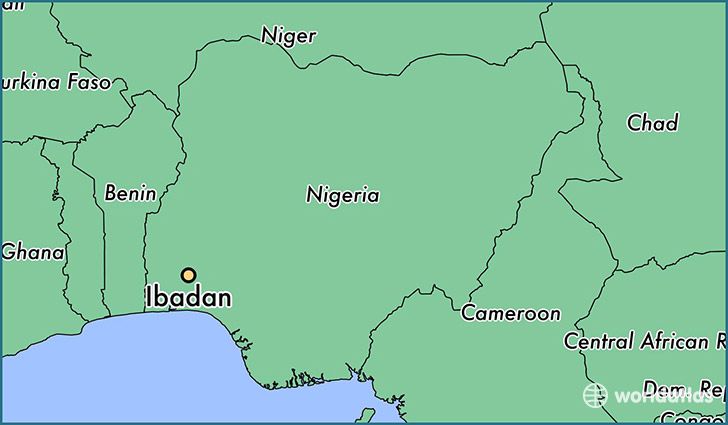
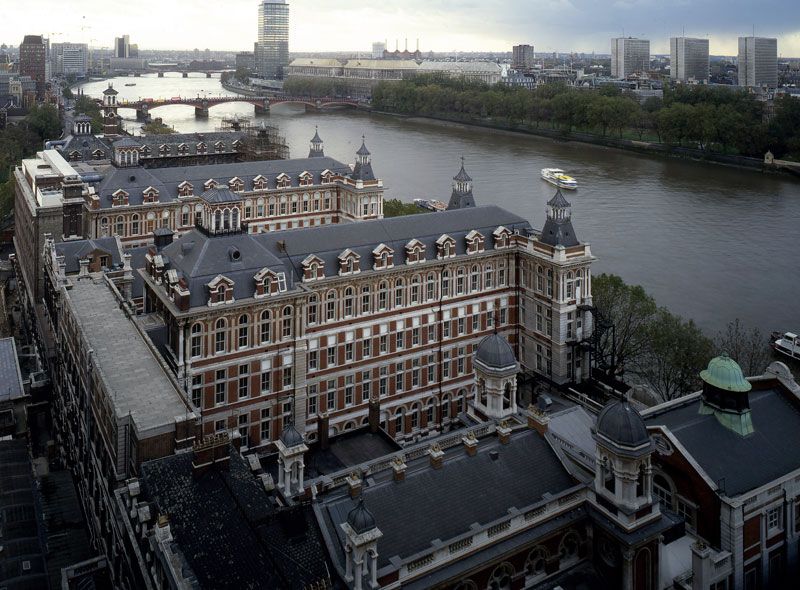
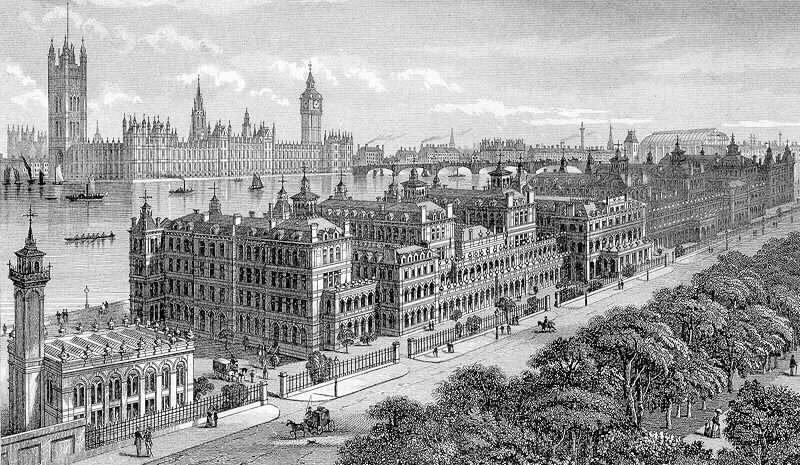
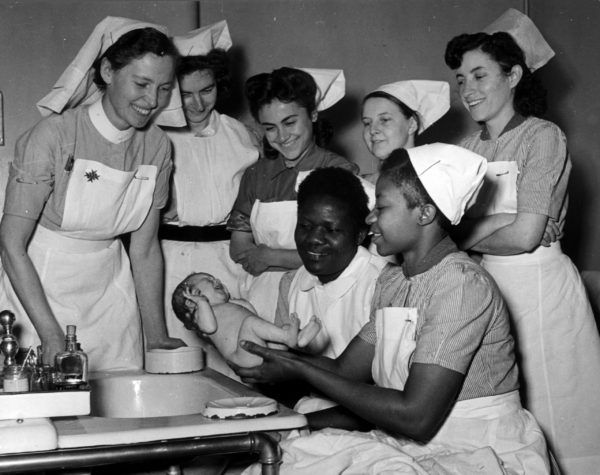
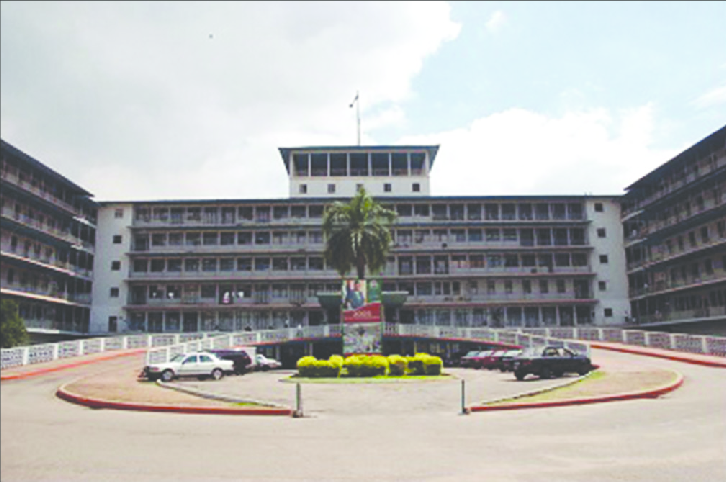
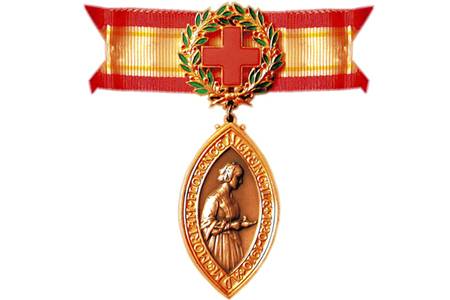
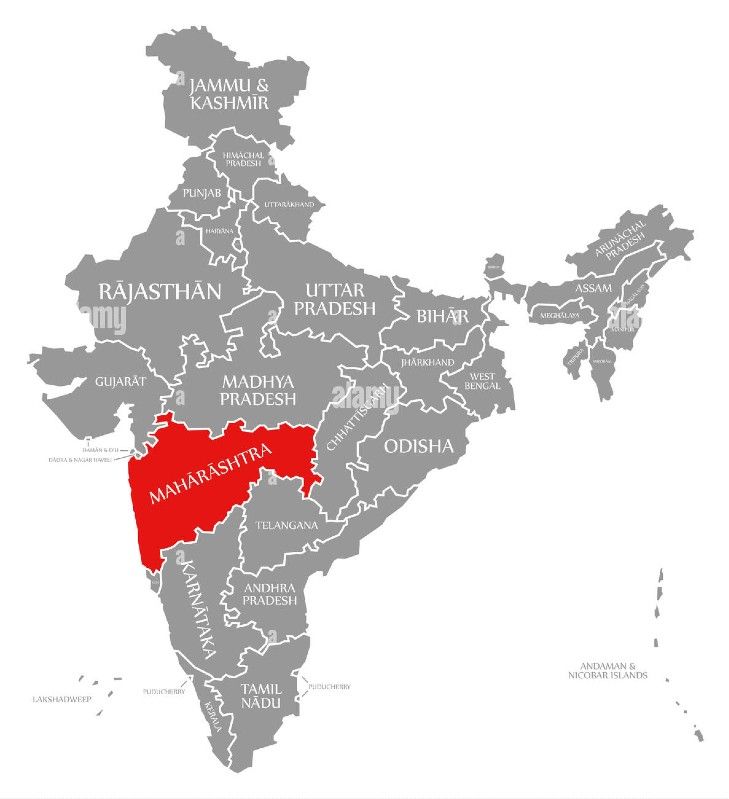
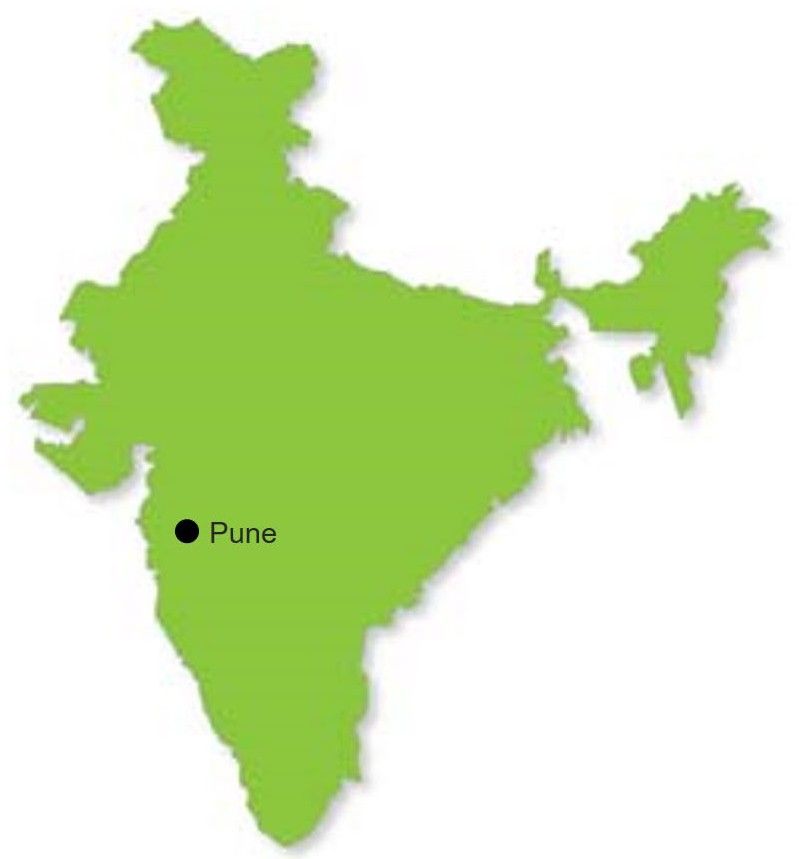
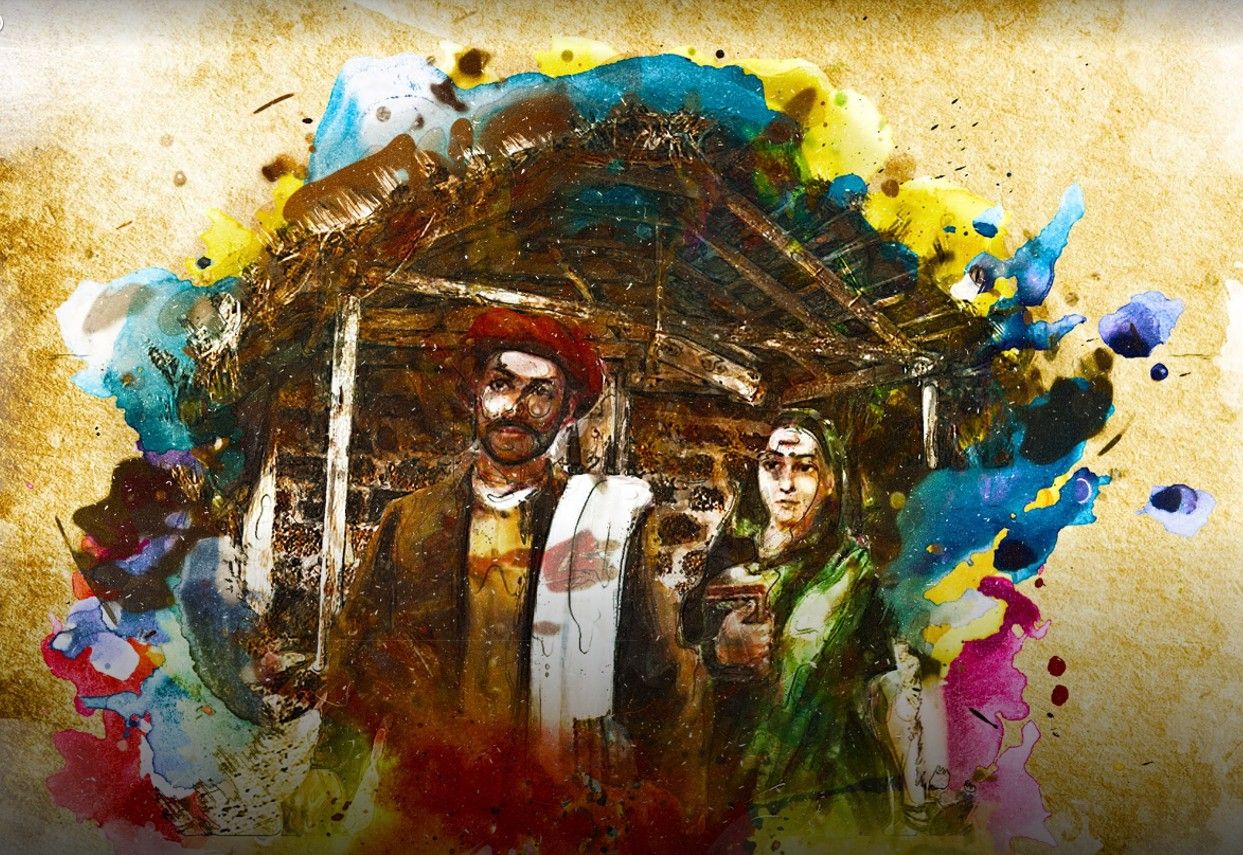
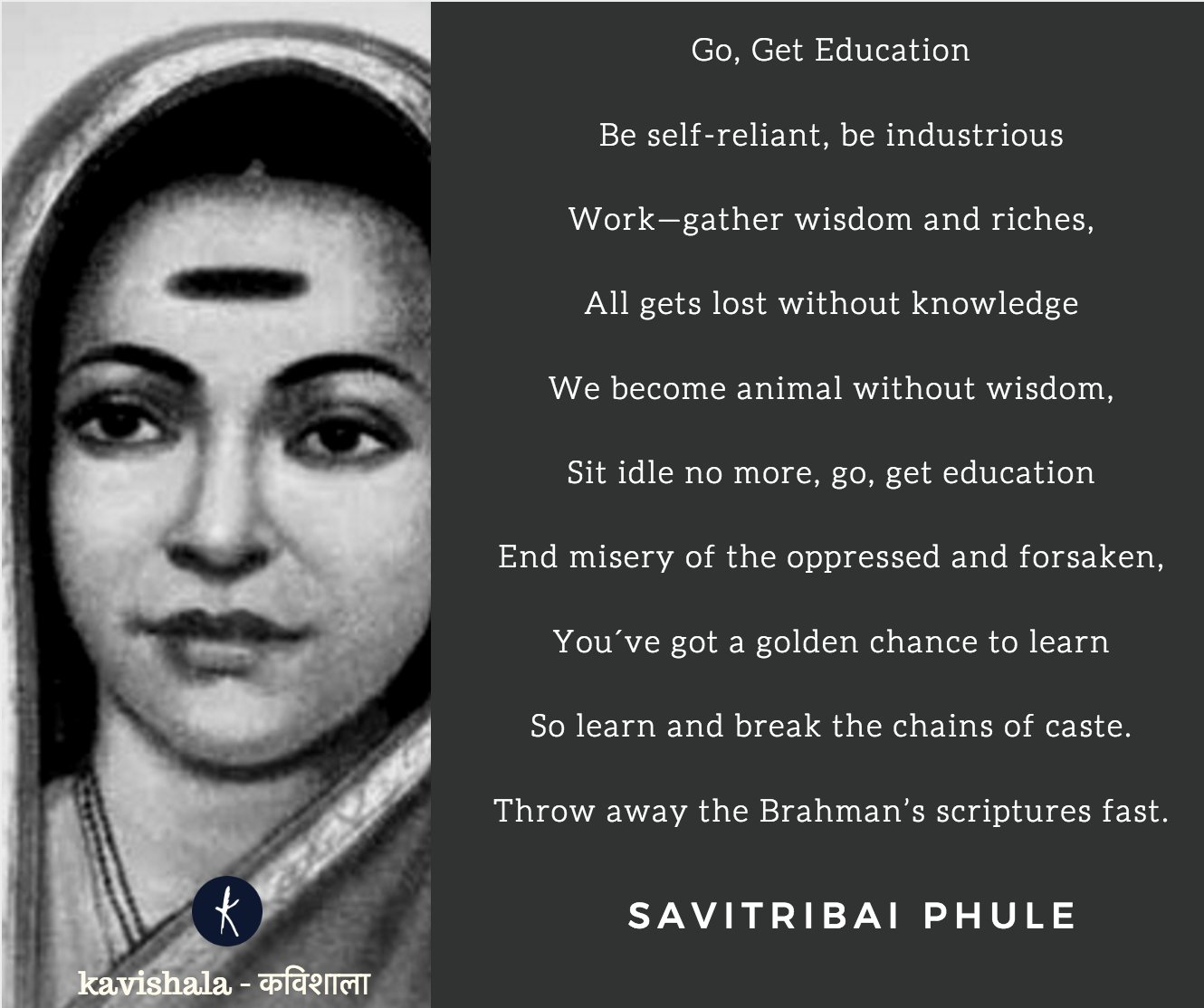
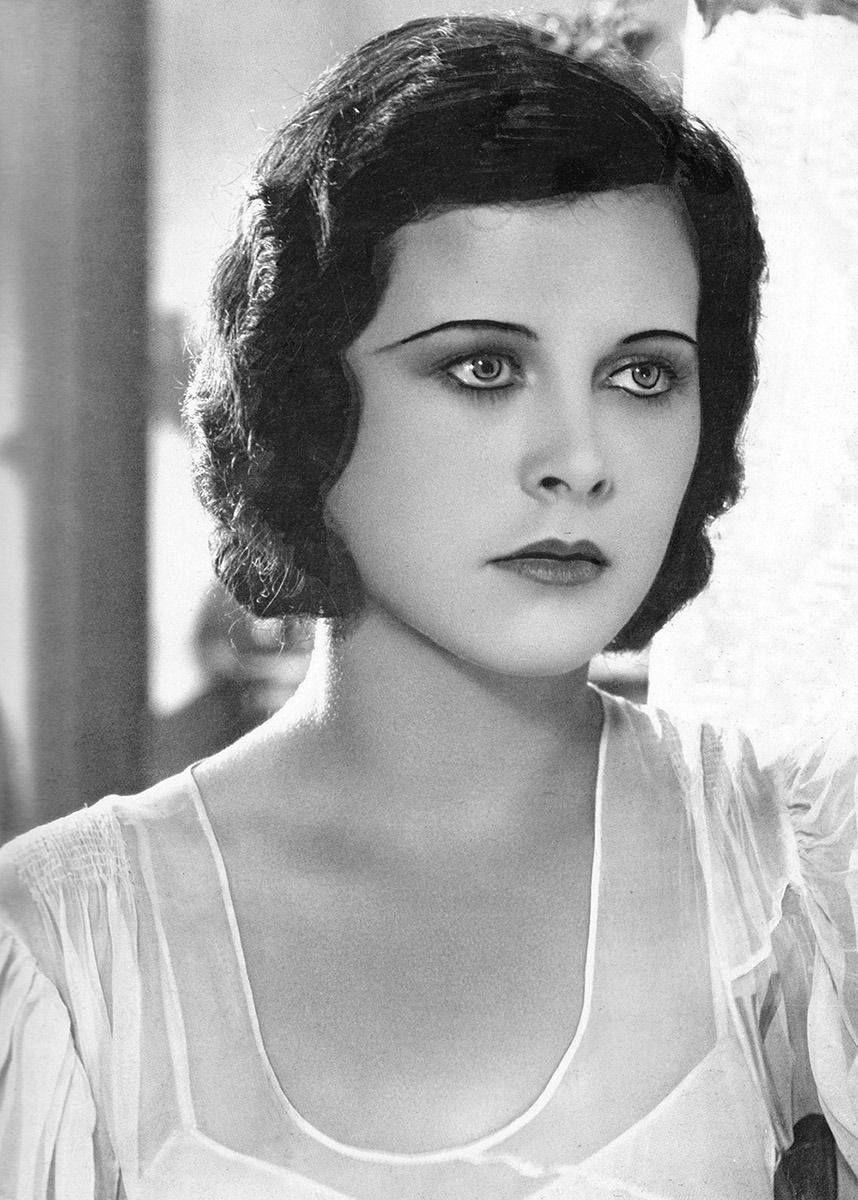
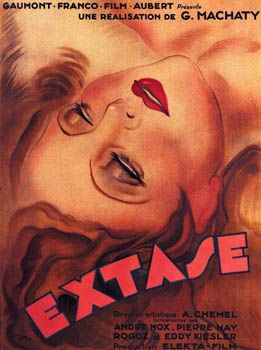
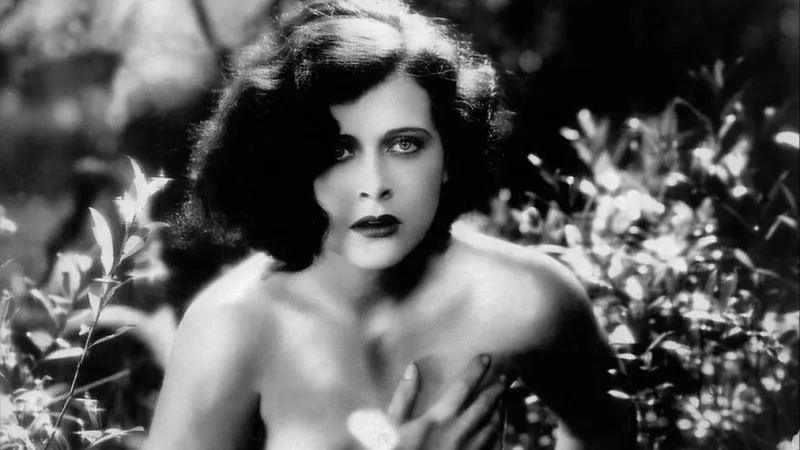
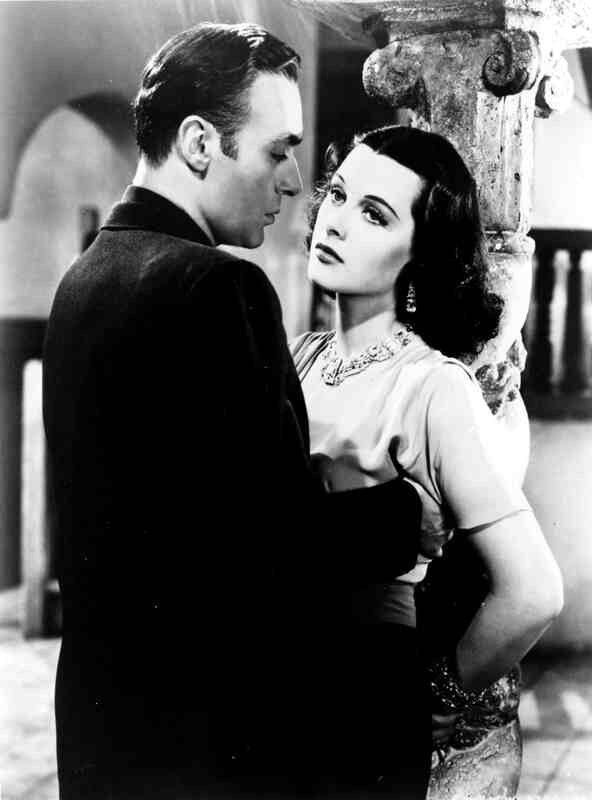
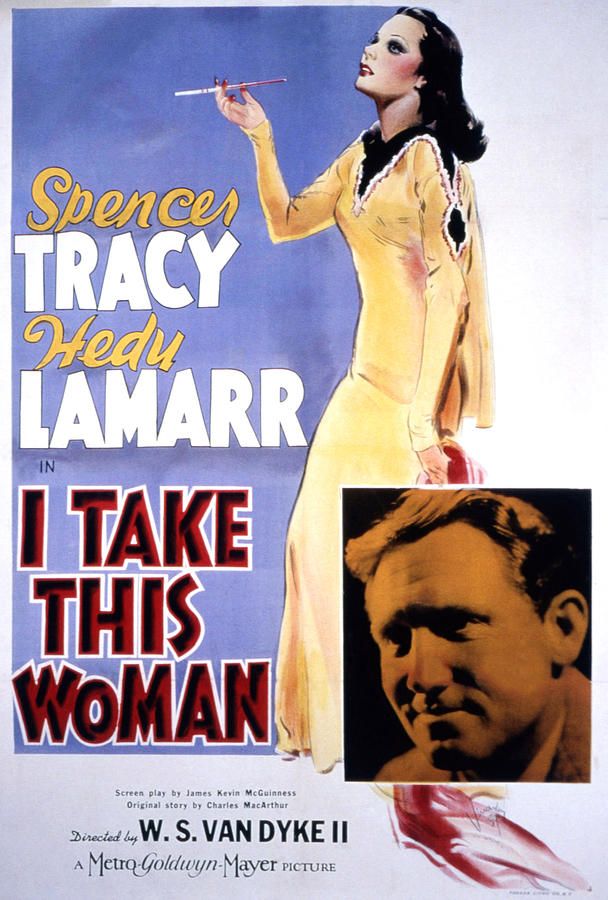
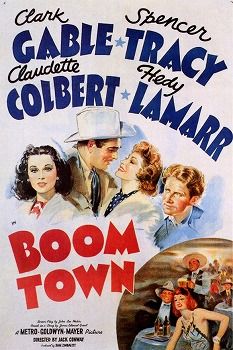
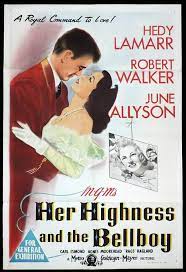
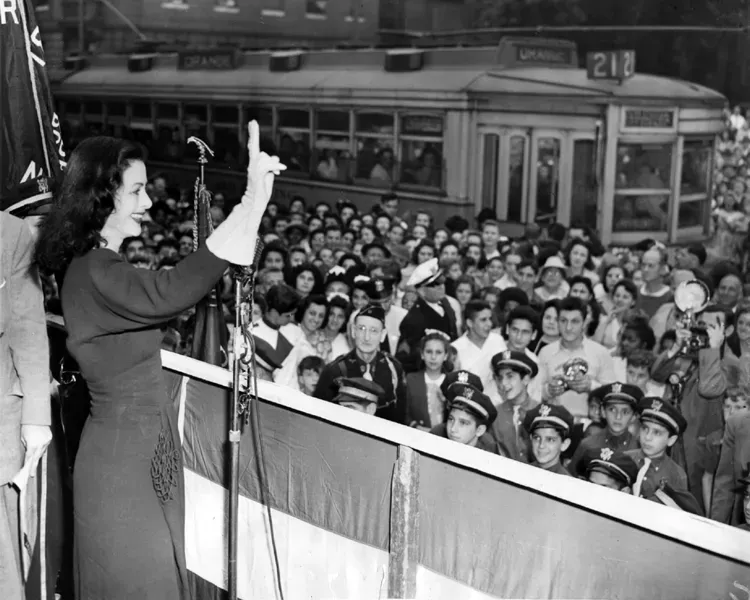
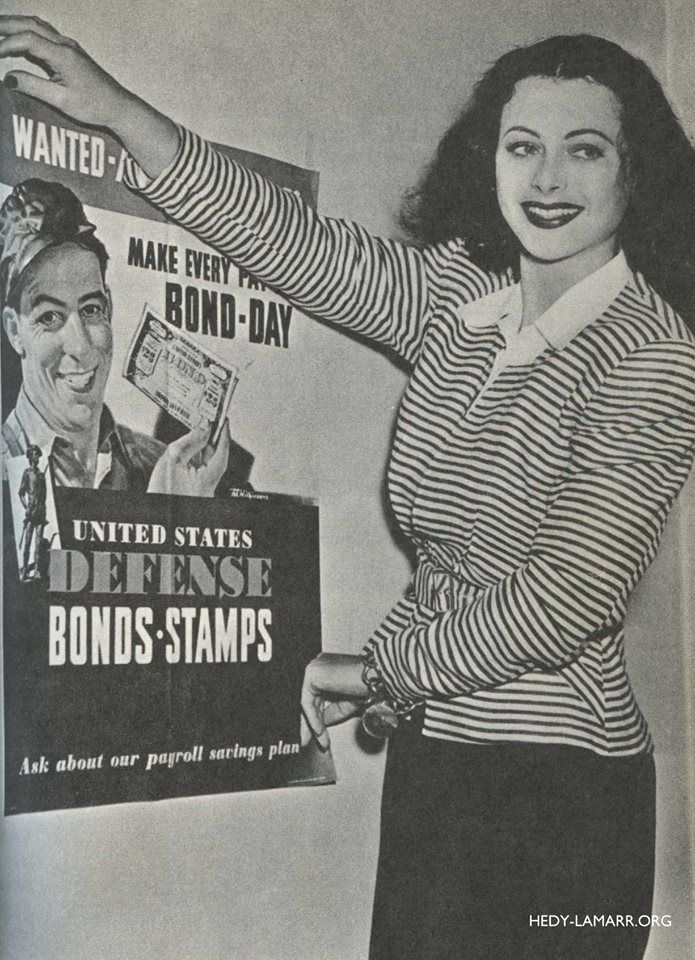
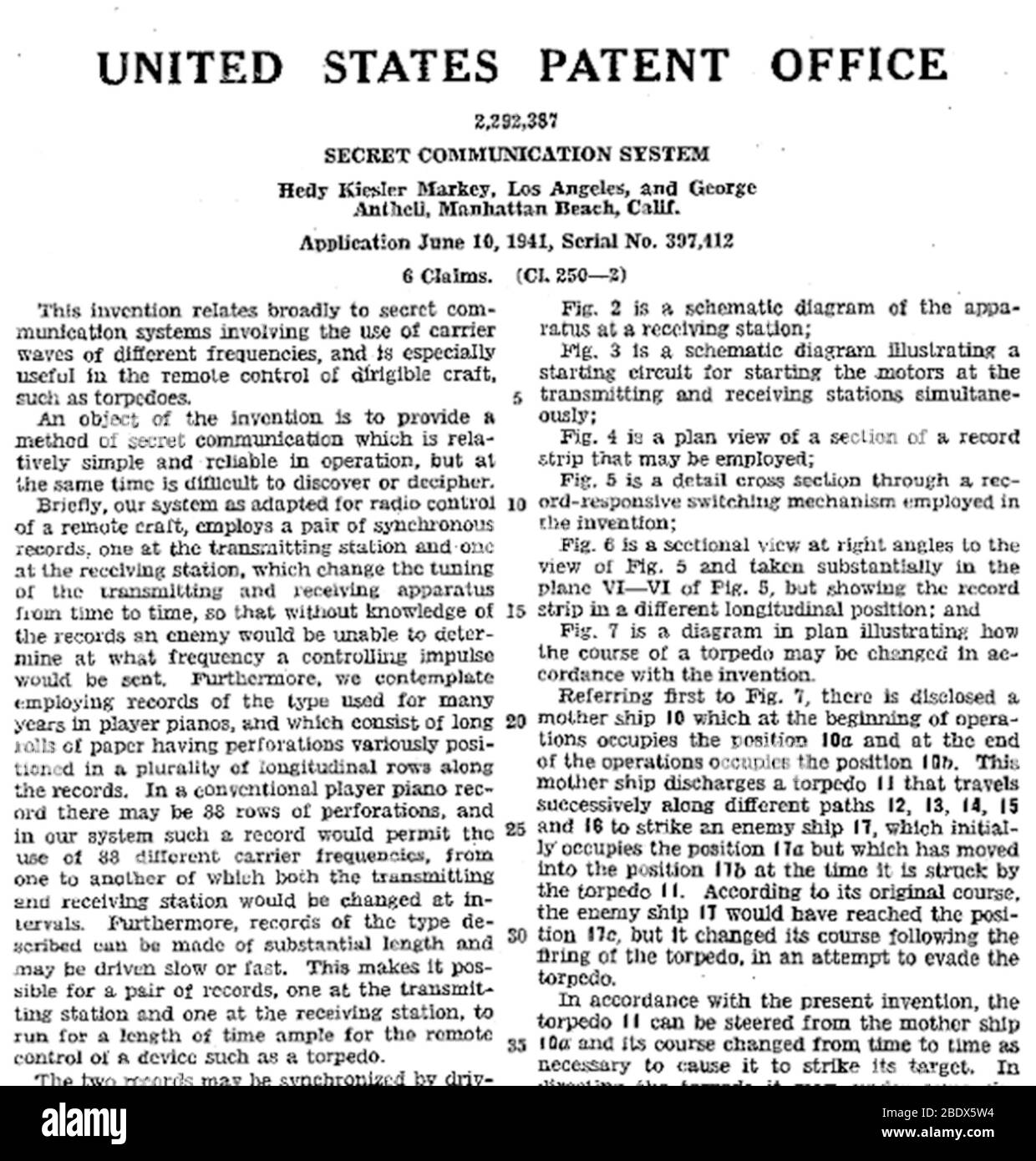
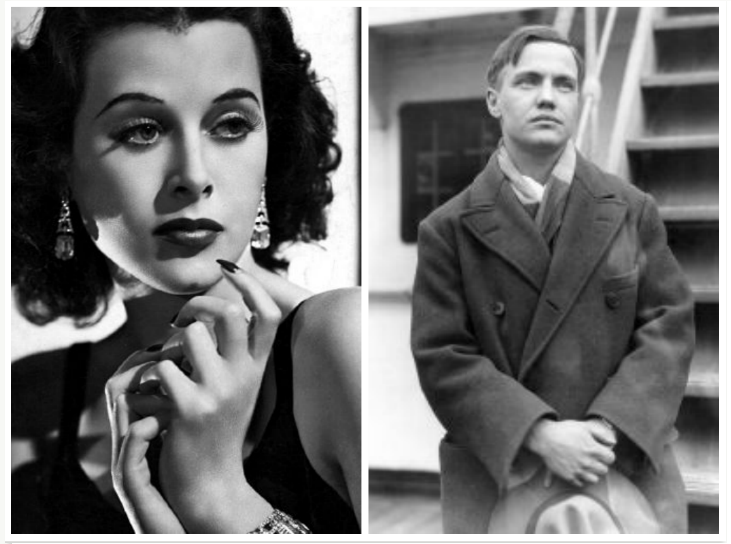
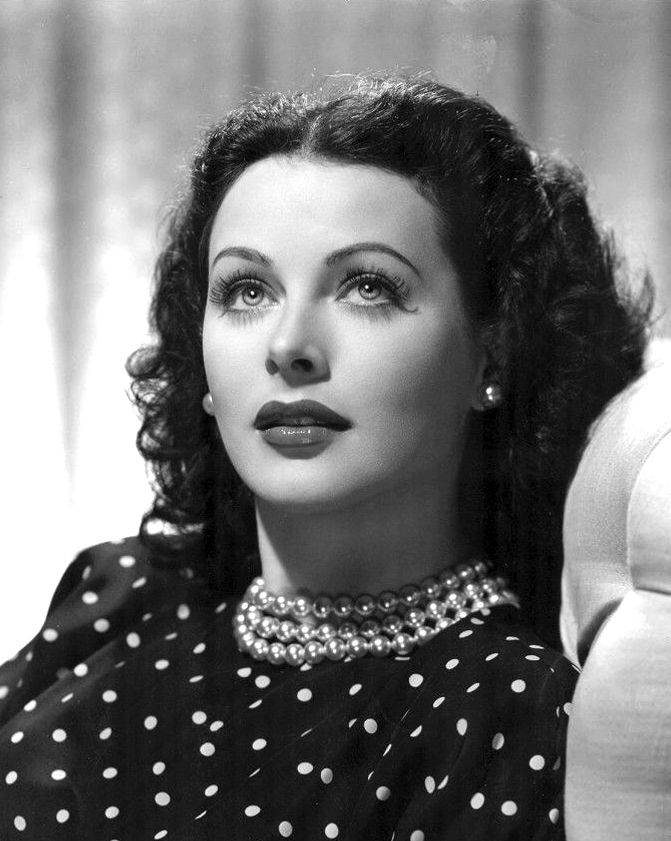
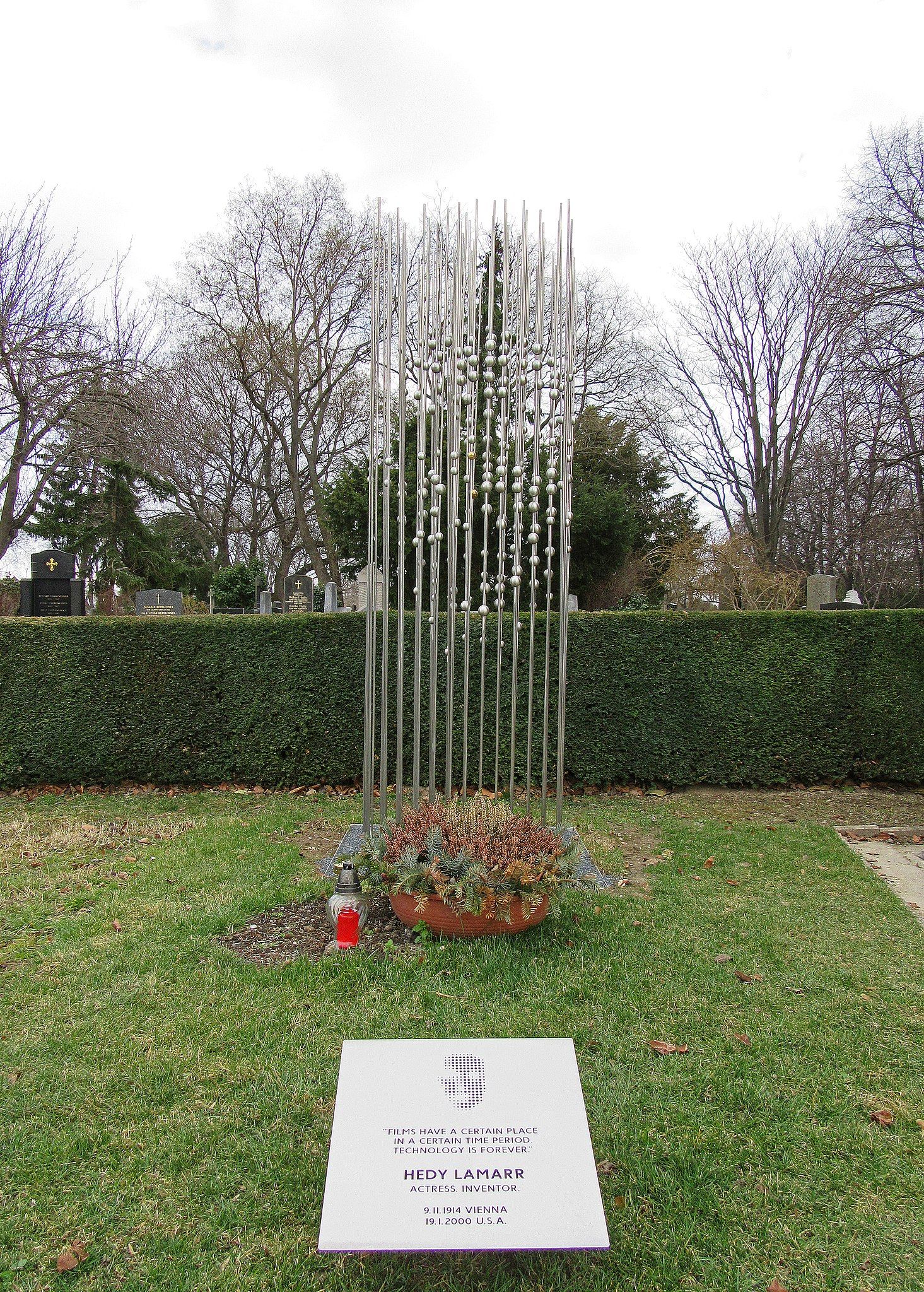
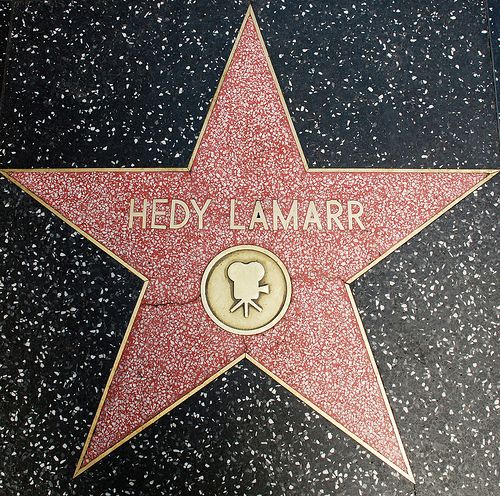
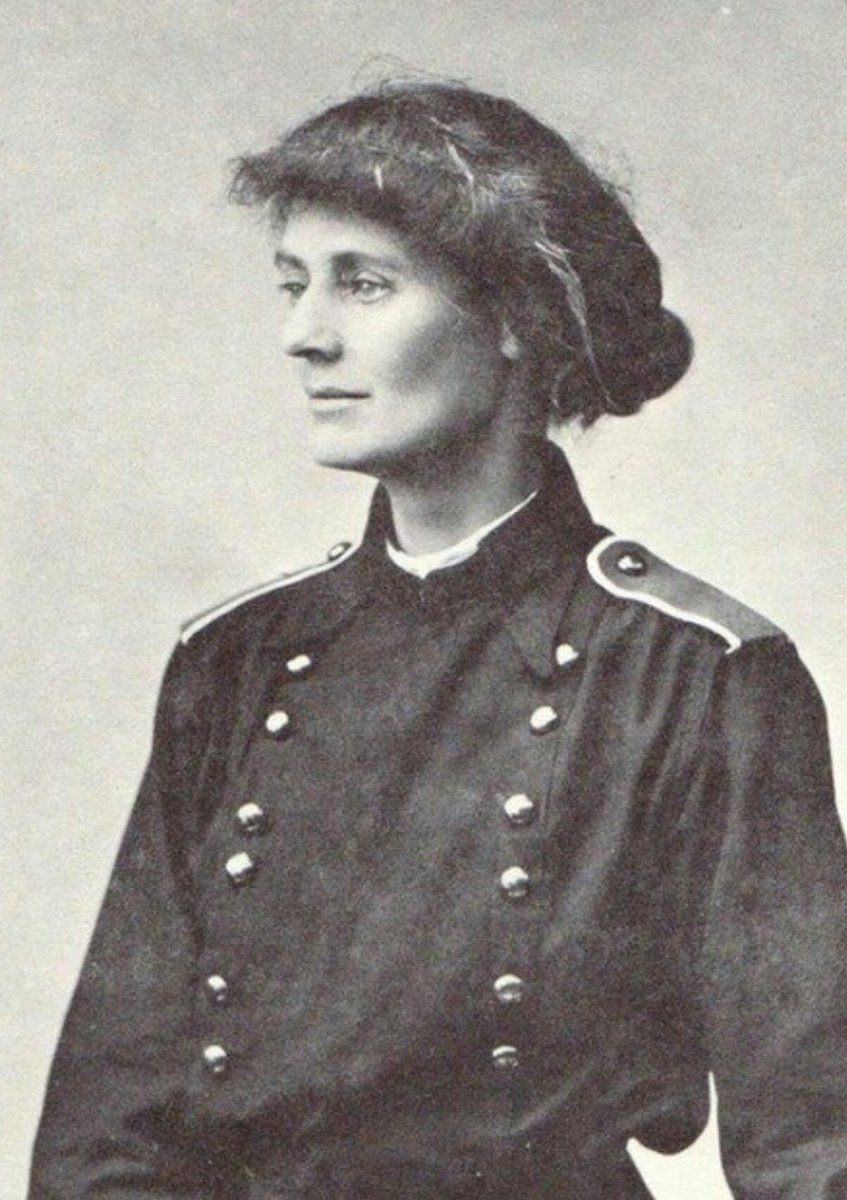
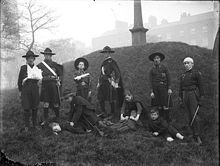
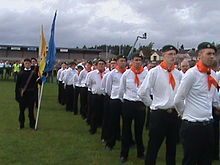
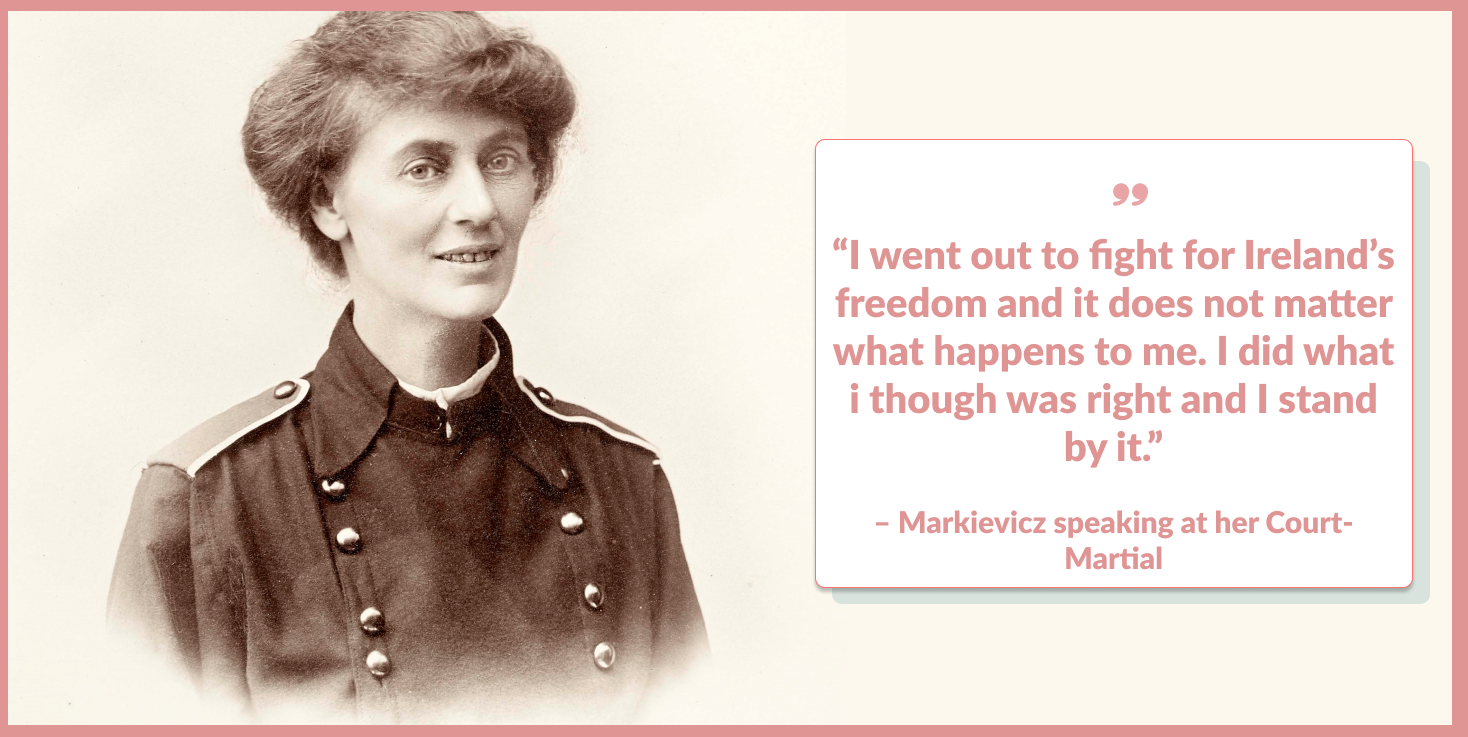
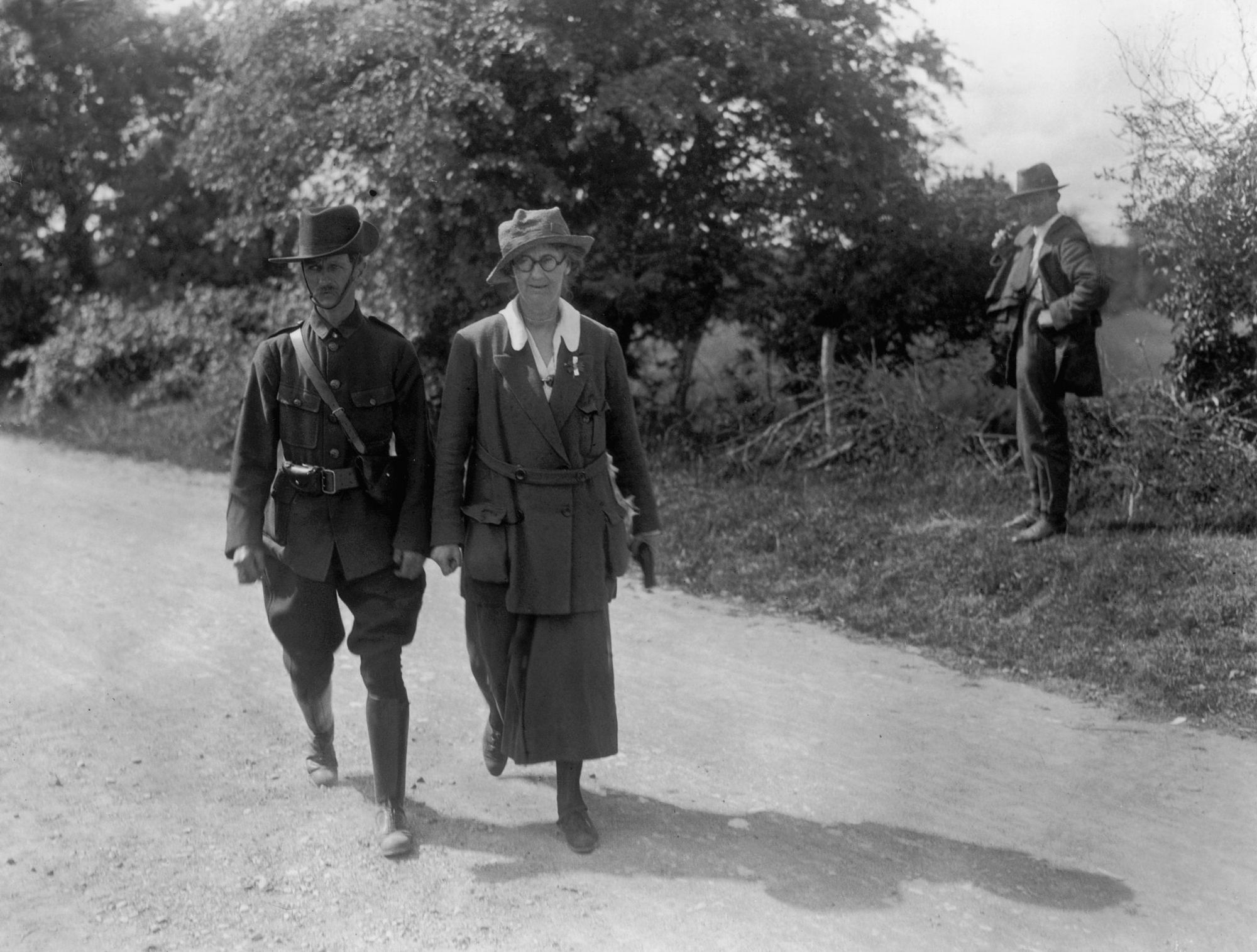
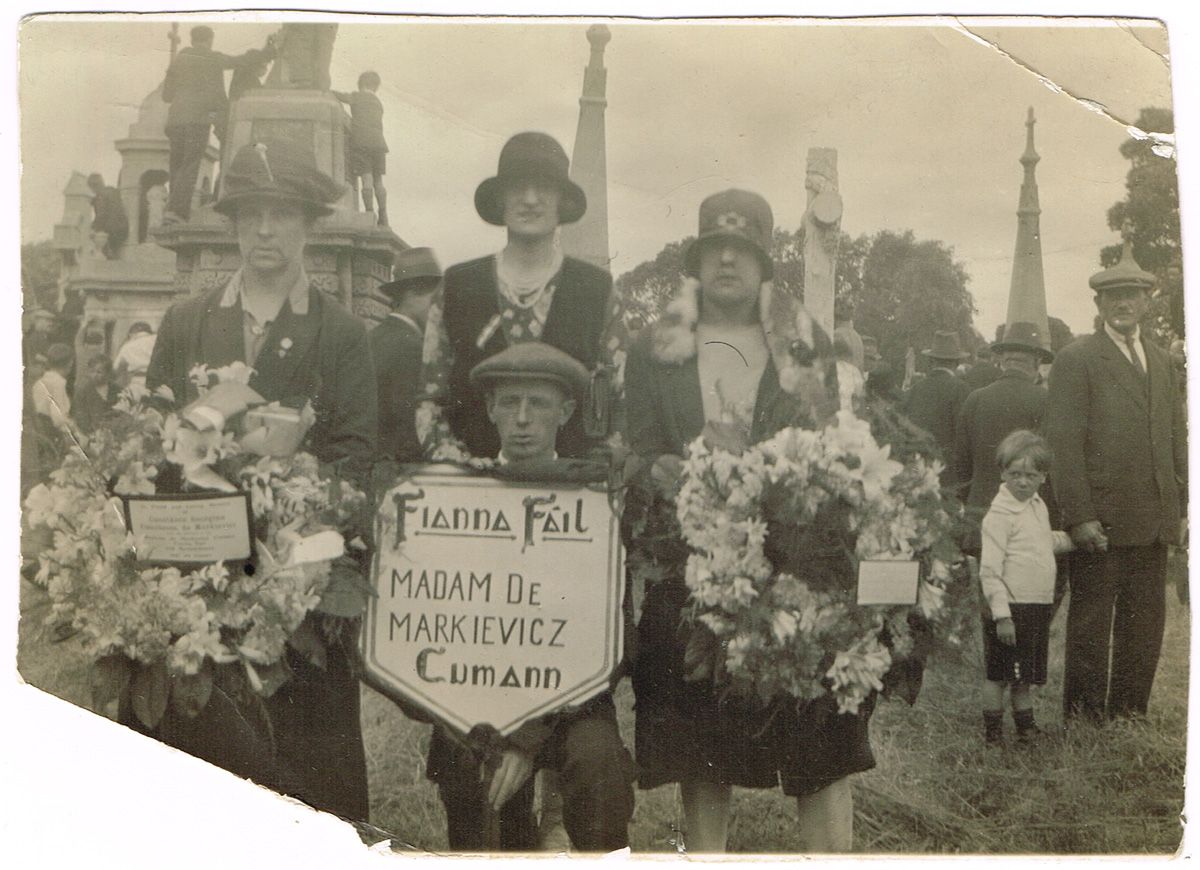
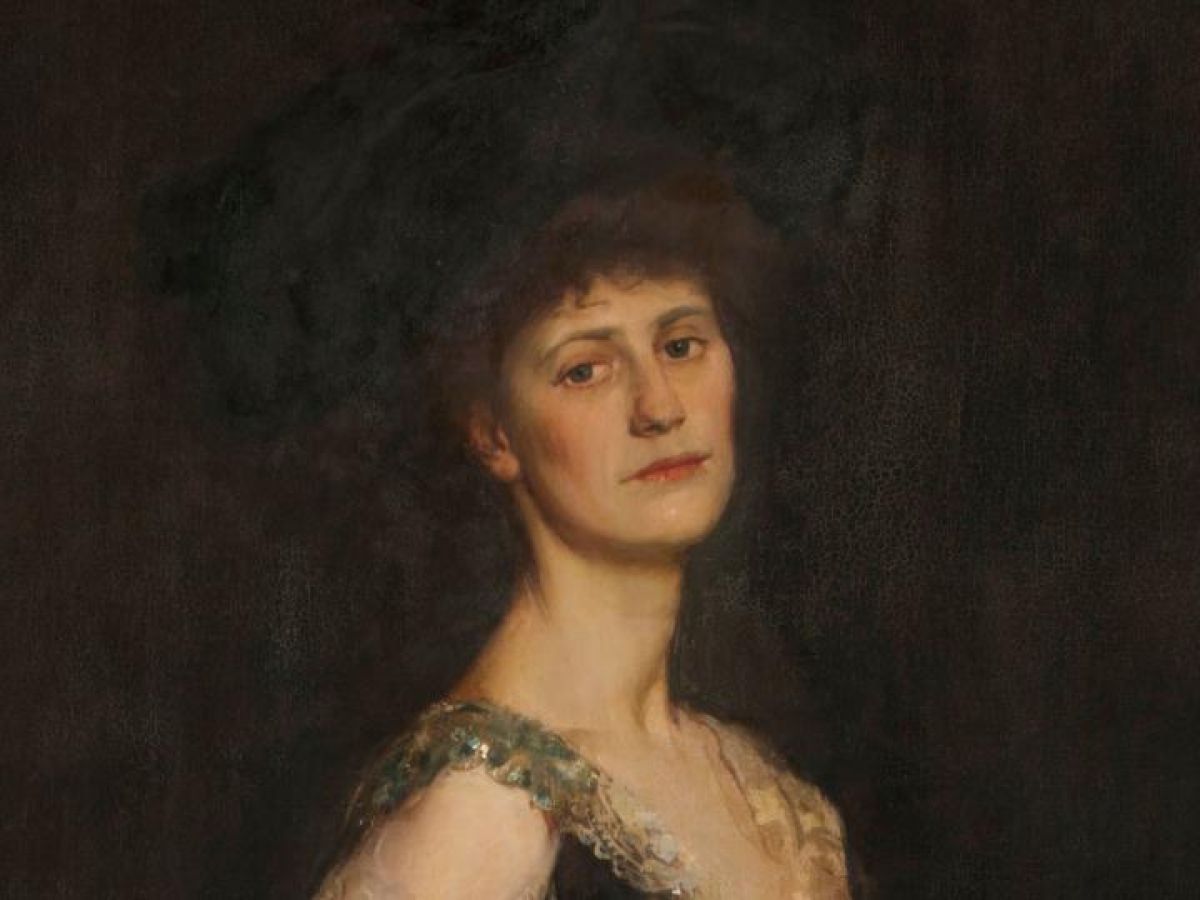
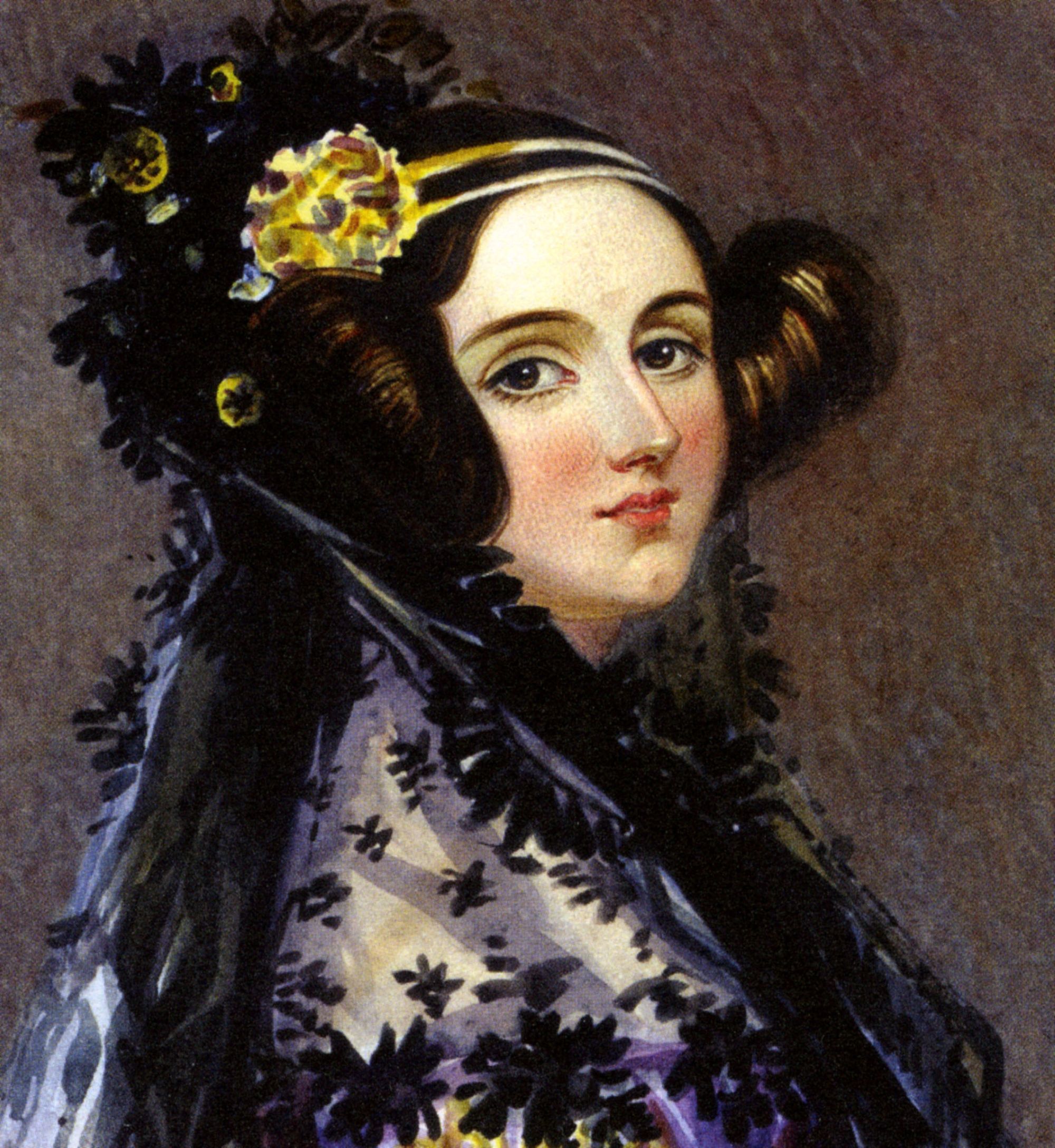
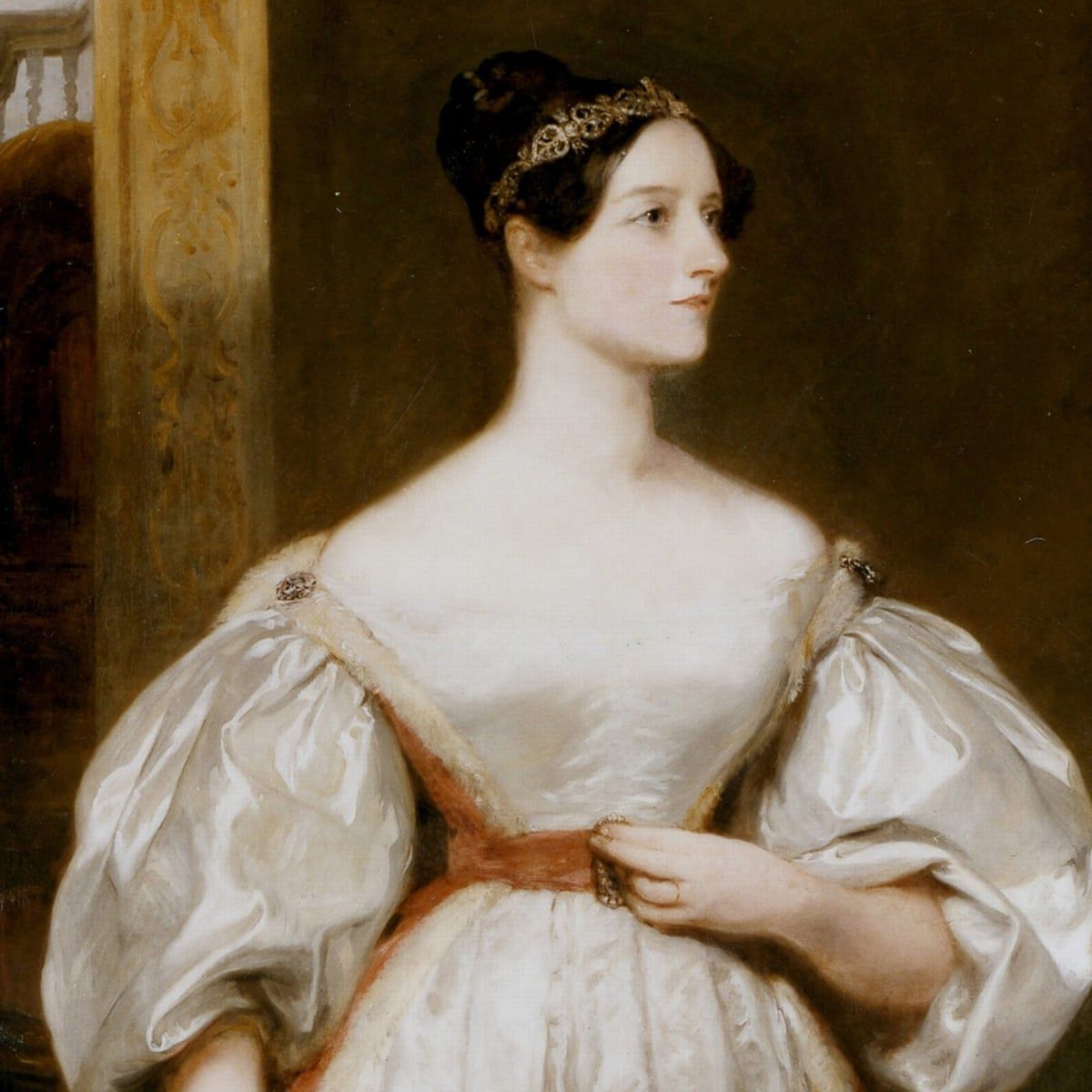
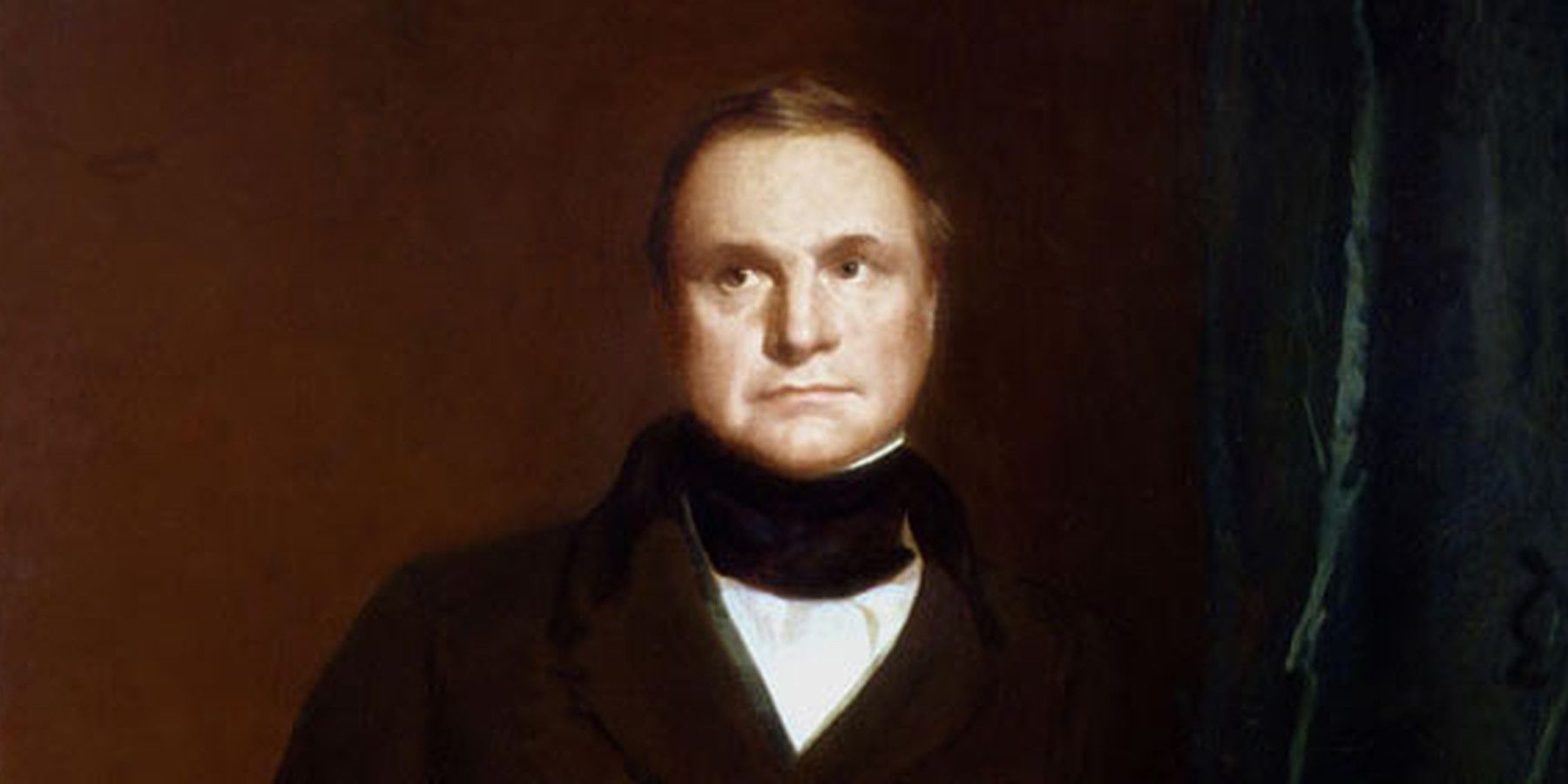
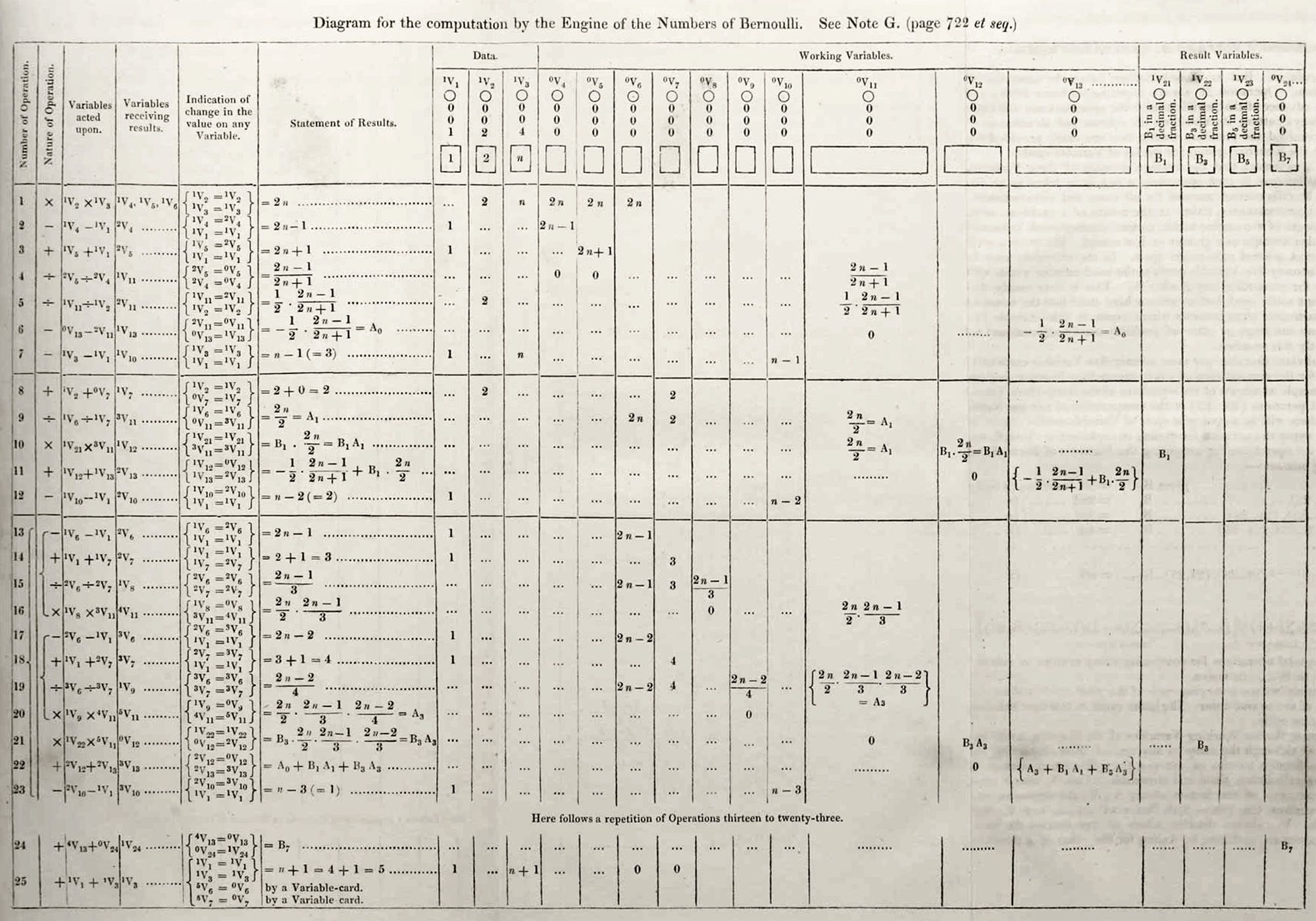
<?xml version="1.0" encoding="UTF-8"?><rss xmlns:dc="http://purl.org/dc/elements/1.1/" xmlns:content="http://purl.org/rss/1.0/modules/content/" xmlns:atom="http://www.w3.org/2005/Atom" version="2.0" xmlns:media="http://search.yahoo.com/mrss/"><channel><title><![CDATA[Women in History]]></title><description><![CDATA[Well behaved women seldom make history]]></description><link>https://womeninhistory.education/</link><image><url>https://womeninhistory.education/favicon.png</url><title>Women in History</title><link>https://womeninhistory.education/</link></image><generator>Ghost 5.26</generator><lastBuildDate>Sun, 15 Oct 2023 20:50:58 GMT</lastBuildDate><atom:link href="/rss/" rel="self" type="application/rss+xml"/><ttl>60</ttl><item><title><![CDATA[Lotfia Elnadi - Fly against tradition]]></title><description><![CDATA[An inspiration for what women can achieve when they break away from tradition. The first Arab and African woman pilot in the world, Elnadi paved the way for other female aviators.]]></description><link>https://womeninhistory.education/lotfia-elnadi/</link><guid isPermaLink="false">639db3de50f0cd932e544ded</guid><category><![CDATA[Adventures, Aviators and Daredevils]]></category><category><![CDATA[20th Century]]></category><dc:creator><![CDATA[Tabitha Lending]]></dc:creator><pubDate>Sat, 17 Dec 2022 13:06:04 GMT</pubDate><media:content url="https://womeninhistory.education/content/images/2022/12/4-2.jpg" medium="image"/><content:encoded><![CDATA[<img src="/content/images/2022/12/4-2.jpg" alt="Lotfia Elnadi - Fly against tradition"><p>There are many women over the past century who have taken to the skies. Names such as Amy Johnson - the first woman to fly solo from London to Australia - and Amelia Earhart - the first woman to fly solo across the Atlantic - are perhaps more instantly recognisable to those in the Western Hemisphere. However, Lotfia Elnadi stands as an icon to many Arab women; a reminder of what women are capable of when they are determined to succeed. Elnadi was not only the first Egyptian woman to qualify as a pilot; she was also the first African woman and first Arab woman to earn a pilot&apos;s licence as well. &#xA0;Although her name is less recognisable than that of the well-esteemed Earhart, her achievements are no less impressive. </p><p>Born in Cairo, on October 29th, 1907, Elnadi&apos;s father was a government employee working for the printing office. Her mother was a forward-thinking housewife who would play a key role in her daughter&apos;s achievements. She completed her primary education and was expected to marry, becoming a housewife and mother, therefore her father saw no point to secondary education. However, Elnadi&apos;s mother encouraged her attendance at the American college with its modern curriculum and language specialism. Whilst at school Elnadi read an article about a flight school which had opened in Cairo. Despite her father&apos;s objections, she was determined to attend.</p><figure class="kg-card kg-image-card"><img src="/content/images/2022/12/four-women-in-aviation-1.jpg" class="kg-image" alt="Lotfia Elnadi - Fly against tradition" loading="lazy" width="1200" height="900" srcset="https://womeninhistory.education/content/images/size/w600/2022/12/four-women-in-aviation-1.jpg 600w, https://womeninhistory.education/content/images/size/w1000/2022/12/four-women-in-aviation-1.jpg 1000w, https://womeninhistory.education/content/images/2022/12/four-women-in-aviation-1.jpg 1200w" sizes="(min-width: 720px) 720px"></figure><p>Elnadi knew she would need help to attend the school. Following rejection from a journalist she had contacted for assistance, she went directly to Kamal Elwi - director of EgyptAir. Seeing the potential for publicity, Elwi agreed to help. However, the flight school was not free, so in order to pay for her tuition, Elnadi worked as a secretary and telephone operator for the flying school. Elnadi kept her flight lessons a secret from her father by telling him she was attending a biweekly study group.</p><p>And so, alongside 33 men, Elnadi began her flight lessons and on 27th September 1933, following just 67 days of studying, she qualified as the world&apos;s first Arab and first African woman pilot. Her father was angry that Elnadi had pursued flight school however, the press she received was favourable so he allowed her to take him on a flight over the pyramids. Around the world, headlines reported Elnadi&apos;s achievement.</p><figure class="kg-card kg-image-card"><img src="/content/images/2022/12/banner-4-628x439-1.jpg" class="kg-image" alt="Lotfia Elnadi - Fly against tradition" loading="lazy" width="628" height="439" srcset="https://womeninhistory.education/content/images/size/w600/2022/12/banner-4-628x439-1.jpg 600w, https://womeninhistory.education/content/images/2022/12/banner-4-628x439-1.jpg 628w"></figure><p>Elnadi experienced further success on 19th December 1933 when she flew in the international race between Cairo and Alexandria. Her single-engine plane flew at speeds of around 100mph and reached the finish line before any other competitors. Her achievement won her &#xA3;E200 and the congratulations of King Fuad. The feminist leader, Huda Sha&apos;arawi acknowledged Elnadi as an inspiration for women and led a fundraiser to buy Elnadi her own plane. For five years, Elnadi flew, until an accident damaged her spine and forced her to stop flying. During that time she worked as the secretary general for the Egypt Aviation Club. Elnadi inspired Egyptian women to train as pilots up until the Second world war which didn&apos;t see any women train as pilots until after 1945 when Dina-Carole El Sawy became a pilot for EgyptAir. </p><p>Elnadi spent many years in Switzerland receiving treatment for the injuries sustained following the accident. In 1989, she was invited to return to Egypt to commemorate the 54th anniversary of civil aviation in Egypt. Whilst there she was awarded the Order of Merit of the Egyptian Organisation of Aerospace Education. A documentary film, <em>Take off from the Sand</em>, was later released in 1996 telling her story. Whilst in her 80s she moved to Toronto Canada to live with her nephew and his family before returning to Cairo where she died in 2002.</p><figure class="kg-card kg-image-card"><img src="/content/images/2022/12/261269_744677copy_638969.webp" class="kg-image" alt="Lotfia Elnadi - Fly against tradition" loading="lazy" width="800" height="501" srcset="https://womeninhistory.education/content/images/size/w600/2022/12/261269_744677copy_638969.webp 600w, https://womeninhistory.education/content/images/2022/12/261269_744677copy_638969.webp 800w" sizes="(min-width: 720px) 720px"></figure><p>Lotfia Elnadi was undoubtedly an inspiration for many female pilots during her life and in the decades since her death. Nevertheless, she has received little recognition in mainstream media and has had limited commemoration of her achievements. She may not have flown the Atlantic but she paved the way for African and Arab women to take to the sky and break away from traditional female roles as housewives and mothers. Elnadi never married, as her father had expected, instead she carved her own path and gave permission for other women to do the same. Her name deserves to be as recognisable as Amy Johnson and Amelia Earhart.</p>]]></content:encoded></item><item><title><![CDATA[Kofoworola Abeni Pratt - Nigeria's Nightingale]]></title><description><![CDATA[Nigeria's answer to Florence Nightingale, Kofoworola Abeni Pratt was the first BAME nurse in the NHS and helped to shape modern nursing in Nigeria.]]></description><link>https://womeninhistory.education/kofoworola-abeni-pratt/</link><guid isPermaLink="false">62c4235b50f0cd932e544637</guid><category><![CDATA[Medicine]]></category><category><![CDATA[20th Century]]></category><dc:creator><![CDATA[Tabitha Lending]]></dc:creator><pubDate>Sat, 15 Oct 2022 13:01:36 GMT</pubDate><media:content url="https://womeninhistory.education/content/images/2022/10/Kofoworola-Abeni-Pratt-1.jpg" medium="image"/><content:encoded><![CDATA[<img src="/content/images/2022/10/Kofoworola-Abeni-Pratt-1.jpg" alt="Kofoworola Abeni Pratt - Nigeria&apos;s Nightingale"><p>A pioneer of nursing in Nigeria and the first BAME nurse in the NHS, Kofoworola Abeni Pratt (nee Scott) was born in 1915 to a prominent Nigerian family in Lagos. (1) Although she wanted to be a nurse from childhood, Kofoworola&apos;s father felt nursing was not a respectable career. Many have drawn similarities between Kofoworola and Britain&apos;s most famous nurse - Florence Nightingale. Both were told that nursing was not a suitable career, instead, Kofoworola passed the Cambridge senior schools certificate in 1933 and went on to study teaching at the United Missionary College in Ibadan, Nigeria (2). From 1936 to 1940 she taught History at the CMS girls&apos; school (1).</p><figure class="kg-card kg-image-card kg-card-hascaption"><img src="/content/images/2022/10/14895-ibadan-locator-map.jpg" class="kg-image" alt="Kofoworola Abeni Pratt - Nigeria&apos;s Nightingale" loading="lazy" width="728" height="425" srcset="https://womeninhistory.education/content/images/size/w600/2022/10/14895-ibadan-locator-map.jpg 600w, https://womeninhistory.education/content/images/2022/10/14895-ibadan-locator-map.jpg 728w" sizes="(min-width: 720px) 720px"><figcaption>Ibadan is located in the south of Nigeria, north of Lagos</figcaption></figure><p>In 1941, Kofoworola married Eugene Samuel Oluremi (Olu) Pratt, a pharmacist who supported his wife&apos;s desire to become a nurse. Olu&apos;s career meant the couple moved around multiple times in the early years of their marriage. Tragically, the couple&apos;s first son died in infancy. Their second son was born in Lagos in 1943 and the following year Olu went to London to receive British medical qualifications. In 1952, their third child was born in London (2).</p><p>In 1946, two years after Olu had moved to London, Kofoworola joined him and began training as a nurse at the Nightingale School at St Thomas&apos; Hospital where, in 1948, she passed her preliminary exams and her finals in 1949. Consequently, on 25 November 1949, she qualified as a State registered nurse. Kofoworola received excellent marks in her exams and completed extra certification in midwifery and tropical diseases. She would later complete qualifications in Hospital nursing administration (3). Her success in becoming a qualified nurse made Kofoworola Abeni Pratt the first BAME nurse in the NHS, where she worked for 4 years. Whilst nursing, she was granted funding to observe nurse training techniques in other countries. She was particularly impressed with the University based training which she observed in the USA, something which would inform decisions later on in her career.</p><figure class="kg-card kg-gallery-card kg-width-wide kg-card-hascaption"><div class="kg-gallery-container"><div class="kg-gallery-row"><div class="kg-gallery-image"><img src="/content/images/2022/10/StThomas_3.jpg" width="800" height="590" loading="lazy" alt="Kofoworola Abeni Pratt - Nigeria&apos;s Nightingale" srcset="https://womeninhistory.education/content/images/size/w600/2022/10/StThomas_3.jpg 600w, https://womeninhistory.education/content/images/2022/10/StThomas_3.jpg 800w" sizes="(min-width: 720px) 720px"></div><div class="kg-gallery-image"><img src="/content/images/2022/10/stthomashospital.jpg" width="800" height="465" loading="lazy" alt="Kofoworola Abeni Pratt - Nigeria&apos;s Nightingale" srcset="https://womeninhistory.education/content/images/size/w600/2022/10/stthomashospital.jpg 600w, https://womeninhistory.education/content/images/2022/10/stthomashospital.jpg 800w" sizes="(min-width: 720px) 720px"></div></div></div><figcaption>St Thomas&apos; Hospital, London, was the location of Nightingale&apos;s School for nurses where Kofoworola and many other nurses trained.</figcaption></figure><p>In 1954, Nurse Pratt returned to Nigeria. Here she achieved a successful nursing career, becoming the first Nigerian ward sister. She had, at first been denied this role as it was reserved for British expatriates however, with support from colleagues at St Thomas&apos; Hospital, she was offered a position at the University College Hospital, Ibadan - the top hospital in Nigeria. (1, 3) &#xA0;Kofoworola was moved to the medical ward at Adeoyo Hospital which was still under construction. Whilst there she worked to impose new standards for hygiene and nutrition, whilst helping reform the hospital administration. In 1955 she was promoted to administrative sister. In 1961, following time spent in London studying nursing administration, and time in other countries observing nursing practice, Kofoworola was appointed deputy matron at University College Hospital, Ibadan. She was promoted to matron three years later in 1964, making her the first Nigerian to hold the post. Whilst matron she established a nursing school at the hospital and also helped found the Professional Association of Trained Nurses in Nigeria.</p><figure class="kg-card kg-image-card"><img src="/content/images/2022/10/185-NHS-Nurses-scaled-e1582625956337.jpg" class="kg-image" alt="Kofoworola Abeni Pratt - Nigeria&apos;s Nightingale" loading="lazy" width="600" height="475" srcset="https://womeninhistory.education/content/images/2022/10/185-NHS-Nurses-scaled-e1582625956337.jpg 600w"></figure><p>In the 1970s Kofoworola worked as the chief nursing officer for the Federal Ministry of Health in Nigeria, later becoming the Commissioner of Health in Lagos. In 1971, she became President of the National Council of Women&apos;s Societies in Nigeria. From 1973 to 1975 Kofoworola performed as Minister of Health for Nigeria. During her time in office, she achieved reforms for Doctors, Nurses and Public Health. Her term was brought to a premature end by a military coup.</p><figure class="kg-card kg-image-card kg-card-hascaption"><img src="/content/images/2022/10/Front-view-of-University-College-Hospital-Ibadan-Nigerias-premier-tertiary-hospital-1.png" class="kg-image" alt="Kofoworola Abeni Pratt - Nigeria&apos;s Nightingale" loading="lazy" width="726" height="482" srcset="https://womeninhistory.education/content/images/size/w600/2022/10/Front-view-of-University-College-Hospital-Ibadan-Nigerias-premier-tertiary-hospital-1.png 600w, https://womeninhistory.education/content/images/2022/10/Front-view-of-University-College-Hospital-Ibadan-Nigerias-premier-tertiary-hospital-1.png 726w" sizes="(min-width: 720px) 720px"><figcaption>University College Hospital, Ibadan</figcaption></figure><p>On 18 June 1992, Chief Kofoworola Abeni Pratt died. Over her lifetime she recognised the significance of political action in improving healthcare, she oversaw the expansion of healthcare in Nigeria and the building of hospitals. She saw the equipping of boats designed to help take healthcare to rural villages by water, and she strove to improve conditions for Nurses. Unusually for her time, through all of this, she was also a wife and a mother. Kofoworola has been regularly forgotten by the history books, unlike Florence Nightingale despite the similarity in their achievements. She was so much more than just the first BAME nurse in the NHS, her achievements extended far beyond the colour of her skin.</p><p>Kofoworola&apos;s life was dedicated to improving healthcare and providing the best service to those in need, and she did not go completely unrecognised. She was awarded the Florence Nightingale medal in 1973, the highest international distinction a nurse can achieve. Two years later, in 1975, she was awarded a chieftaincy title in recognition of her services to Nigeria. In 1979 she was also made a fellow of the Royal College of Nursing. If we consider the work of Florence Nightingale to be significant enough to teach children across the country about her work, then we should not neglect to consider the equally significant achievements of Chief Kofoworola Abeni Pratt.</p><figure class="kg-card kg-image-card kg-card-hascaption"><img src="/content/images/2022/10/medal.jpg" class="kg-image" alt="Kofoworola Abeni Pratt - Nigeria&apos;s Nightingale" loading="lazy" width="450" height="300"><figcaption>Kofoworola was awarded the Florence Nightingale Medal, the highest international distinction for nurses</figcaption></figure><p>Further reading</p><ol><li><a href="https://www.kcl.ac.uk/people/kofoworola-abeni-pratt" rel="noopener noreferrer">https://www.kcl.ac.uk/people/kofoworola-abeni-pratt</a></li><li><a href="https://en.wikipedia.org/wiki/Kofoworola_Abeni_Pratt">https://en.wikipedia.org/wiki/Kofoworola_Abeni_Pratt</a></li><li><a href="https://nightingalesociety.com/papers/kofoworola-abeni-pratt-outline/" rel="noopener noreferrer">https://nightingalesociety.com/papers/kofoworola-abeni-pratt-outline/</a></li></ol>]]></content:encoded></item><item><title><![CDATA[Savitribai Phule - Go, get education]]></title><description><![CDATA[ Social reformer, educationalist, and poet from Maharashtra, India. A pioneer of India’s feminist movement, Savitrabai Phule founded 18 schools for women, protected vulnerable child widows, and dedicated her life to helping ‘untouchables’.]]></description><link>https://womeninhistory.education/savitribai-phule/</link><guid isPermaLink="false">627fad6e09f5f45cd77efebc</guid><category><![CDATA[Education]]></category><category><![CDATA[Rebels and Advocates]]></category><category><![CDATA[19th Century]]></category><dc:creator><![CDATA[Tabitha Lending]]></dc:creator><pubDate>Wed, 06 Jul 2022 11:47:34 GMT</pubDate><media:content url="https://womeninhistory.education/content/images/2022/07/Untitled-2--2.jpg" medium="image"/><content:encoded><![CDATA[<img src="/content/images/2022/07/Untitled-2--2.jpg" alt="Savitribai Phule - Go, get education"><p>Born in Maharashtra, India, on January 3, 1831, about 50 km from Pule, Savitribai Phule was the youngest daughter of Lakshmi and Khandoji Nevase Patil. [1] At the age of 9, she was married to Jyotirao Phule (known as Jyotiba), himself only 13, but the couple remained together for life. [2] Although she was illiterate when married, she was fortunate in marrying a progressive husband who taught her to read and write. [3] Savitribai also learnt from her husbands friends, Sakharam Yeshwant Paranjpe and Keshav Shivram Bhavalkar. This education allowed Savitribai to enrol on teacher training at a normal school in Pune and an institution run by Cynthia Farrar, an American Missionary, in Ahmednager. [3] Savitribai qualified as a teacher after passing her 4th examination in 1847,[4] thus earning her credit as India&apos;s first female teacher. [5]</p><figure class="kg-card kg-gallery-card kg-width-wide kg-card-hascaption"><div class="kg-gallery-container"><div class="kg-gallery-row"><div class="kg-gallery-image"><img src="/content/images/2022/07/india.jpg" width="729" height="799" loading="lazy" alt="Savitribai Phule - Go, get education" srcset="https://womeninhistory.education/content/images/size/w600/2022/07/india.jpg 600w, https://womeninhistory.education/content/images/2022/07/india.jpg 729w" sizes="(min-width: 720px) 720px"></div><div class="kg-gallery-image"><img src="/content/images/2022/07/Untitled.jpg" width="799" height="859" loading="lazy" alt="Savitribai Phule - Go, get education" srcset="https://womeninhistory.education/content/images/size/w600/2022/07/Untitled.jpg 600w, https://womeninhistory.education/content/images/2022/07/Untitled.jpg 799w" sizes="(min-width: 720px) 720px"></div></div></div><figcaption>Pune is located within Maharashtra</figcaption></figure><p>Following her training, Savitribai taught girls at Maharawada in Pune. It was here that she met Sagunabai Kshirsagar a teacher and committed feminist. [6] The two connected over their belief in education for women and as a result Savitribai, aged just 17, Sagunabai and Jyotiba established their own school for girls at Bhide Wada in 1848. The curriculum was based on a more western model and students were taught subjects such as maths, science and social studies rather than traditional religious texts. The school began with just 9 girls, but eventually that grew to 25. [7]</p><figure class="kg-card kg-image-card kg-card-hascaption"><img src="/content/images/2022/07/art.jpg" class="kg-image" alt="Savitribai Phule - Go, get education" loading="lazy" width="1243" height="855" srcset="https://womeninhistory.education/content/images/size/w600/2022/07/art.jpg 600w, https://womeninhistory.education/content/images/size/w1000/2022/07/art.jpg 1000w, https://womeninhistory.education/content/images/2022/07/art.jpg 1243w" sizes="(min-width: 720px) 720px"><figcaption>Opening of the First School for Girls by Savitribai Phule and Jyotirao Phule by Malvika Asher 2016</figcaption></figure><p>The growing success of Savitribai&apos;s work was not without opposition. Conservative elements of society were strongly opposed to female education and argued that Savitribai&apos;s work was considered a sin under the Brahmana texts. [3] Opponents would throw stones, dung and verbal abuse at Savitribai as she walked to the school everyday, however, she always carried a spare sari with her so she could change and carry on with her work. </p><p>Originally, Savitribai and Jyotiba lived with his father, but they were asked to leave in 1849 as a result of the opposition to their work. The couple went to live with Jyotiba&apos;s friend Usman Sheikh and his sister Fatima Begum Sheikh. Fatima was a literate woman who had trained alongside Savitribai making her the first female Muslim teacher in India. The same year, Savitribai and Fatima established a school in Usman&apos;s home aimed at backward caste communities who might otherwise be denied an education.</p><figure class="kg-card kg-image-card"><img src="/content/images/2022/07/image-1.png" class="kg-image" alt="Savitribai Phule - Go, get education" loading="lazy" width="1468" height="737" srcset="https://womeninhistory.education/content/images/size/w600/2022/07/image-1.png 600w, https://womeninhistory.education/content/images/size/w1000/2022/07/image-1.png 1000w, https://womeninhistory.education/content/images/2022/07/image-1.png 1468w" sizes="(min-width: 720px) 720px"></figure><p>By 1851, Savitribai and Jyotiba has established 3 schools for girls in Pune, with approximately 150 students were enrolled. They continued using a western curriculum and their teaching methods differed from those used at government schools. Divya Kandukuri suggests there methods were in fact superior. Their hard work was even recognised in 1852 by the British Government which declared Savitribai to be the best teacher in the Maharashtra state,[4] she was only 21. The following year, Savitribai and Jyotiba established and education society titled &apos;The Society for Promoting the Education of Mahars, Mangs and Etceteras&apos; which opened more schools for girls across Maharashtra. In total, the couple helped establish 18 schools over their lifetime.</p><figure class="kg-card kg-image-card kg-card-hascaption"><img src="/content/images/2022/07/art3.jpg" class="kg-image" alt="Savitribai Phule - Go, get education" loading="lazy" width="1142" height="798" srcset="https://womeninhistory.education/content/images/size/w600/2022/07/art3.jpg 600w, https://womeninhistory.education/content/images/size/w1000/2022/07/art3.jpg 1000w, https://womeninhistory.education/content/images/2022/07/art3.jpg 1142w" sizes="(min-width: 720px) 720px"><figcaption>Savitribai Phule Receiving British Accolades by Malvika Asher 2016</figcaption></figure><p>Savitribai&apos;s career in education is admirable, but her work did not cease there. The Phule couple were not only advocates of women&apos;s education but of the rights of women and people of lower castes to equality. In 1852, they started Mahila Seva Mandal an organisation which focused on raising awareness of women&apos;s rights and encouraging women to recognise their human rights as well as other social issues. [8] Through this, Savitribai organised a successful barbers strike in protest to the practice of shaving widow&apos;s heads - something which highlighted them as vulnerable therefore putting them at greater risk of abuse, rape and isolation. [7]</p><figure class="kg-card kg-image-card"><img src="/content/images/2022/07/img_6016.jpg" class="kg-image" alt="Savitribai Phule - Go, get education" loading="lazy" width="640" height="480" srcset="https://womeninhistory.education/content/images/size/w600/2022/07/img_6016.jpg 600w, https://womeninhistory.education/content/images/2022/07/img_6016.jpg 640w"></figure><p>In 1854, a centre for widows was established by Savitribai in order to care for these vulnerable women, this was expanded in 1864 to allow for the care of destitute women, widows and child brides who had been cast aside by their families. The Phule couple made sure to educate all the women in their care. The couple had no children of their own but appear to have adopted the son of a widow called Yashwantrao and in 1889 they helped arrange his marriage as nobody was willing to give him their daughter as his mother was a widow. This demonstrates the level of discrimination present at the time against widows and their children.</p><figure class="kg-card kg-image-card kg-card-hascaption"><img src="/content/images/2022/07/art2.jpg" class="kg-image" alt="Savitribai Phule - Go, get education" loading="lazy" width="1243" height="855" srcset="https://womeninhistory.education/content/images/size/w600/2022/07/art2.jpg 600w, https://womeninhistory.education/content/images/size/w1000/2022/07/art2.jpg 1000w, https://womeninhistory.education/content/images/2022/07/art2.jpg 1243w" sizes="(min-width: 720px) 720px"><figcaption>The Legacy of Savitribai Phule by Malvika Asher 2016</figcaption></figure><p>Savitribai also opened Balhatya Pratibandhak Griha a care centre which aided the pregnant victims of rape and pregnant widows and helped deliver their infants safely. The centre was against practices such as female infanticide and encouraged mothers who couldn&apos;t support a child to have them adopted instead of abandoning them.</p><p>Savitribai believed in the equality of all, regardless of their caste and, since those of a lower caste could not drink from the village well, Savitribai and Jyotiba dug a well in their own garden for societies outcasts to use. Jyotiba&apos;s brainchild was Satyashodhak Samaj - the Truth-seekers society - which aimed at eliminating such discrimination as the limitation of wells. In 1890, Jyotiba died. He had supported his wife&apos;s many endeavours and had been a strong advocate for women&apos;s education and equality of castes. Against the social norms of the time, Savitribai lit her husbands funeral pyre, and then proceeded to take responsibility for the Truth-seekers society. In 1893, she even chaired the annual meeting for the society, a role that was revolutionary for a woman to hold - indeed it caused a furore at the time.</p><figure class="kg-card kg-image-card kg-card-hascaption"><img src="/content/images/2022/07/EyrPk0-U8AACacl.jpg" class="kg-image" alt="Savitribai Phule - Go, get education" loading="lazy" width="900" height="675" srcset="https://womeninhistory.education/content/images/size/w600/2022/07/EyrPk0-U8AACacl.jpg 600w, https://womeninhistory.education/content/images/2022/07/EyrPk0-U8AACacl.jpg 900w" sizes="(min-width: 720px) 720px"><figcaption>Busts of Jyotiba and Savitribai Phule, a couple who dedicated their lives to the pursuit of equality in caste and education</figcaption></figure><p>When India was hit by a pandemic of Bubonic plague, Savitribai refused to sit by idle. She and her son Yashawant (who was a medical professional) opened a clinic to treat those affected by the disease. On a daily basis, Savitribai served meals to nearly 2,000 children - those whose families had been affected by the plague. It is perhaps unsurprising that a woman who dedicated her life to helping others should die doing the same. In 1897, Savitribai heard that the 10-year-old son of Pandurang Babaji Gaekwad had contracted the plague. She rushed to his side and carried him to hospital in her arms. In doing so, she caught the plague herself and on 10 March, 1897, Savitribai Phule, India&apos;s first female teacher, died.</p><figure class="kg-card kg-image-card"><img src="/content/images/2022/07/image.png" class="kg-image" alt="Savitribai Phule - Go, get education" loading="lazy" width="1330" height="1114" srcset="https://womeninhistory.education/content/images/size/w600/2022/07/image.png 600w, https://womeninhistory.education/content/images/size/w1000/2022/07/image.png 1000w, https://womeninhistory.education/content/images/2022/07/image.png 1330w" sizes="(min-width: 720px) 720px"></figure><p>Alongside her selfless deeds, Savitribai was an ardent poet. She published two collections of poems - Kavya Phule and Bhavan Kashi Subodh Ratnakar. Her most iconic poem is titled &apos;Go, Get education&apos; and was intended to encourage women to educate themselves as the best means of fighting inequality. Women&apos;s education in India owes much to Savitribai and the support she received from Jyotiba, Fatima Begum Sheikh and Sagunabai Kshirsagar. In 2015, the University of Pune was renamed Savitribai Phule Pune University in honour of her work, and a statue of her was erected there in 2021, almost 200 years after her birth. Every year, her birthday is celebrated as &quot;Balika Din&quot; in Maharashtra. She led a selfless life, and exceeded well beyond the expectations of a child bride from an unimportant caste. Her heroic death is evidence that she was willing to give everything in order to help those in need - even her life.</p><p></p><p>Notes</p><ol><li>Sundararaman, T. (2009). <em>Savitribai Phule first memorial lecture, [2008]</em>. National Council of Educational Research and Training. <a href="https://en.wikipedia.org/wiki/ISBN_(identifier)" rel="noopener noreferrer">ISBN </a><a href="https://en.wikipedia.org/wiki/Special:BookSources/978-81-7450-949-9" rel="noopener noreferrer">978-81-7450-949-9</a></li><li>Rege, Sharmila (2009). <a href="https://books.google.com/books?id=y1TbZwEACAAJ&amp;q=savitribai+phule" rel="noopener noreferrer"><em>Savitribai Phule Second Memorial Lecture, [2009]</em></a>. National Council of Educational Research and Training. <a href="https://en.wikipedia.org/wiki/ISBN_(identifier)" rel="noopener noreferrer">ISBN</a><a href="https://en.wikipedia.org/wiki/Special:BookSources/978-8-17450-931-4" rel="noopener noreferrer">978-8-17450-931-4</a></li><li>Kandukuri, Divya (11 January 2019). <a href="https://www.livemint.com/Leisure/DmR1fQSnVD62p4D3eyq9mO/The-life-and-times-of-Savitribai-Phule.html" rel="noopener noreferrer">&quot;The life and times of Savitribai Phule&quot;</a>.</li><li><a href="https://artsandculture.google.com/story/savitribai-phule-zubaan/mAWBW6eHcTWSLg?hl=en">https://artsandculture.google.com/story/savitribai-phule-zubaan/mAWBW6eHcTWSLg?hl=en</a></li><li>Sundararaman, T. (2009). <em>Savitribai Phule first memorial lecture, [2008]</em>. National Council of Educational Research and Training. <a href="https://en.wikipedia.org/wiki/ISBN_(identifier)" rel="noopener noreferrer">ISBN</a><a href="https://en.wikipedia.org/wiki/Special:BookSources/978-81-7450-949-9" rel="noopener noreferrer">978-81-7450-949-9</a>.</li><li><a href="https://www.esakal.com/saptarang/today-is-savitribai-phule-jayanti-the-indian-womens-liberation-tmb01" rel="noopener noreferrer">&quot;&#x938;&#x93E;&#x935;&#x93F;&#x924;&#x94D;&#x930;&#x940;&#x92C;&#x93E;&#x908; &#x92B;&#x941;&#x932;&#x947; : &#x92D;&#x93E;&#x930;&#x924;&#x940;&#x92F; &#x938;&#x94D;&#x924;&#x94D;&#x930;&#x940; &#x92E;&#x941;&#x915;&#x94D;&#x924;&#x940;&#x91A;&#x94D;&#x92F;&#x93E; &#x91C;&#x928;&#x915; | Savitribai Phule-Pioneer of Women&apos;s Education and Liberation&quot;</a>. <em>eSakal - Marathi Newspaper.</em></li><li><a href="https://indianexpress.com/article/opinion/columns/savitribai-phule-education-feminism-women-empowerment-7131478/">https://indianexpress.com/article/opinion/columns/savitribai-phule-education-feminism-women-empowerment-7131478/</a></li><li><a href="https://velivada.com/timeline/started-mahila-seva-mandal/">https://velivada.com/timeline/started-mahila-seva-mandal/</a></li></ol>]]></content:encoded></item><item><title><![CDATA[Hedy Lamarr - A Beautiful Mind]]></title><description><![CDATA[More than just a pretty face. Famed for her beauty, Hedy Lamarr also contributed to the development of Wifi, GPS and Bluetooth, thanks to her invention of a frequency hopping device.]]></description><link>https://womeninhistory.education/hedy-lamarr/</link><guid isPermaLink="false">62c0be8550f0cd932e544108</guid><category><![CDATA[STEM]]></category><category><![CDATA[20th Century]]></category><category><![CDATA[Inventors and Entrepreneurs]]></category><dc:creator><![CDATA[Tabitha Lending]]></dc:creator><pubDate>Mon, 04 Jul 2022 21:02:36 GMT</pubDate><media:content url="https://womeninhistory.education/content/images/2022/07/vt-hedylamarr-1.jpg" medium="image"/><content:encoded><![CDATA[<img src="/content/images/2022/07/vt-hedylamarr-1.jpg" alt="Hedy Lamarr - A Beautiful Mind"><p>Famed for her beauty, Hedy Lamarr was once described as one of the greatest actresses of all time.[1] Her name is synonymous with the golden age of Hollywood, and yet her inventive mind laid the foundations for modern WiFi, GPS and Bluetooth which have revolutionised the world of communication. The Viennese-born actress had a challenging life and her innovative achievement went unrecognised for a long time. Nevertheless, over previous decades the achievements of women have received renewed attention, and the work of Hedy Lamarr is finally receiving the attention and celebration she deserved.</p><figure class="kg-card kg-image-card"><img src="/content/images/2022/07/hedy_lamarr_1024x1024.webp" class="kg-image" alt="Hedy Lamarr - A Beautiful Mind" loading="lazy" width="1024" height="672" srcset="https://womeninhistory.education/content/images/size/w600/2022/07/hedy_lamarr_1024x1024.webp 600w, https://womeninhistory.education/content/images/size/w1000/2022/07/hedy_lamarr_1024x1024.webp 1000w, https://womeninhistory.education/content/images/2022/07/hedy_lamarr_1024x1024.webp 1024w" sizes="(min-width: 720px) 720px"></figure><p>Hedwig Eva Maria Kiesler (later known as Hedy Lamarr) was born in Vienna, Austria-Hungary. Her father, Emil Kiesler, was a Galacian-Jewish Bank director whilst her mother, Trude Kiesler, was a Hungarian- Jewish Pianist from Budapest who converted to Catholicism. From a young age, Lamarr was fascinated by theatre and film, and at age 12 she won a beauty contest in Vienna. Her scientific mind was fueled by her father who used to take her for walks and explain how different technology functioned. [2] Lamarr took acting classes and had roles in various small films in Germany, however, her big break was <em>Ecstasy</em> (1933) during which 18-year-old Lamarr had various brief nude scenes. The film became notorious for showing closeups of Lamarr&apos;s face in the throws of orgasm, which Lamarr has suggested were captured without her knowledge by the director. [3] Lamarr was as a result dismayed and disillusioned about other roles, nevertheless, the film won awards in Europe. It was, however, considered too sexual in America and was banned there and in Germany. [4]</p><figure class="kg-card kg-gallery-card kg-width-wide kg-card-hascaption"><div class="kg-gallery-container"><div class="kg-gallery-row"><div class="kg-gallery-image"><img src="/content/images/2022/07/Ekstase-600x338.jpg" width="600" height="338" loading="lazy" alt="Hedy Lamarr - A Beautiful Mind" srcset="https://womeninhistory.education/content/images/2022/07/Ekstase-600x338.jpg 600w"></div><div class="kg-gallery-image"><img src="/content/images/2022/07/tumblr_mtvjfw3aIi1qi2gavo1_1280.jpg" width="858" height="1200" loading="lazy" alt="Hedy Lamarr - A Beautiful Mind" srcset="https://womeninhistory.education/content/images/size/w600/2022/07/tumblr_mtvjfw3aIi1qi2gavo1_1280.jpg 600w, https://womeninhistory.education/content/images/2022/07/tumblr_mtvjfw3aIi1qi2gavo1_1280.jpg 858w" sizes="(min-width: 720px) 720px"></div></div><div class="kg-gallery-row"><div class="kg-gallery-image"><img src="/content/images/2022/07/Extase_film_poster.jpg" width="261" height="350" loading="lazy" alt="Hedy Lamarr - A Beautiful Mind"></div><div class="kg-gallery-image"><img src="/content/images/2022/07/image-w1280.webp" width="800" height="450" loading="lazy" alt="Hedy Lamarr - A Beautiful Mind" srcset="https://womeninhistory.education/content/images/size/w600/2022/07/image-w1280.webp 600w, https://womeninhistory.education/content/images/2022/07/image-w1280.webp 800w" sizes="(min-width: 720px) 720px"></div></div></div><figcaption>The film poster for <em>Ecstasy</em> (1933) is in the bottom left, alongside some shots of Hedy Lemarr from the film which made her famous.</figcaption></figure><p>During her early career, she met Friedrich Mandl, a military arms merchant who was obsessed with getting to know Lamarr. The young actress became equally enamoured, perhaps in part due to Mandl&apos;s wealth. Her parents were far more disapproving as Mandl had links with both Benito Mussolini and, later, Adolf Hitler. [3] The couple were married on August 10, 1933, when Lamarr was just 18 and Mandl was 33. In her autobiography, Ecstasy and Me, Lamarr described Mandl as an extremely controlling husband who prevented her from pursuing her acting career. Lamarr suggested that she was a prisoner in the couple&apos;s castle home, Schloss Schwarzenau. [4] Their castle was host to many lavish parties which were attended by both the German and Italian dictators. Lamarr also encouraged her husband to conferences with scientists and other professionals involved with military technology further introducing her to applied science thus nurturing her latent scientific talents. In 1937, she fled to Paris, separating from her husband and country. [5]</p><figure class="kg-card kg-gallery-card kg-width-wide kg-card-hascaption"><div class="kg-gallery-container"><div class="kg-gallery-row"><div class="kg-gallery-image"><img src="/content/images/2022/07/MV5BYWEzNWFmNDQtNWFlZC00MjM3LTkwZjQtYzM0ODVlMmI1ZjRhXkEyXkFqcGdeQXVyMjUwMDUwNA@@._V1_-1.jpg" width="592" height="800" loading="lazy" alt="Hedy Lamarr - A Beautiful Mind"></div><div class="kg-gallery-image"><img src="/content/images/2022/07/Algiers_1938_Poster.jpg" width="220" height="284" loading="lazy" alt="Hedy Lamarr - A Beautiful Mind"></div></div></div><figcaption>Algiers proved a huge success for Hedy Lamarr and thrust her into the limelight</figcaption></figure><p>Later in 1937, Lamarr arrived in London. It was there that she met Louis B Mayer, the head of MGM who was in Europe scouting for talent. [6] Initially, Lamarr turned down a contract offer of $125 a week. However, she booked onto the same New York-bound liner as Mayer and managed to impress him enough to secure a $500 a week contract instead. Mayer persuaded Lamarr to change her name in order to distance herself from &apos;the Ecstasy lady.&apos; [5] The choice of &apos;Lamarr&apos; was in homage to film star Barbara La Marr who was greatly admired by Mayer&apos;s wife. In 1938, Lamarr was taken to Hollywood and promoted as the &apos;world&apos;s most beautiful woman.&apos; [7] Mayer loaned Lamarr to Walter Wanger for the film <em>Algiers</em> (1938). Lamarr was cast in the lead role and supposedly her face took people&apos;s breath away. [8] Consequently, Lamarr became typecasted as a glamorous seductress and was cast in multiple films of varying success such as <em>Lady Of The Tropics</em> (1939) where Lamarr played a mixed-race seductress in Saigon, <em>I Take This Woman </em>(1940) which proved to be a flop, and <em>Boom Town</em> (1940) in which Lamarr teamed up with Clark Gable proved to be a major success and made $5 million in the box office. [9] In 1940, Lamarr again teamed up with Clarke Gable for <em>Comrade X</em>. Her final film with MGM was <em>Her Highness and the Bellboy</em> (1945), following which her career began to decline.</p><figure class="kg-card kg-gallery-card kg-width-wide kg-card-hascaption"><div class="kg-gallery-container"><div class="kg-gallery-row"><div class="kg-gallery-image"><img src="/content/images/2022/07/download.jpeg" width="183" height="275" loading="lazy" alt="Hedy Lamarr - A Beautiful Mind"></div><div class="kg-gallery-image"><img src="/content/images/2022/07/i-take-this-woman.jpg" width="608" height="900" loading="lazy" alt="Hedy Lamarr - A Beautiful Mind" srcset="https://womeninhistory.education/content/images/size/w600/2022/07/i-take-this-woman.jpg 600w, https://womeninhistory.education/content/images/2022/07/i-take-this-woman.jpg 608w"></div><div class="kg-gallery-image"><img src="/content/images/2022/07/Boom_Town_poster.jpg" width="233" height="350" loading="lazy" alt="Hedy Lamarr - A Beautiful Mind"></div></div></div><figcaption>Three of Lamarr&apos;s films (from right) <em>Lady of the Tropics</em> (1939), I take this woman (1940), Boom Town (1940)</figcaption></figure><p>Following the Second World War, Lamarr attempted to produce her own films but she had little success. In 1950 she played Delilah in Cecil B. DeMille&apos;s Samson and Delilah which became the highest-grossing film of 1950, and won two Oscars. From then on, her acting career went into decline. Her final film was <em>The Female Animal</em> released in 1958. She had been signed to act in a 1966 film called Picture Mummy Dead but she was replaced in the film when she collapsed from nervous exhaustion. [10]</p><figure class="kg-card kg-gallery-card kg-width-wide kg-card-hascaption"><div class="kg-gallery-container"><div class="kg-gallery-row"><div class="kg-gallery-image"><img src="/content/images/2022/07/download--2-.jpeg" width="186" height="272" loading="lazy" alt="Hedy Lamarr - A Beautiful Mind"></div><div class="kg-gallery-image"><img src="/content/images/2022/07/MV5BYWNhODE1NGMtODM3MC00YjZhLWFmZGItMWUxODZiNDk3ZDIxXkEyXkFqcGdeQXVyNTk1MTk0MDI@._V1_.jpg" width="313" height="470" loading="lazy" alt="Hedy Lamarr - A Beautiful Mind"></div></div></div><figcaption><em>Her Highness and the Bellboy </em>(1945) was her last film with MGM, <em>The Female Animal </em>(1958) was Lamarr&apos;s final film</figcaption></figure><p>Although Lamarr was a successful actress, her career did not constitute her sole talent and Lamarr had hobbies, built in part on her experiences in earlier life. Having no formal scientific training, Lamarr was mostly self-taught but that did not stop her from working on various hobbies and inventions. As well as inventing an improved stop light, Lamarr created a tablet which could be used to create carbonated drinks. The drink was, however, unsuccessful and Lamarr herself admitted it tasted like Alka-Seltzer. [11] Very few individuals were privy to Lamarr&apos;s inventive streak, Howard Hughes was one of them. An aviation tycoon, Hughes had experience Lamarr&apos;s aptitude for invention when she suggested he change the design of his aeroplanes to a more streamlined design, as Lamarr felt the present design was too boxy. She based her suggestion on images of a range of fast birds and fish, using these as inspiration to improve the aircraft. Whilst Lamarr and Hughes dated, he was supportive of her hobbies. He even allowed her to utilise his team of scientists and engineers who were instructed to do or make anything she asked for. [12]</p><figure class="kg-card kg-gallery-card kg-width-wide kg-card-hascaption"><div class="kg-gallery-container"><div class="kg-gallery-row"><div class="kg-gallery-image"><img src="/content/images/2022/07/hedy-lamarr-boosts-war-bond-sales.webp" width="750" height="600" loading="lazy" alt="Hedy Lamarr - A Beautiful Mind" srcset="https://womeninhistory.education/content/images/size/w600/2022/07/hedy-lamarr-boosts-war-bond-sales.webp 600w, https://womeninhistory.education/content/images/2022/07/hedy-lamarr-boosts-war-bond-sales.webp 750w" sizes="(min-width: 720px) 720px"></div><div class="kg-gallery-image"><img src="/content/images/2022/07/8767e87d591ce8d11f4d90631657caf0--war-bond-hedy-lamarr.jpg" width="695" height="960" loading="lazy" alt="Hedy Lamarr - A Beautiful Mind" srcset="https://womeninhistory.education/content/images/size/w600/2022/07/8767e87d591ce8d11f4d90631657caf0--war-bond-hedy-lamarr.jpg 600w, https://womeninhistory.education/content/images/2022/07/8767e87d591ce8d11f4d90631657caf0--war-bond-hedy-lamarr.jpg 695w"></div></div></div><figcaption>Hedy Lamarr spent much of WW2 helping to sell war bonds in order to support the war effort</figcaption></figure><p> During the second world war, Lamarr had been eager to support the war effort but had been resigned to using her celebrity in order to sell war bonds. However, she learned that radio-controlled torpedoes, which were only recently introduced to the navy, could be easily jammed and set off course. [13] In response, Lamarr worked with composer and pianist George Antheil to develop a device which could create a frequency-hopping signal that could not be tracked or jammed. [14] In 1942, the invention was granted a patent under Lamarr&apos;s married name &apos;Hedy Kiesler Markey&apos; alongside Antheil. However, the US Navy were not receptive to considering inventions from outside the military thus the invention was not initially utilised. In 1962, during the Cuban missile crisis, an updated version of the design finally appeared on Navy ships. [15] It is this technology, invented by Hedy Lamarr, which formed the foundation for frequency-hopping developments such as WiFi, Bluetooth and GPS.</p><figure class="kg-card kg-image-card kg-card-hascaption"><img src="/content/images/2022/07/hedy-lamarr-and-george-antheils-us-patent-2BDX5W4.jpg" class="kg-image" alt="Hedy Lamarr - A Beautiful Mind" loading="lazy" width="1240" height="1390" srcset="https://womeninhistory.education/content/images/size/w600/2022/07/hedy-lamarr-and-george-antheils-us-patent-2BDX5W4.jpg 600w, https://womeninhistory.education/content/images/size/w1000/2022/07/hedy-lamarr-and-george-antheils-us-patent-2BDX5W4.jpg 1000w, https://womeninhistory.education/content/images/2022/07/hedy-lamarr-and-george-antheils-us-patent-2BDX5W4.jpg 1240w" sizes="(min-width: 720px) 720px"><figcaption>The patent for Lamarr and Antheil&apos;s &apos;Secret communication system&apos;</figcaption></figure><p>Over the course of her life, Lamarr was married and divorced six times. She was often lonely and homesick and avoided beaches and staring crowds. Being the &apos;most beautiful woman in the world&apos; came at a price. She became a naturalised citizen of the USA in 1953, aged 38 and, following her final divorce in 1965 she spent the remaining 35 years of her life unmarried. In her later years, Lamarr became very secluded and, although she often spent 6 or 7 hours a day on the phone with her friends and 3 children, she very rarely spent time with people in person. On January 19, 2000, Lamarr passed away in Florida from Heart disease. An unremarkable end for a truly remarkable woman.</p><figure class="kg-card kg-image-card kg-card-hascaption"><img src="/content/images/2022/07/895c77ed2be1c4c2c88b1ebf66630c01.png" class="kg-image" alt="Hedy Lamarr - A Beautiful Mind" loading="lazy" width="731" height="544" srcset="https://womeninhistory.education/content/images/size/w600/2022/07/895c77ed2be1c4c2c88b1ebf66630c01.png 600w, https://womeninhistory.education/content/images/2022/07/895c77ed2be1c4c2c88b1ebf66630c01.png 731w" sizes="(min-width: 720px) 720px"><figcaption>Hedy Lamarr (left) and George Antheil (right) worked together to develop frequency-hopping technology</figcaption></figure><p>Lamarr&apos;s theatrical achievements received much acclaim during her lifetime. Most notably, in 1960 she was inducted to the Hollywood Walk of Fame. However, her accomplishments as an inventor were slower to receive the recognition she deserved. Nevertheless, in 1997, three years before her death, Lamarr and Antheil received the Electronic Frontier Foundation Pioneer Award and the Bulbie Gnass Spirit of Achievement Bronze Award. [16] Both awards commemorate individuals whose lifetime achievements in the arts, sciences, business or invention have contributed significantly to society. It took time for the full potential of Lamarr&apos;s invention to be recognised and appreciated. [17] Furthermore, in 2014, Lamarr was posthumously inducted into the National Inventors Hall of Fame and in 2019, an asteroid was named after her. Although for much of her life Lamarr was celebrated for her beauty, it took time for society to realise that her greatest contribution came from her beautiful mind. Her legacy will live on through frequency-hopping technology for years to come.</p><figure class="kg-card kg-image-card kg-card-hascaption"><img src="/content/images/2022/07/Hedy_Lamarr_Publicity_Photo_for_The_Heavenly_Body_1944-1.jpg" class="kg-image" alt="Hedy Lamarr - A Beautiful Mind" loading="lazy" width="671" height="841" srcset="https://womeninhistory.education/content/images/size/w600/2022/07/Hedy_Lamarr_Publicity_Photo_for_The_Heavenly_Body_1944-1.jpg 600w, https://womeninhistory.education/content/images/2022/07/Hedy_Lamarr_Publicity_Photo_for_The_Heavenly_Body_1944-1.jpg 671w"><figcaption>Hedy Lamarr - A beautiful mind</figcaption></figure><figure class="kg-card kg-gallery-card kg-width-wide kg-card-hascaption"><div class="kg-gallery-container"><div class="kg-gallery-row"><div class="kg-gallery-image"><img src="/content/images/2022/07/Grave_Hedy_Lamarr-_Vienna-_2016.jpg" width="1465" height="2048" loading="lazy" alt="Hedy Lamarr - A Beautiful Mind" srcset="https://womeninhistory.education/content/images/size/w600/2022/07/Grave_Hedy_Lamarr-_Vienna-_2016.jpg 600w, https://womeninhistory.education/content/images/size/w1000/2022/07/Grave_Hedy_Lamarr-_Vienna-_2016.jpg 1000w, https://womeninhistory.education/content/images/2022/07/Grave_Hedy_Lamarr-_Vienna-_2016.jpg 1465w" sizes="(min-width: 720px) 720px"></div><div class="kg-gallery-image"><img src="/content/images/2022/07/dca90b4b48974c8a1d5be5ed6984387d.jpg" width="500" height="496" loading="lazy" alt="Hedy Lamarr - A Beautiful Mind"></div></div></div><figcaption>A memorial to Hedy Lamarr&apos;s contribution to technology in Vienna (left) and her star on the Walk of fame.</figcaption></figure><p>Notes</p><ol><li>Lipton, Richard J.; Regan, Kenneth W. (2013). &quot;Hedy Lamarr: The Role of Amateurs&quot;. <em>People, Problems, and Proofs</em>. Berlin, Heidelberg: Springer Berlin Heidelberg. pp. 255&#x2013;258.</li><li><a href="https://web.archive.org/web/20170204170424/http://o.usasciencefestival.org/schoolprograms/role-models-in-science-engineering/item/2659-lamarr-hedy.html" rel="noopener noreferrer">&quot;USA Science and Engineering Festival - Lamarr Hedy&quot;</a>. February 4, 2017.</li><li>&quot;A Candid Portrait of Hedy Lamarr&quot;, <em>Liberty</em> magazine, December 1938, pp. 18-19</li><li><em>Extraordinary Women: Hedy Lamarr,</em> documentary, 2011</li><li>Friedrich, Otto (1997). <em>City of Nets: A Portrait of Hollywood in the 1940s</em> (reprint ed.). Berkeley and Los Angeles: University of California Press. pp. 12&#x2013;13</li><li>Donnelley, Paul. <em>Fade to Black: 1500 Movie Obituaries</em>, Omnibus Press (2010), p. 639.</li><li>Katz, Ephraim. <em>The Film Encyclopedia</em>, 3rd ed. HarperPerennial (1998), p. 780.</li><li>Shearer, Stephen Michael (2010). <em>Beautiful: The Life of Hedy Lamarr</em>. Thomas Dunne Books.</li><li><em>The Eddie Mannix Ledger</em>, Los Angeles: Margaret Herrick Library, Center for Motion Picture Study</li><li>Hedy Lamarr Fired From Comeback Film: HEDY LAMARR Berman, Art. Los Angeles Times (1923-Current File) [Los Angeles, Calif] 04 Feb 1966</li><li><a href="https://www.npr.org/2011/11/27/142664182/most-beautiful-woman-by-day-inventor-by-night" rel="noopener noreferrer">&quot;&apos;Most Beautiful Woman&apos; By Day, Inventor By Night&quot;</a>. NPR. November 22, 2011. <a href="https://web.archive.org/web/20150429211415/http://www.npr.org/2011/11/27/142664182/most-beautiful-woman-by-day-inventor-by-night" rel="noopener noreferrer">Archived</a> from the original on April 29, 2015. Retrieved May 26, 2015.</li><li>Desta, Yohana (April 20, 2017). <a href="https://web.archive.org/web/20170423100818/http://www.vanityfair.com/hollywood/2017/04/hedy-lamarr-documentary-clip" rel="noopener noreferrer">&quot;How Inventive &quot;Genius&quot; Hedy Lamarr Became a Hollywood Tragedy&quot;</a>. <em>Vanity Fair</em>. Archived from <a href="http://www.vanityfair.com/hollywood/2017/04/hedy-lamarr-documentary-clip" rel="noopener noreferrer">the original</a> on April 23, 2017.</li><li><a href="http://mpegmedia.abc.net.au/rn/podcast/2014/07/ssw_20140705_1218.mp3#t=420" rel="noopener noreferrer">&quot;Hedy Lamarr &#x2013; actor, inventor, amateur engineer&quot;</a> (MP3). <em>The Science Show</em>. July 5, 2014. 7 minutes in. Radio National. <a href="https://web.archive.org/web/20140705081920/http://mpegmedia.abc.net.au/rn/podcast/2014/07/ssw_20140705_1218.mp3#t=420" rel="noopener noreferrer">Archived</a> from the original on July 5, 2014.</li><li><a href="http://scienceandfilm.org/articles/2889/bombshell-interview-with-richard-rhodes-on-hedy-lamarr">&quot;Bombshell: Interview with Richard Rhodes on Hedy Lamarr&quot;</a> <a href="https://web.archive.org/web/20170419004007/http://scienceandfilm.org/articles/2889/bombshell-interview-with-richard-rhodes-on-hedy-lamarr">Archived</a> April 19, 2017, at the <a href="https://en.wikipedia.org/wiki/Wayback_Machine">Wayback Machine</a>, Sloan Science and Film, April 18, 2017.</li><li>Long, Tony (August 11, 2011). <a href="https://www.wired.com/thisdayintech/2011/08/0811hedy-lamar-george-antheil-torpedo-patent">&quot;This Day in Tech: Aug. 11, 1942: Actress + Piano Player=New Torpedo&quot;</a>. <em>Wired</em>. <a href="https://web.archive.org/web/20110910052538/http://www.wired.com/thisdayintech/2011/08/0811hedy-lamar-george-antheil-torpedo-patent/">Archived</a> from the original on September 10, 2011. Retrieved October 17, 2011.</li><li>Dolor, Danny. <a href="https://www.philstar.com/entertainment/2018/03/11/1795482/other-side-hedy-lamarr">&quot;The other side of Hedy Lamarr&quot;</a>. <em><a href="http://Philstar.com">Philstar.com</a></em>. Retrieved March 16, 2022.</li><li><a href="http://www.thelocal.at/20141107/hollywood-pinup-and-inventor-given-vienna-grave">&quot;Honorary grave for Hollywood pin-up&quot;</a>. November 7, 2014. <a href="https://web.archive.org/web/20141110175931/http://www.thelocal.at/20141107/hollywood-pinup-and-inventor-given-vienna-grave">Archived</a> from the original on November 10, 2014. Retrieved November 11, 2014.</li></ol>]]></content:encoded></item><item><title><![CDATA[Constance Markievicz - Ireland's Revolutionary Countess]]></title><description><![CDATA[Irelands rebel Countess. Constance Markievicz dedicated her life the Ireland's republican cause and helping the poor. She played a key role in the Easter rising and was the first woman elected to the UK Parliament.]]></description><link>https://womeninhistory.education/constance-markievicz/</link><guid isPermaLink="false">6242ebc84754d404b5edf15d</guid><category><![CDATA[Rebels and Advocates]]></category><category><![CDATA[20th Century]]></category><dc:creator><![CDATA[Tabitha Lending]]></dc:creator><pubDate>Sun, 08 May 2022 15:21:05 GMT</pubDate><media:content url="https://womeninhistory.education/content/images/2022/03/feature_countessmarkievicz.jpg" medium="image"/><content:encoded><![CDATA[<img src="/content/images/2022/03/feature_countessmarkievicz.jpg" alt="Constance Markievicz - Ireland&apos;s Revolutionary Countess"><p>Born in London, in 1868, Constance Georgine Gore-Booth was the daughter of Arctic explorer Sir Henry Gore-Booth. Constance&apos;s father was also an Anglo-Irish landowner but this did not prevent him from having concerns for the working people and the poor. During the famine of 1879-1880, Sir Henry provided free food for his tenants, actions which inspired Constance, like her father, to have life-long affection and consideration for the poor. [1] Constance&apos;s rebellious nature appeared early in her life; to her family&apos;s dismay, she desired to be an artist so she elected to study at Slade School of Art in London. [2] It was here that she first became politically active when she joined the National Union of Women&apos;s suffrage Societies (NUWSS). Constance continued her studies in Paris where she met Casimir Markievicz - a wealthy Polish man. Constance and Casimir married in 1900.</p><figure class="kg-card kg-image-card kg-card-hascaption"><img src="/content/images/2022/04/Countess_Markiewicz.jpg" class="kg-image" alt="Constance Markievicz - Ireland&apos;s Revolutionary Countess" loading="lazy" width="847" height="1200" srcset="https://womeninhistory.education/content/images/size/w600/2022/04/Countess_Markiewicz.jpg 600w, https://womeninhistory.education/content/images/2022/04/Countess_Markiewicz.jpg 847w" sizes="(min-width: 720px) 720px"><figcaption>Constance Markievicz, a renound Irish revolutionary figure known for her role in the Easter rising. Britains first elected female MP.</figcaption></figure><p>Over the following years, Markievicz and her husband settled in Dublin where Constance moved in artistic and literary circles, associating with various patriots and future political leaders. In 1907, She rented a cottage in the countryside surrounding Dublin. The previous tenant had been Padriac Colum, a poet who had left copies of revolutionary journals The Peasant and Sinn Fein. Markievicz supposedly read these journals and was propelled into action. [3]</p><p><br>The following year, Markievicz joined Sinn Fein and Inghinidhe na hEireann (Daughters of Ireland), a women&apos;s revolutionary movement. For the movement&apos;s first meeting Markievicz attended wearing a satin ball gown and tiara having come straight from a function at Dublin Castle, the British seat in Ireland. Other members viewed Markievicz with hostility, but she refused to be deterred. As well as attending revolutionary meetings, Markievicz played a dramatic role in the women&apos;s suffrage campaign. During a by-election in Manchester, she opposed the election of Winston Churchill to the seat. Markievicz appeared in the constituency driving an old-fashioned carriage drawn by four white horses. When an onlooker heckled her asking &apos;can you cook dinner?&apos; she replied &apos;yes, can you drive a coach and four?&apos; [4] Much to the relief of the suffrage movement, Churchill lost the election.</p><p><br>Markievicz&apos;s nationalist work continued when in 1909 she founded Fianna Eireann, a nationalist alternative to the Boy scouts. Although initially challenged on grounds of her gender, she was elected to the committee. [5]</p><figure class="kg-card kg-gallery-card kg-width-wide kg-card-hascaption"><div class="kg-gallery-container"><div class="kg-gallery-row"><div class="kg-gallery-image"><img src="/content/images/2022/05/82C0AA63-E65F-463D-808C-0480063BC0CC.jpeg" width="220" height="166" loading="lazy" alt="Constance Markievicz - Ireland&apos;s Revolutionary Countess"></div><div class="kg-gallery-image"><img src="/content/images/2022/05/43DB6E79-E6CA-4BD2-9A9D-EC957193DEDA.png" width="200" height="200" loading="lazy" alt="Constance Markievicz - Ireland&apos;s Revolutionary Countess"></div><div class="kg-gallery-image"><img src="/content/images/2022/05/BB09FD28-3D15-41D2-BB03-DBE48545A09A.jpeg" width="220" height="165" loading="lazy" alt="Constance Markievicz - Ireland&apos;s Revolutionary Countess"></div></div></div><figcaption>From left to right: Fianna Scouts engaged in field medical training, c.1914; The logo for Fianna Eireann; A Fianna &#xC9;ireann colour party at Galbally, Tyrone 2009</figcaption></figure><p>In 1911 Markievicz was arrested for the first time. She had spoken at an Irish Republican Brotherhood demonstration attended by 30,000 people. The protest was against a visit to Ireland by King George V. Markievicz handed out pamphlets and engaged in stone-throwing at portraits of the King and Queen. It would not be the last time that Markievicz&apos;s activities would lead to her arrest. Despite Markievicz testifying that she was responsible for the stone-throwing, she wasn&apos;t imprisoned. Her friend, Helena Molony was also arrested for stone-throwing and became the first woman in Ireland to be tried and arrested for a political act in decades.</p><figure class="kg-card kg-image-card kg-width-wide kg-card-hascaption"><img src="/content/images/2022/05/Frame-9--4-.png" class="kg-image" alt="Constance Markievicz - Ireland&apos;s Revolutionary Countess" loading="lazy" width="1468" height="737" srcset="https://womeninhistory.education/content/images/size/w600/2022/05/Frame-9--4-.png 600w, https://womeninhistory.education/content/images/size/w1000/2022/05/Frame-9--4-.png 1000w, https://womeninhistory.education/content/images/2022/05/Frame-9--4-.png 1468w" sizes="(min-width: 1200px) 1200px"><figcaption>A quote from an article written by Markievicz on behalf of the radical women&apos;s organisation Inghininidhe na h-Eireann [6]</figcaption></figure><p>During a lockout in 1913, Markievicz joined the Irish Citizens Army, a socialist volunteer force formed by James Connolly. Whilst part of the ICA helped to defend demonstrating workers from the police, Markievicz recruited women to help peel potatoes and distribute food. Despite being born into a life of privilege, Markievicz was drawn to help those less fortunate than herself. In supporting the lockout she paid for food herself taking out loans and selling her jewellery. She also helped to run a soup kitchen to feed poor children and help them attend school. It was during this time that her husband moved back to Ukraine, never returning to live in Ireland.</p><figure class="kg-card kg-image-card kg-card-hascaption"><img src="/content/images/2022/04/sites-gall-stephens-green.jpg" class="kg-image" alt="Constance Markievicz - Ireland&apos;s Revolutionary Countess" loading="lazy" width="894" height="595" srcset="https://womeninhistory.education/content/images/size/w600/2022/04/sites-gall-stephens-green.jpg 600w, https://womeninhistory.education/content/images/2022/04/sites-gall-stephens-green.jpg 894w" sizes="(min-width: 720px) 720px"><figcaption>Modern Aerial view of St Stephen&apos;s Green where Markievicz was based with the Citizens&apos; Army (Cpl Colum Lawlor, Air Corps, Photographic Section)</figcaption></figure><p>Ireland in the early 20th century was fraught with clashes between Irish Nationalists and the British forces. None of these clashes is as famous as the Easter Rising. Unsurprisingly, Markievicz was present as part of the Irish Citizens Army. She designed the uniform for the ICA as well as its anthem which she based on a polish song. [7] Reports vary as to exactly where Markievicz was on Easter Monday 1916. One account suggests she was at St Stephens Green where she shot Constable Lahiff of the Dublin Metropolitan Police, who later died of his injuries. [8] Others suggest that she began the day at City hall, and arrived at Stephen&apos;s Green later in the day after Constable Lahiff was shot. [9]</p><figure class="kg-card kg-image-card kg-card-hascaption"><img src="/content/images/2022/04/sites-college-of-surgeons-villanova-cropped.webp" class="kg-image" alt="Constance Markievicz - Ireland&apos;s Revolutionary Countess" loading="lazy" width="894" height="543" srcset="https://womeninhistory.education/content/images/size/w600/2022/04/sites-college-of-surgeons-villanova-cropped.webp 600w, https://womeninhistory.education/content/images/2022/04/sites-college-of-surgeons-villanova-cropped.webp 894w" sizes="(min-width: 720px) 720px"><figcaption>Royal College of Surgeons on St Stephen&apos;s Green. Photo taken after the insurrection. Digital Library, Villanova University</figcaption></figure><p>Throughout Easter Monday, Markievicz supervised the setting up of barricades, and during the fighting, she supposedly wounded a British sniper. The garrison at St Stephen&apos;s Green dug trenches but was forced to retreat by British machine guns. The garrison, including Markievicz, withdrew to the Royal College of Surgeons on the west side of the Green. For 6 days they held out at the college until they were ordered to surrender by Patrick Pearse, one of the leaders of the rising. The garrisons surrender was accepted by Captain de Courcy Wheeler - the husband of Markievicz&apos;s first cousin. The insurrectionists were taken to Dublin Castle and then to Kilmainham Gaol. Of the 70 women arrested, Markievicz was the only one placed in solitary confinement.</p><figure class="kg-card kg-image-card kg-card-hascaption"><img src="/content/images/2022/05/130730024_10159225469450739_3886801520288718650_n.webp" class="kg-image" alt="Constance Markievicz - Ireland&apos;s Revolutionary Countess" loading="lazy" width="640" height="501" srcset="https://womeninhistory.education/content/images/size/w600/2022/05/130730024_10159225469450739_3886801520288718650_n.webp 600w, https://womeninhistory.education/content/images/2022/05/130730024_10159225469450739_3886801520288718650_n.webp 640w"><figcaption>A newspaper headline for the Court-Martial of Constance Markievicz</figcaption></figure><p>At the court-martial on 4th May 1916, Markievicz plead not guilty to &quot;taking part in an armed rebellion...for purpose of assisting the enemy&quot; however, she plead guilty to attempting &quot;to cause disaffection among the civil population of His Majesty&quot;. [10] For the part she played, Markievicz was sentenced to death. However, on account of her sex, her sentence was commuted to life in prison. In July 1917, Markievicz was relocated to Aylesbury Prison in England, although she was released that same year as part of a general amnesty for the Easter Rising.</p><figure class="kg-card kg-image-card kg-width-wide"><img src="/content/images/2022/05/Frame-9--5-.png" class="kg-image" alt="Constance Markievicz - Ireland&apos;s Revolutionary Countess" loading="lazy" width="1468" height="737" srcset="https://womeninhistory.education/content/images/size/w600/2022/05/Frame-9--5-.png 600w, https://womeninhistory.education/content/images/size/w1000/2022/05/Frame-9--5-.png 1000w, https://womeninhistory.education/content/images/2022/05/Frame-9--5-.png 1468w" sizes="(min-width: 1200px) 1200px"></figure><p>It was after the Easter rising that Markievicz&apos;s political career began. In 1918, she was once again jailed, this time for anti-conscription activities. However, whilst imprisoned, Markievicz was elected to Parliament for the constituency of Dublin St Patrick&apos;s. She beat her opponent, William Field, with 66% of the vote and thus became one of 73 Sinn Fein MPs elected. This made Constance Markievicz the first woman to be elected to the House of Commons, but due to Sinn Fein&apos;s abstentionist policy, and her incarceration, she did not take her seat.[11] Markievicz was still in prison for the first meeting of the First Dail (Parliament of the revolutionary Irish). When her name was called she was described as &apos;being imprisoned by the foreign enemy.&apos; [12] From April 1919 to January 1922 Markievicz was the Minister for Labour holding cabinet rank from April to August 1919. This made her not only the first woman elected to Parliament, but also the first Irish female Cabinet Minister, the only female cabinet member in Irish history until 1979, and only the second female cabinet minister in Europe. [13]</p><figure class="kg-card kg-image-card kg-card-hascaption"><img src="/content/images/2022/04/gettyimages-52973650-2048x1551.jpg" class="kg-image" alt="Constance Markievicz - Ireland&apos;s Revolutionary Countess" loading="lazy" width="2000" height="1515" srcset="https://womeninhistory.education/content/images/size/w600/2022/04/gettyimages-52973650-2048x1551.jpg 600w, https://womeninhistory.education/content/images/size/w1000/2022/04/gettyimages-52973650-2048x1551.jpg 1000w, https://womeninhistory.education/content/images/size/w1600/2022/04/gettyimages-52973650-2048x1551.jpg 1600w, https://womeninhistory.education/content/images/2022/04/gettyimages-52973650-2048x1551.jpg 2048w" sizes="(min-width: 720px) 720px"><figcaption>Irish politician and nationalist Countess Constance Georgine Markiewicz (1868 - 1927) with a companion, June 1922. (Photo by Walshe/Topical Press Agency/Hulton Archive/Getty Images)</figcaption></figure><p>In 1922, Markievicz left the Dail in opposition to the Anglo-Irish treaty. In the Civil war which followed, she was an active member of the republican cause. Following the Civil war, she toured the US and although she was not elected in 1922, she was elected in 1923. This time she refused to take her seat in the Dail. That same year, Markievicz was arrested but was released a month later following a hunger strike. [14] She left Sinn Fein and joined Fianna Fail on its foundation in 1926. The following year she was re-elected to the 5th Dail, this time as a member of Fianna Fail. However, once again, she was unable to take her seat as she died 5 weeks after the election.</p><figure class="kg-card kg-image-card kg-card-hascaption"><img src="/content/images/2022/04/ffrr.jpg" class="kg-image" alt="Constance Markievicz - Ireland&apos;s Revolutionary Countess" loading="lazy" width="1200" height="870" srcset="https://womeninhistory.education/content/images/size/w600/2022/04/ffrr.jpg 600w, https://womeninhistory.education/content/images/size/w1000/2022/04/ffrr.jpg 1000w, https://womeninhistory.education/content/images/2022/04/ffrr.jpg 1200w" sizes="(min-width: 720px) 720px"><figcaption>Countess Markievicz&#x2019;s funeral photograph. A photograph of mourners from the Madame de Markievicz Cumann, Fianna Fail, at Countess Markievicz&#x2019;s funeral, July 1927.</figcaption></figure><p>On 15th July 1927, Constance Markievicz died from complications following two appendicitis operations, aged 59. She had given away all her wealth and died in a public ward &quot;among the poor where she wanted to be.&quot; [15] Despite moving back to Ukraine, her husband had kept in touch and was by her side when she died. Although refused a state funeral, Markievicz&apos;s body lay in state. Thousands of Dubliners lined O&apos;Connell Street and Parnell Square to pay their respects and pass by her body. Although a controversial figure during her life, Markievicz has received much posthumous recognition. Since 2019, a Dublin City Council Commemorative Plaque has been in location at her former Dublin home - Surrey House of Leinster Road. [16] A portrait of Markievicz was donated by the Republic of Ireland to the UK Houses of Parliament to commemorate the 100th anniversary of (some) women first gaining the right to vote. Ironically she now graces the corridors at the heart of the government she dedicated her life to overthrowing.</p><figure class="kg-card kg-image-card kg-card-hascaption"><img src="/content/images/2022/04/image.jpg" class="kg-image" alt="Constance Markievicz - Ireland&apos;s Revolutionary Countess" loading="lazy" width="1200" height="900" srcset="https://womeninhistory.education/content/images/size/w600/2022/04/image.jpg 600w, https://womeninhistory.education/content/images/size/w1000/2022/04/image.jpg 1000w, https://womeninhistory.education/content/images/2022/04/image.jpg 1200w" sizes="(min-width: 720px) 720px"><figcaption>Photo of the portrait of Constance Countess Markievicz (1901). The portrait now graces the UK Houses of Parliament. Photograph: Estate of Boleslaw von Szankowski/PA Wire</figcaption></figure><h3 id="footnotes">Footnotes</h3><ol><li>&#x201C;The Gore-Booth and Warwick Families&#x201D;. Rootsweb Gore-Booth.</li><li>&#x201C;Countess markievicz&#x201D; Centre for Advancement of Women in Politics.</li><li>Anne Haverty, Constance Markievicz: Irish Revolutionary (Liiliput Press: Dublin, 2016), pp. 73-74.</li><li>Marecco, Anne (1967). <em>The Rebel Countess</em>. Weidenfeld &amp; Nicolson.</li><li>Townshend, Charles (2006). <a href="https://books.google.com/books?id=g6FNKxBJXMYC" rel="noopener noreferrer"><em>Easter 1916: The Irish Rebellion</em></a>. London: Penguin Books. pp. 21&#x2013;2.</li><li>Sigillito, Gina (2007). <em><a href="https://books.google.com/books?id=XfUCl5tHDNUC&amp;pg=PA87">The Daughters of Maeve: 50 Irish Women Who Changed World</a></em>. New York: Kensington Publishing Corp. p. 87.</li><li>Markievicz, Constance (c. 1917). <a href="http://www.itma.ie/digitallibrary/book/battle-hymn" rel="noopener noreferrer"><em>A Battle Hymn</em></a>. Irish Traditional Music Archive.</li><li>Matthews, Ann (2010). <a href="https://books.google.com/books?id=pzYkTYi3JRgC&amp;pg=PA129" rel="nofollow"><em>Renegades: Irish Republican Women 1900&#x2013;1922</em></a>. Mercier Press Ltd. pp. 129&#x2013;30. <a href="https://en.wikipedia.org/wiki/ISBN_(identifier)">ISBN</a><a href="https://en.wikipedia.org/wiki/Special:BookSources/978-1-85635-684-8">978-1-85635-684-8</a>.</li><li><a href="https://en.wikipedia.org/wiki/Anne_Haverty" rel="noopener noreferrer">Haverty, Anne</a> (1988). <em>Constance Markievicz: Irish Revolutionary</em>. London: Pandora. p. 148.</li><li>Foy, Michael T.; Barton, Brian (2011). <a href="https://books.google.com/books?id=wUI7AwAAQBAJ&amp;pg=PA303" rel="noopener noreferrer"><em>The Easter Rising</em></a>. The History Press. p. 303.</li><li><a href="https://www.parliament.uk/business/publications/parliamentary-archives/explore-guides-to-documentary-archive-/archives-highlights/archives-the-suffragettes/archives-the-first-women-in-parliament-1919-1945" rel="noopener noreferrer">&quot;Archives &#x2013; The First Women MPs&quot;</a>. <em>UK Parliament</em>. <a href="https://web.archive.org/web/20181007183548/https://www.parliament.uk/business/publications/parliamentary-archives/explore-guides-to-documentary-archive-/archives-highlights/archives-the-suffragettes/archives-the-first-women-in-parliament-1919-1945/" rel="noopener noreferrer">Archived</a> from the original on 7 October 2018.</li><li>McGuffin, John (1973). <a href="http://www.irishresistancebooks.com/internment/intern6.htm" rel="noopener noreferrer">&quot;Internment &#x2013; Women Internees 1916&#x2013;1973&quot;</a>. <a href="https://web.archive.org/web/20190913203048/http://www.irishresistancebooks.com/internment/intern6.htm" rel="noopener noreferrer">Archived</a> from the original on 13 September 2019.</li><li>Ward, Margaret (1983). <em>Unmanageable Revolutionaries: Women and Irish Nationalism</em>. London: Pluto Press. p. 78.</li><li>Pa&#x161;eta, Senia (2009). <a href="https://www.dib.ie/biography/markievicz-constance-georgine-a5452" rel="noopener noreferrer">&quot;Markievicz, Constance Georgine&quot;</a>. <em>Dictionary of Irish Biography</em>. Royal Irish Academy.</li><li>Levenson, Leah; Natterstad, Jerry H. (1989). <em><a href="https://books.google.com/books?id=MCJO7AX9tjsC&amp;pg=PA152">Hanna Sheehy-Skeffington: Irish Feminist</a></em>. New York: Syracuse University Press. p. 452.</li></ol>]]></content:encoded></item><item><title><![CDATA[Ada Lovelace - Prophet of the Computer Age]]></title><description><![CDATA[Computer science is dominated by men, yet the first computer program was written by a woman. Ada Lovelace was a remarkable woman with a short but remarkable life. A prophet of the computer age, she is an inspiration for all women in STEM.]]></description><link>https://womeninhistory.education/ada-lovelace/</link><guid isPermaLink="false">605cad5af88aec03c8163032</guid><category><![CDATA[STEM]]></category><category><![CDATA[19th Century]]></category><dc:creator><![CDATA[Tabitha Lending]]></dc:creator><pubDate>Tue, 22 Mar 2022 17:13:00 GMT</pubDate><media:content url="https://womeninhistory.education/content/images/2021/04/Frame-9--3-.png" medium="image"/><content:encoded><![CDATA[<img src="/content/images/2021/04/Frame-9--3-.png" alt="Ada Lovelace - Prophet of the Computer Age"><p>Statistics may vary but in the world of programming there is one firm consistency - men outnumber women. In fact, in early 2020 it was estimated that globally around 91% of &#xA0;programmers are men. And yet, the individual credited as the first computer programmer was in fact a woman. (Fuegi and Francis, 2003) Augustus Ada King, Countess of Lovelace, (Ada Lovelace) is credited as being not only the first female programmer but the first person to ever write a paper discussing the programming of a computer. In an age where many women were treated as irrational, and their education (if they got one) was limited, Ada was an expert in mathematics and logic. Women have been involved in computing since the very beginning and it all started with a meeting between 17 year old Ada and 41 year old Charles Babbage.</p><figure class="kg-card kg-gallery-card kg-width-wide kg-card-hascaption"><div class="kg-gallery-container"><div class="kg-gallery-row"><div class="kg-gallery-image"><img src="/content/images/2022/03/ay95895977ada-lovelace-engl1.jpg" width="2000" height="2177" loading="lazy" alt="Ada Lovelace - Prophet of the Computer Age" srcset="https://womeninhistory.education/content/images/size/w600/2022/03/ay95895977ada-lovelace-engl1.jpg 600w, https://womeninhistory.education/content/images/size/w1000/2022/03/ay95895977ada-lovelace-engl1.jpg 1000w, https://womeninhistory.education/content/images/size/w1600/2022/03/ay95895977ada-lovelace-engl1.jpg 1600w, https://womeninhistory.education/content/images/2022/03/ay95895977ada-lovelace-engl1.jpg 2205w" sizes="(min-width: 720px) 720px"></div><div class="kg-gallery-image"><img src="/content/images/2022/03/5165.jpg" width="1200" height="1200" loading="lazy" alt="Ada Lovelace - Prophet of the Computer Age" srcset="https://womeninhistory.education/content/images/size/w600/2022/03/5165.jpg 600w, https://womeninhistory.education/content/images/size/w1000/2022/03/5165.jpg 1000w, https://womeninhistory.education/content/images/2022/03/5165.jpg 1200w" sizes="(min-width: 720px) 720px"></div></div></div><figcaption>Augusta Ada King, Countess of Lovelace. The author of the worlds first published computer programme</figcaption></figure><p>The remarkable Ada was the daughter of the prestigious, and notorious, poet Lord Byron and his wife Anna Isabella Noel Byron. The only legitimate child of Lord Byron, her parents separated when she was just one month old. Three months later her father left England and Ada never saw her father again as he died in Greece when she was 8, although she remained fascinated by him and insisted that, following death, she be buried beside him. In contrast to Lord Byron, &#xA0;Lady Byron was a keen mathematician; an educated woman. Lord Byron was notorious for leading an immoral life, which Lady Byron in part attributed to his artistic tendencies. Thus, in an effort to guide her daughter, and prevent Ada from following in her fathers footsteps, Lady Byron ensured the young Ada was well tutored in mathematics and logic. Much to her mother&apos;s relief, Ada took well to her studies and was a dedicated student. Ada&apos;s education was far from typical. Mathematics was popular in Europe but, although interest was growing in England, it was still not considered a standard education - certainly not for a woman. This education brought Ada into contact with individuals such as Michael Faraday, Charles Dickens and Charles Babbage. It was her association with the latter which would lead to her groundbreaking achievements.</p><figure class="kg-card kg-image-card kg-width-wide kg-card-hascaption"><img src="/content/images/2022/03/charles-babbage_0.jpg" class="kg-image" alt="Ada Lovelace - Prophet of the Computer Age" loading="lazy" width="1800" height="900" srcset="https://womeninhistory.education/content/images/size/w600/2022/03/charles-babbage_0.jpg 600w, https://womeninhistory.education/content/images/size/w1000/2022/03/charles-babbage_0.jpg 1000w, https://womeninhistory.education/content/images/size/w1600/2022/03/charles-babbage_0.jpg 1600w, https://womeninhistory.education/content/images/2022/03/charles-babbage_0.jpg 1800w" sizes="(min-width: 1200px) 1200px"><figcaption>Charles Babbage (1791 - 1871), inventor of the the Analytical engine, friend of Ada Lovelace, one of the many men in history who have lifted women up rather than putting them down.</figcaption></figure><p>In 1833, Ada met Charles Babbage at a party where Babbage was discussing his Difference Machine. Babbage&apos;s invention was an early form of calculator which he had developed in the 1820s. The machine used punch cards to conduct more complex calculations and captured the attention of Ada, who was fascinated and followed the Difference Machine&apos; development closely. However, Babbage decided his machine was limited so in 1937 he commenced work on a new machine - the Analytical Engine. This &apos;engine&apos;, which was intended to complete even more complex calculations, was demonstrated by Babbage in Italy. Present at the demonstration was Luigi Menabrea who wrote notes about the engine in French. </p><figure class="kg-card kg-image-card kg-card-hascaption"><img src="/content/images/2022/03/3-1.jpg" class="kg-image" alt="Ada Lovelace - Prophet of the Computer Age" loading="lazy" width="800" height="800" srcset="https://womeninhistory.education/content/images/size/w600/2022/03/3-1.jpg 600w, https://womeninhistory.education/content/images/2022/03/3-1.jpg 800w" sizes="(min-width: 720px) 720px"><figcaption>An example of Babbage&apos;s Difference Engine, an early form of calculator</figcaption></figure><p>Ada, now Countess of Lovelace following her marriage to William King, Count of Lovelace, was tasked in 1841 with translating Menabrea&apos;s notes from French into English. (Huskey, 1980) Babbage, who had kept in touch with Ada, encouraged her to annotate the translation - adding her own comments and ideas. This translation became Ada&apos;s signature work. Throughout, she suggested that the possibility of the Analytical engine was limitless, she even imagined a world where a machine could compose music if programmed to. Altogether, Ada&apos;s translation was twice as long as the original paper and included seven additional notes. Amongst her commentary she debunked the idea (often still attributed to modern computers) that the Analytical engine was &apos;thinking&apos; arguing that &quot;The analytical Engine has no pretentions whatever to <em>originate</em> anything, it can do whatever we know how to <em>order it </em>to perform&quot;. In other words, the Analytical engine can only do what it is programmed to do.</p><figure class="kg-card kg-image-card kg-card-hascaption"><img src="/content/images/2022/03/download-1.jpeg" class="kg-image" alt="Ada Lovelace - Prophet of the Computer Age" loading="lazy" width="2000" height="1400" srcset="https://womeninhistory.education/content/images/size/w600/2022/03/download-1.jpeg 600w, https://womeninhistory.education/content/images/size/w1000/2022/03/download-1.jpeg 1000w, https://womeninhistory.education/content/images/size/w1600/2022/03/download-1.jpeg 1600w, https://womeninhistory.education/content/images/2022/03/download-1.jpeg 2000w" sizes="(min-width: 720px) 720px"><figcaption>Note G. The first published computer programme, written by Ada Lovelace.</figcaption></figure><p>Ada&apos;s notes end with note G, which thrust Ada, perhaps unwittingly, into the history books. Note G concerns a programme for computing Bernoulli numbers. This programme was more complex and advanced than anything which Babbage himself had written for the engine. It is widely accepted in the 21st century that in note G Ada Lovelace presents the first published computer programme - a century before computers were officially invented. Ever Ada&apos;s mentor and academic support, Babbage was continually impressed by Ada&apos;s work. In a letter responding to her translation, Babbage commented &quot;All this was impossible for you to know by intuition and the more I read your notes the more surprised I am at them and regret not having earlier explored so rich a vein of the noblest metal&quot;. Nonetheless, not all of Ada&apos;s ideas went to plan. In an attempt to help Babbage fund the building of the Analytical engine, Ada developed a system intended to predict gambling odds on horse racing. The scheme failed and Ada landed in considerable debt.</p><figure class="kg-card kg-image-card kg-card-hascaption"><img src="/content/images/2022/03/portion-Charles-Babbage-Analytical-Engine-death-mill-1871.jpg" class="kg-image" alt="Ada Lovelace - Prophet of the Computer Age" loading="lazy" width="1176" height="978" srcset="https://womeninhistory.education/content/images/size/w600/2022/03/portion-Charles-Babbage-Analytical-Engine-death-mill-1871.jpg 600w, https://womeninhistory.education/content/images/size/w1000/2022/03/portion-Charles-Babbage-Analytical-Engine-death-mill-1871.jpg 1000w, https://womeninhistory.education/content/images/2022/03/portion-Charles-Babbage-Analytical-Engine-death-mill-1871.jpg 1176w" sizes="(min-width: 720px) 720px"><figcaption>Charles Babbage&apos;s Analytical Engine. Designed in the 1830&apos;s to conduct more complex calculations than the Difference machine.</figcaption></figure><p>Augusta Ada King, Countess of Lovelace was ahead of her time, but her brilliant life was cut short when she died of cancer on November 27th, 1852, aged just 36. (Baum, 1986) Throughout her life, she had been fascinated by her absent father, Lord Byron, and it had long been her wish to be buried alongside him. She was interred next to Lord Byron in the graveyard of the Church of St. Mary Magdalene in Hucknall, England. She considered herself an &apos;analyst and metaphysician&apos;, (Toole, 1998, pp.156-157) her long time admired, Charles Babbage, considered her &apos;the enchantress of number&apos;. (Wolfram, 2015) Despite her genius, her work remained obscure for decades, perhaps because of the limited practical impact of her work considering Babbage&apos;s Analytical engine was never fully completed. Her name came to light again in 1953, when Bertram V. Bowden wrote a history of computers. He hailed Ada as &apos;a prophet&apos;. Although many developments were made independently of Ada Lovelace and Charles Babbage, Ada is still credited as the author of the first computer programme. Her other lasting influence was her use of a binary system in place of Babbage&apos;s decimal system. To this day, computers exist on binary. More recently, in her honour, the American Department of Defence created a coding language named ADA.</p><figure class="kg-card kg-image-card kg-card-hascaption"><img src="/content/images/2022/03/passport.jpg" class="kg-image" alt="Ada Lovelace - Prophet of the Computer Age" loading="lazy" width="890" height="534" srcset="https://womeninhistory.education/content/images/size/w600/2022/03/passport.jpg 600w, https://womeninhistory.education/content/images/2022/03/passport.jpg 890w" sizes="(min-width: 720px) 720px"><figcaption>Ada Lovelace is one of two women currently featured in British passports, alongside Charles Babbage.</figcaption></figure><p>Her contribution to the world of computing has captured popular culture with her featuring as characters in books, TV shows and films. The second Tuesday in October is now celebrated as Ada Lovelace Day. British passports feature her image and buildings have been named after her. (HM Passport Office, 2018) She is heralded as an icon for women in STEM. Women were once at the core of programming, yet despite women being involved since the days of Ada, programming has become a male dominated field. This is changing. Schools in England now teach about Ada, and programmes are in place to encourage girls to enter computer programming. It is hard to not wonder about how Ada would feel about the 21st century world, full of computers and programmes derived from her own.</p><figure class="kg-card kg-gallery-card kg-width-wide kg-card-hascaption"><div class="kg-gallery-container"><div class="kg-gallery-row"><div class="kg-gallery-image"><img src="/content/images/2022/03/tv2.jpeg" width="2000" height="1334" loading="lazy" alt="Ada Lovelace - Prophet of the Computer Age" srcset="https://womeninhistory.education/content/images/size/w600/2022/03/tv2.jpeg 600w, https://womeninhistory.education/content/images/size/w1000/2022/03/tv2.jpeg 1000w, https://womeninhistory.education/content/images/size/w1600/2022/03/tv2.jpeg 1600w, https://womeninhistory.education/content/images/2022/03/tv2.jpeg 2000w" sizes="(min-width: 720px) 720px"></div><div class="kg-gallery-image"><img src="/content/images/2022/03/books.jpeg" width="203" height="249" loading="lazy" alt="Ada Lovelace - Prophet of the Computer Age"></div><div class="kg-gallery-image"><img src="/content/images/2022/03/tv1.jpg" width="980" height="654" loading="lazy" alt="Ada Lovelace - Prophet of the Computer Age" srcset="https://womeninhistory.education/content/images/size/w600/2022/03/tv1.jpg 600w, https://womeninhistory.education/content/images/2022/03/tv1.jpg 980w" sizes="(min-width: 720px) 720px"></div></div></div><figcaption>Ada Lovelace has been featured in a range of media from BBC <em>Doctor Who</em> (left), Little People, Big Dreams book series (centre), ITV&apos;s <em>Victoria</em> (right)</figcaption></figure><h3 id="find-out-more">Find out more</h3><figure class="kg-card kg-bookmark-card"><a class="kg-bookmark-container" href="https://www.britannica.com/biography/Ada-Lovelace"><div class="kg-bookmark-content"><div class="kg-bookmark-title">Ada Lovelace | Biography, Computer, &amp; Facts</div><div class="kg-bookmark-description">Ada Lovelace, in full Ada King, countess of Lovelace, original name Augusta Ada Byron, Lady Byron, (born December 10, 1815, Piccadilly Terrace, Middlesex [now in London], England&#x2014;died November 27, 1852, Marylebone, London), English mathematician, an associate of Charles Babbage, for whose prototype&#x2026;</div><div class="kg-bookmark-metadata"><img class="kg-bookmark-icon" src="https://www.britannica.com/favicon.ico" alt="Ada Lovelace - Prophet of the Computer Age"><span class="kg-bookmark-author">Encyclopedia Britannica</span><span class="kg-bookmark-publisher">The Editors of Encyclopaedia Britannica &#x2022; Edit History</span></div></div><div class="kg-bookmark-thumbnail"><img src="https://cdn.britannica.com/31/187431-050-117E094C/Ada-Lovelace.jpg" alt="Ada Lovelace - Prophet of the Computer Age"></div></a></figure><figure class="kg-card kg-bookmark-card"><a class="kg-bookmark-container" href="https://www.history.com/news/10-things-you-may-not-know-about-ada-lovelace"><div class="kg-bookmark-content"><div class="kg-bookmark-title">10 Things You May Not Know About Ada Lovelace</div><div class="kg-bookmark-description">Check out 10 surprising facts about the pioneering woman often cited as the world&#x2019;s first computer programmer.</div><div class="kg-bookmark-metadata"><img class="kg-bookmark-icon" src="https://www.history.com/site/images/apple-touch-icon-114x114-precomposed.png?v=2022-03-21-145824-154bba1-025280" alt="Ada Lovelace - Prophet of the Computer Age"><span class="kg-bookmark-author">HISTORY</span><span class="kg-bookmark-publisher">Christopher Klein</span></div></div><div class="kg-bookmark-thumbnail"><img src="https://www.history.com/.image/t_share/MTU3ODc4Njg0NTkxMjAzNjU3/ada_lovelace_portrait-2.jpg" alt="Ada Lovelace - Prophet of the Computer Age"></div></a></figure><h3 id="references">References</h3><ul><li>Baum, Joan (1986), <a href="https://archive.org/details/calculatingpassi00baum" rel="nofollow"><em><em>The Calculating Passion of Ada Byron</em></em></a>, Archon, <a href="https://en.m.wikipedia.org/wiki/ISBN_(identifier)">ISBN</a> <a href="https://en.m.wikipedia.org/wiki/Special:BookSources/978-0-208-02119-9">978-0-208-02119-9</a>.</li><li>Fuegi, J; Francis, J (October&#x2013;December 2003), <a href="https://web.archive.org/web/20200215003909/https://pdfs.semanticscholar.org/81bb/f32d2642a7a8c6b0a867379a4e9e99d872bc.pdf" rel="nofollow">&quot;Lovelace &amp; Babbage and the creation of the 1843 &apos;notes&apos;&quot;</a> (PDF), <em><em>Annals of the History of Computing</em></em>, <strong><strong>25</strong></strong> (4): 16&#x2013;26, <a href="https://en.m.wikipedia.org/wiki/Doi_(identifier)">doi</a>:<a href="https://doi.org/10.1109%2FMAHC.2003.1253887" rel="nofollow">10.1109/MAHC.2003.1253887</a>, <a href="https://en.m.wikipedia.org/wiki/S2CID_(identifier)">S2CID</a> <a href="https://api.semanticscholar.org/CorpusID:40077111" rel="nofollow">40077111</a>, archived from <a href="https://pdfs.semanticscholar.org/81bb/f32d2642a7a8c6b0a867379a4e9e99d872bc.pdf" rel="nofollow">the original</a>(PDF) on 15 February 2020.</li><li>Toole, Betty Alexandra (1998), <a href="https://books.google.com/books?id=gnvZAAAAMAAJ" rel="nofollow"><em><em>Ada, the Enchantress of Numbers: Prophet of the Computer Age</em></em></a>, Strawberry Press, <a href="https://en.m.wikipedia.org/wiki/ISBN_(identifier)">ISBN</a> <a href="https://en.m.wikipedia.org/wiki/Special:BookSources/978-0-912647-18-0">978-0-912647-18-0</a>.</li><li><a href="https://en.m.wikipedia.org/wiki/Stephen_Wolfram">Wolfram, Stephen</a> (10 December 2015). <a href="http://blog.stephenwolfram.com/2015/12/untangling-the-tale-of-ada-lovelace/" rel="nofollow">&quot;Untangling the Tale of Ada Lovelace&quot;</a>. Then, on Sept. 9, Babbage wrote to Ada, expressing his admiration for her and (famously) describing her as &apos;Enchantress of Number&apos; and &apos;my dear and much admired Interpreter&apos;. (Yes, despite what&apos;s often quoted, he wrote &apos;Number&apos; not &apos;Numbers&apos;.)</li><li><a href="https://en.m.wikipedia.org/wiki/Velma_Huskey">Huskey, Velma R.</a>; <a href="https://en.m.wikipedia.org/wiki/Harry_Huskey">Huskey, Harry D.</a> (1980). &quot;Lady Lovelace and Charles Babbage&quot;. <em><em>Annals of the History of Computing</em></em>. <strong><strong>2</strong></strong> (4): 299&#x2013;329. <a href="https://en.m.wikipedia.org/wiki/Doi_(identifier)">doi</a>:<a href="https://doi.org/10.1109%2FMAHC.1980.10042" rel="nofollow">10.1109/MAHC.1980.10042</a>. <a href="https://en.m.wikipedia.org/wiki/S2CID_(identifier)">S2CID</a> <a href="https://api.semanticscholar.org/CorpusID:2640048" rel="nofollow">2640048</a>.</li><li><a href="https://www.gov.uk/government/uploads/system/uploads/attachment_data/file/473495/HMPO_magazine.pdf" rel="nofollow">&quot;Introducing the new UK passport design&quot;</a> (PDF). HM Passport Office. Retrieved 20 April 2018.</li></ul><div class="kg-card kg-header-card kg-width-full kg-size-small kg-style-accent" style data-kg-background-image><h2 class="kg-header-card-header">Mathematicians and Computer Scientists</h2><h3 class="kg-header-card-subheader">What&apos;s in a number?</h3><a href="/tag/mathematicians-and-computer-scientists/" class="kg-header-card-button">Find out more</a></div>]]></content:encoded></item><item><title><![CDATA[Cornelia Sorabji - A voice for the voiceless]]></title><description><![CDATA[Committed to ensuring all people had a voice in the courts of law. Oxford University’s first female law graduate, India's first woman advocate, Cornelia Sorabji helped hundreds of women and orphans stand up in court.]]></description><link>https://womeninhistory.education/cornelia-sorabji/</link><guid isPermaLink="false">61ef1b3f4754d404b5edeb0c</guid><category><![CDATA[Philosophy and Law]]></category><dc:creator><![CDATA[Tabitha Lending]]></dc:creator><pubDate>Fri, 28 Jan 2022 18:05:13 GMT</pubDate><media:content url="https://womeninhistory.education/content/images/2022/01/original--1--1.jpg" medium="image"/><content:encoded><![CDATA[<img src="/content/images/2022/01/original--1--1.jpg" alt="Cornelia Sorabji - A voice for the voiceless"><p>Determined that all people should have a voice in a court of law, Cornelia Sorabji committed her life to advocating on behalf of women and orphans and was dedicated to her belief that true social change could only occur when all women were educated. Though she was not always popular for her views, particularly her support for the British Raj, she undoubtedly helped hundreds of women fight their cause in the court of law and was a trail blazer for all women, particularly those of colour, in the legal practice.</p><figure class="kg-card kg-gallery-card kg-width-wide kg-card-hascaption"><div class="kg-gallery-container"><div class="kg-gallery-row"><div class="kg-gallery-image"><img src="/content/images/2022/01/sorabji012-1.jpg" width="350" height="640" loading="lazy" alt="Cornelia Sorabji - A voice for the voiceless"></div><div class="kg-gallery-image"><img src="/content/images/2022/01/sorabji_dont_use_again_without_asking_somerville_1_1.jpg" width="400" height="822" loading="lazy" alt="Cornelia Sorabji - A voice for the voiceless"></div></div></div><figcaption>Cornelia Soranji, India&apos;s first woman advocate</figcaption></figure><p>Born in Nashik, British India, on November 15, 1866, Cornelia Sorabji was inspired by the work of her mother, who ran several girls&apos; schools. It was through home, and missionary schools, that Sorabji received her education. Her mother&apos;s support for girls&apos; education and helping the needed was an inspiration for Sorabji&apos;s later work as an advocate for women. She attended Deccan College, where she had earned a scholarship to Bombay University. Sorabji consistently earned high marks, including top marks in her final exam. This made her eligible for a scholarship from the Indian Government to study in England. However, no scholarship was offered to her. Instead, she took up a job teaching English at Gujarat college - a college for men.</p><figure class="kg-card kg-gallery-card kg-width-wide kg-card-hascaption"><div class="kg-gallery-container"><div class="kg-gallery-row"><div class="kg-gallery-image"><img src="/content/images/2022/01/2.-Admission-1922-reduced-991x591-c-center.jpg" width="991" height="591" loading="lazy" alt="Cornelia Sorabji - A voice for the voiceless" srcset="https://womeninhistory.education/content/images/size/w600/2022/01/2.-Admission-1922-reduced-991x591-c-center.jpg 600w, https://womeninhistory.education/content/images/2022/01/2.-Admission-1922-reduced-991x591-c-center.jpg 991w" sizes="(min-width: 720px) 720px"></div><div class="kg-gallery-image"><img src="/content/images/2022/01/11248872_990316177668960_1216929047055623474_n-1.jpg" width="362" height="512" loading="lazy" alt="Cornelia Sorabji - A voice for the voiceless"></div></div></div><figcaption>(Left) Cornelia Sorabji&apos;s entry in the admissions register to Lincolns Inn, 1922 (Right) An drawing of Sorabji in her graduation robes.</figcaption></figure><p>Sorabji&apos;s talent had been recognised by Lady Hobhouse (who may have been an associate of her mother&apos;s), and a campaign was started to fund Sorabji&apos;s education in England. Lady Hobhouse wrote to the Times in an appeal for donations. Through the generosity of individuals such as Lady Hobhouse, Florence Nightingale, and others in addition to the savings made from her teaching salary, Sorabji was soon able to afford to study at Oxford University. She began her course in 1889 and was granted permission to study the post-graduate Bachelor of Civil Law (BCL). Sorabji was already the first woman to graduate from Bombay University, now she was the first woman to study law at Oxford. In 1892, she became the first woman to pass the BCL examinations. Nonetheless, women were not allowed to hold a degree from Oxford until 1922, thus Sorabji was not fully recognised as a barrister. Sorabji thus returned to England in 1922 to receive her degree, 30 years after she had passed the required examinations, and on May 1st she was admitted to Lincoln&apos;s Inn as a barrister. Sorabji only kept 6 terms at Lincolns Inn, having been permitted a shorter stay due to her also holding a position with the High Court of Judicature in Allahabad. She was finally called to the bar in June 1923, aged 55.</p><figure class="kg-card kg-image-card"><img src="/content/images/2022/01/cornelia-sorabji-india-first-female-laywer-1.jpg" class="kg-image" alt="Cornelia Sorabji - A voice for the voiceless" loading="lazy" width="500" height="500"></figure><p>Although Sorabji was not able to fully qualify for 30 years, she still put her talent and knowledge to use. She returned to India in 1894 where she took up the cause of the Purdahnashins, women who had committed to spend their lives separated from men. However, as these women could not communicate with the male outside world, they had no access to legal guidance. Some of the Purdahnashins held good property yet lacked the legal expertise to defend it. Sorabji sought to resolve this, as a female she was able to communicate with the Purdahnashins and special permission was granted to enter pleas on their behalf. However, since she was not permitted professional standing as a barrister until 1922, she was unable to defend the Purdahnashins in court. In 1897, Sorabji presented herself for the Bachelor of Law examinations at Bombay University and two years later she sat the pleaders exam of the Allahabad High Court. This achievement made Sorabji the first woman advocate in India adding to her already impressive list of firsts.</p><figure class="kg-card kg-image-card"><img src="/content/images/2022/01/Cornelia-1.jpg" class="kg-image" alt="Cornelia Sorabji - A voice for the voiceless" loading="lazy" width="640" height="360" srcset="https://womeninhistory.education/content/images/size/w600/2022/01/Cornelia-1.jpg 600w, https://womeninhistory.education/content/images/2022/01/Cornelia-1.jpg 640w"></figure><p>Over 20 years, Sorabji helped advocate for numerous women and orphans, helping as many as 600 fight legal battles, sometimes at no charge. Although in 1922 the legal profession was finally opened to women, Sorabji was confined to preparing opinions for cases rather than pleading them in court. Her many achievements meant little to the male professionals who did not believe a woman capable of being a successful barrister. Nonetheless, Sorabji persisted and continued to practice law in Calcutta (now Kolcata) whilst advocating for those who felt they had no legal guidance available to them. In 1929, Sorabji retired from the High Court and settled in London, where she stayed at Lincolns Inn, choosing to only return to India in the winters.</p><figure class="kg-card kg-image-card kg-card-hascaption"><img src="/content/images/2022/01/DkznhlIX0AAiX7P-1.jpg" class="kg-image" alt="Cornelia Sorabji - A voice for the voiceless" loading="lazy" width="476" height="640"><figcaption>Cornelia Sorabji, the first Indian barrister in the UK</figcaption></figure><p>Despite her qualifications and her commitment to helping others, Sorabji struggled in her later years to achieve some of her social reforms due to her controversial political views. Opposed to rapid reform, and a supporter of the British Raj, Sorabji felt that political reform could only have lasting value once all women were educated. Instead, she supported traditional Indian life and culture and despite being pro-independent early in her career, by the late 1920&apos;s she was staunchly nationalist and pro-Empire. This led her to criticism of Mahatma Gandhi, who&apos;s non-violent protests sought Indian independence, when she promoted support for empire in 1927.</p><figure class="kg-card kg-image-card kg-card-hascaption"><img src="/content/images/2022/01/Exterior_of_Lincoln-s_Inn_Great_Hall.jpg" class="kg-image" alt="Cornelia Sorabji - A voice for the voiceless" loading="lazy" width="2000" height="1124" srcset="https://womeninhistory.education/content/images/size/w600/2022/01/Exterior_of_Lincoln-s_Inn_Great_Hall.jpg 600w, https://womeninhistory.education/content/images/size/w1000/2022/01/Exterior_of_Lincoln-s_Inn_Great_Hall.jpg 1000w, https://womeninhistory.education/content/images/size/w1600/2022/01/Exterior_of_Lincoln-s_Inn_Great_Hall.jpg 1600w, https://womeninhistory.education/content/images/size/w2400/2022/01/Exterior_of_Lincoln-s_Inn_Great_Hall.jpg 2400w" sizes="(min-width: 720px) 720px"><figcaption>The Great Hall at Lincolns Inn, London</figcaption></figure><p>On 6 July 1954, aged 87, Cornelia Sorabji passed away at Northumberland House, a nursing home in Finsbury Park. During her life she authored several books including two autobiographies. She was the first woman to earn a degree from Bombay University, the first woman to study law at Oxford University, the first woman to qualify as a barrister in India, and the first Indian woman to practice as a barrister in the UK. In 1909 she had been awarded the Kaisar-i-Hind Gold Medal in recognition of her services to India, and in 2012 a bust of her was unveiled at Lincolns Inn, London, to commemorate her achievements at the place where she first practised law. Sorabji set out with the ambition that all people should have a voice in the court of law. Through her work, and her commitment, she provided the Purdahnashins with that voice. She proved that women could achieve the highest education and her legacy is followed by so many women, particularly Indian, who practice law today.</p><figure class="kg-card kg-gallery-card kg-width-wide kg-card-hascaption"><div class="kg-gallery-container"><div class="kg-gallery-row"><div class="kg-gallery-image"><img src="/content/images/2022/01/Cornelia_Sorabji_bust_in_Lincoln-s_Inn.jpg" width="683" height="1024" loading="lazy" alt="Cornelia Sorabji - A voice for the voiceless" srcset="https://womeninhistory.education/content/images/size/w600/2022/01/Cornelia_Sorabji_bust_in_Lincoln-s_Inn.jpg 600w, https://womeninhistory.education/content/images/2022/01/Cornelia_Sorabji_bust_in_Lincoln-s_Inn.jpg 683w"></div><div class="kg-gallery-image"><img src="/content/images/2022/01/original-1.jpg" width="1500" height="1406" loading="lazy" alt="Cornelia Sorabji - A voice for the voiceless" srcset="https://womeninhistory.education/content/images/size/w600/2022/01/original-1.jpg 600w, https://womeninhistory.education/content/images/size/w1000/2022/01/original-1.jpg 1000w, https://womeninhistory.education/content/images/2022/01/original-1.jpg 1500w" sizes="(min-width: 720px) 720px"></div></div></div><figcaption>The bust of Cornelia Sorabji at Lincolns Inn, London</figcaption></figure>]]></content:encoded></item><item><title><![CDATA[Junko Tabei - Reaching New Heights]]></title><description><![CDATA[Junko Tabei only became a mountaineer to find a husband - at least that is what many of the male mountaineers suggested. The first woman to climb Mount Everest, she proved that women were more than capable of the endurance and determination needed to reach new heights.]]></description><link>https://womeninhistory.education/junko-tabei/</link><guid isPermaLink="false">61cf38f408f00ff85a84be1e</guid><category><![CDATA[Sports]]></category><category><![CDATA[20th Century]]></category><dc:creator><![CDATA[Tabitha Lending]]></dc:creator><pubDate>Sun, 23 Jan 2022 18:26:08 GMT</pubDate><media:content url="https://womeninhistory.education/content/images/2021/12/102304-1.jpg" medium="image"/><content:encoded><![CDATA[<img src="/content/images/2021/12/102304-1.jpg" alt="Junko Tabei - Reaching New Heights"><p>&apos;All women must be in want of a husband&apos; is a common assumption faced by women. It was certainly faced by Junko Tabei when she was the only female mountaineer in a men&apos;s climbing club. Many of them believed she was only mountaineering because she wanted to find a husband.</p><p>Born September 22nd, 1939, in Fukushima, Junko Tabei (nee Ishibashi) refused to let the judgement of men separate her from her passion. She first discovered her love of mountaineering aged 10, when her class went on a climbing trip to Mount Nesu. Tabei fell in love with the non-competitive nature of the sport and the view from the top, which allowed her to see things she had never seen before. Unfortunately, Tabei was unable to climb much during her teenage years as mountaineering was an expensive hobby and her parents had seven children to provide for.</p><figure class="kg-card kg-image-card"><img src="/content/images/2022/01/download.jpeg" class="kg-image" alt="Junko Tabei - Reaching New Heights" loading="lazy" width="2000" height="1331" srcset="https://womeninhistory.education/content/images/size/w600/2022/01/download.jpeg 600w, https://womeninhistory.education/content/images/size/w1000/2022/01/download.jpeg 1000w, https://womeninhistory.education/content/images/size/w1600/2022/01/download.jpeg 1600w, https://womeninhistory.education/content/images/2022/01/download.jpeg 2000w" sizes="(min-width: 720px) 720px"></figure><p>Nevertheless, Tabei didn&apos;t forget her love for mountaineering and following her graduation from Showa Women&apos;s University, where she studied English and American literature, she joined a number of men&apos;s climbing clubs. Here, her motives were questioned. Although some men welcomed her, others assumed she was just looking for a husband. Some men even refused to climb with her. Yet Tabei was not phased. Before long, she had climbed all the major mountains in Japan - including Mount Fuji. She proved her commitment to the sport and her determination to continue. Whilst climbing Mount Tanigawa, Junko met Masanobu Tabei, another mountaineer, whom she married when she was 27.</p><figure class="kg-card kg-image-card kg-card-hascaption"><img src="https://images.unsplash.com/photo-1526481280693-3bfa7568e0f3?crop=entropy&amp;cs=tinysrgb&amp;fit=max&amp;fm=jpg&amp;ixid=MnwxMTc3M3wwfDF8c2VhcmNofDI0fHxNb3VudCUyMEZ1aml8ZW58MHx8fHwxNjQyMDkzMzg4&amp;ixlib=rb-1.2.1&amp;q=80&amp;w=2000" class="kg-image" alt="Junko Tabei - Reaching New Heights" loading="lazy" width="4181" height="2787" srcset="https://images.unsplash.com/photo-1526481280693-3bfa7568e0f3?crop=entropy&amp;cs=tinysrgb&amp;fit=max&amp;fm=jpg&amp;ixid=MnwxMTc3M3wwfDF8c2VhcmNofDI0fHxNb3VudCUyMEZ1aml8ZW58MHx8fHwxNjQyMDkzMzg4&amp;ixlib=rb-1.2.1&amp;q=80&amp;w=600 600w, https://images.unsplash.com/photo-1526481280693-3bfa7568e0f3?crop=entropy&amp;cs=tinysrgb&amp;fit=max&amp;fm=jpg&amp;ixid=MnwxMTc3M3wwfDF8c2VhcmNofDI0fHxNb3VudCUyMEZ1aml8ZW58MHx8fHwxNjQyMDkzMzg4&amp;ixlib=rb-1.2.1&amp;q=80&amp;w=1000 1000w, https://images.unsplash.com/photo-1526481280693-3bfa7568e0f3?crop=entropy&amp;cs=tinysrgb&amp;fit=max&amp;fm=jpg&amp;ixid=MnwxMTc3M3wwfDF8c2VhcmNofDI0fHxNb3VudCUyMEZ1aml8ZW58MHx8fHwxNjQyMDkzMzg4&amp;ixlib=rb-1.2.1&amp;q=80&amp;w=1600 1600w, https://images.unsplash.com/photo-1526481280693-3bfa7568e0f3?crop=entropy&amp;cs=tinysrgb&amp;fit=max&amp;fm=jpg&amp;ixid=MnwxMTc3M3wwfDF8c2VhcmNofDI0fHxNb3VudCUyMEZ1aml8ZW58MHx8fHwxNjQyMDkzMzg4&amp;ixlib=rb-1.2.1&amp;q=80&amp;w=2400 2400w" sizes="(min-width: 720px) 720px"><figcaption>Mount Fuji, Japans tallest mountain. Photo by <a href="https://unsplash.com/@jlhopes?utm_source=ghost&amp;utm_medium=referral&amp;utm_campaign=api-credit">David Edelstein</a> / <a href="https://unsplash.com/?utm_source=ghost&amp;utm_medium=referral&amp;utm_campaign=api-credit">Unsplash</a></figcaption></figure><p>Tabei had not forgotten the attitudes of many men regarding her interest in mountaineering and she was aware that many other women had faced similar judgement. In response, Tabei established the Joshi-Tohan (women&apos;s mountaineering) club in 1969. As a woman only club, Joshi-Tohan was the first club of its kind in Japan. Women now had a place where they could climb together without men. Their slogan, &apos;Let&apos;s go on an overseas expedition by ourselves&apos;, captures the club&apos;s spirit and ambition. In order to fund her climbing, Tabei worked as the editor for the <em>Journal of the Physical Society of Japan. </em>She was breaking the traditional Japanese expectations of womanhood - to be at home and raise children.</p><figure class="kg-card kg-image-card kg-card-hascaption"><img src="/content/images/2022/01/Junko-Tabei_Womens-Movement_WomensMovement.com_2.jpg" class="kg-image" alt="Junko Tabei - Reaching New Heights" loading="lazy" width="700" height="932" srcset="https://womeninhistory.education/content/images/size/w600/2022/01/Junko-Tabei_Womens-Movement_WomensMovement.com_2.jpg 600w, https://womeninhistory.education/content/images/2022/01/Junko-Tabei_Womens-Movement_WomensMovement.com_2.jpg 700w"><figcaption>Junko Tabei facing harsh conditions in her pursuit of climbing to new heights</figcaption></figure><p>In 1970, the Joshi-Tohan club, after several attempts at gaining a permit, embarked on their first expedition. Their permit allowed them to climb the Nepalese mountain Annapurna III. This was not only the first female ascent of the mountain, but also the first Japanese ascent. The group used a new route on the south side of the mountain with their Sherpa guides. Near the summit it was decided that Tabei and Hiroko Hirakawa should be the two members of the team to climb the final distance to the summit. Although the team had brought a camera, the cold temperature cracked the film, so they were unable to take any photographs. Despite their successful summit, Tabei realised that she and other women struggled. They had overcome male judgement yet struggled to reconcile the quiet strength emphasised by Japanese values, with the practical needs of mountaineering. Their external challenge emphasised an internal struggle. Many of the women were reluctant to admit that they did not know something or that they needed assistance - opting for a stoic silence. The challenges of mountaineering forced the women to acknowledge their limits and accept help.</p><figure class="kg-card kg-gallery-card kg-width-wide"><div class="kg-gallery-container"><div class="kg-gallery-row"><div class="kg-gallery-image"><img src="/content/images/2022/01/Junko-Tabei_Womens-Movement_WomensMovement.com_-3.jpg" width="570" height="528" loading="lazy" alt="Junko Tabei - Reaching New Heights"></div><div class="kg-gallery-image"><img src="/content/images/2022/01/TELEMMGLPICT000215304857_trans_NvBQzQNjv4BqKdmM8Ok3LNHwkwE8D5pKgP9EVFwH68EnS1pY6DKpg5g.jpeg" width="1773" height="1108" loading="lazy" alt="Junko Tabei - Reaching New Heights" srcset="https://womeninhistory.education/content/images/size/w600/2022/01/TELEMMGLPICT000215304857_trans_NvBQzQNjv4BqKdmM8Ok3LNHwkwE8D5pKgP9EVFwH68EnS1pY6DKpg5g.jpeg 600w, https://womeninhistory.education/content/images/size/w1000/2022/01/TELEMMGLPICT000215304857_trans_NvBQzQNjv4BqKdmM8Ok3LNHwkwE8D5pKgP9EVFwH68EnS1pY6DKpg5g.jpeg 1000w, https://womeninhistory.education/content/images/size/w1600/2022/01/TELEMMGLPICT000215304857_trans_NvBQzQNjv4BqKdmM8Ok3LNHwkwE8D5pKgP9EVFwH68EnS1pY6DKpg5g.jpeg 1600w, https://womeninhistory.education/content/images/2022/01/TELEMMGLPICT000215304857_trans_NvBQzQNjv4BqKdmM8Ok3LNHwkwE8D5pKgP9EVFwH68EnS1pY6DKpg5g.jpeg 1773w" sizes="(min-width: 720px) 720px"></div></div></div></figure><p>The following year, Tabei and the Joshi-Tohan club set their sights higher. They applied for a permit to climb Mount Everest - the highest peak in the world - but they had to wait 4 years for a place in the formal climbing schedule. Despite their prior achievement, there were still many men who did not believe it possible for women to reach the summit of Everest, many felt women should focus on raising children. The club create a new team of 15 women led by Eiko Hisano to face the challenge. The Japanese Women&apos;s Everest Expedition (JWEE) consisted mainly of working women from various professions including two mothers. The historic climb was scheduled for 1975, but the women were faced with financial obstacles. The expedition was expensive so Tabei search for sponsorship. Many companies were unwilling to sponsor such an endeavour, nevertheless last-minute funding was secured from Yomiuri Shimbun Newspaper and Nippon Television. Members of the team were still required to pay 1.5 million Yen ($5,000) towards the expedition cost. Tabei taught extra piano lessons alongside her job, to help raise funds, and kept costs down by making gloves from her car cover and trousers from curtains.</p><figure class="kg-card kg-gallery-card kg-width-wide"><div class="kg-gallery-container"><div class="kg-gallery-row"><div class="kg-gallery-image"><img src="/content/images/2022/01/gettyimages-542640090_wide-daf41ebad14c0fbe72e1dc6e34fef5a83bfe5fbc-1.jpg" width="2000" height="1125" loading="lazy" alt="Junko Tabei - Reaching New Heights" srcset="https://womeninhistory.education/content/images/size/w600/2022/01/gettyimages-542640090_wide-daf41ebad14c0fbe72e1dc6e34fef5a83bfe5fbc-1.jpg 600w, https://womeninhistory.education/content/images/size/w1000/2022/01/gettyimages-542640090_wide-daf41ebad14c0fbe72e1dc6e34fef5a83bfe5fbc-1.jpg 1000w, https://womeninhistory.education/content/images/size/w1600/2022/01/gettyimages-542640090_wide-daf41ebad14c0fbe72e1dc6e34fef5a83bfe5fbc-1.jpg 1600w, https://womeninhistory.education/content/images/size/w2400/2022/01/gettyimages-542640090_wide-daf41ebad14c0fbe72e1dc6e34fef5a83bfe5fbc-1.jpg 2400w" sizes="(min-width: 720px) 720px"></div><div class="kg-gallery-image"><img src="/content/images/2022/01/junko_tabei_no_topo_everest_6-1.jpg" width="552" height="359" loading="lazy" alt="Junko Tabei - Reaching New Heights"></div></div></div></figure><p>Despite the financial challenge and faced with much criticism, in May 1975 the expedition began, and it attracted much media attention. Guided by 6 Sherpas the team began their ascent but on 4th May, whilst camping at 6,300 meters, an avalanche struck the team. Tabei and 4 others were buried under snow. Fortunately, no casualties were sustained but Tabei was bruised and could barely walk. For 2 days the team recovered but they were determined to press on so as soon as they were able, they pressed onward and upward. Originally, the plan had involved sending 2 women up to the summit, however altitude sickness meant the Sherpas could only carry enough oxygen for one climber. Following much discussion, the team leader, Hisano, decided that Tabei should be the one to continue. Her climb to the summit included crossing a hazardous ridge of ice - which no previous accounts had mentioned. On May 16th, 1975, after years of criticism from men, constant determination, financial obstacles, and 12 days after the avalanche which could have ended the expedition with disaster, Junko Tabei reached the summit of Mount Everest, and in doing so, became the first woman to achieve the feat. Tabei was showered with attention. In Kathmandu, a parade was held in her honour and upon the teams&apos; arrival at Tokyo airport they were greeted by thousands of cheering supporters. Tabei received personalized messages from both the King of Nepal and the Japanese Government. Nonetheless, Tabei was humble, and never felt comfortable with the fame. In one interview she said she preferred to be remembered as the 36th person to reach the summit as she &apos;did not intend to be the first woman on Everest&apos;.</p><figure class="kg-card kg-gallery-card kg-width-wide kg-card-hascaption"><div class="kg-gallery-container"><div class="kg-gallery-row"><div class="kg-gallery-image"><img src="/content/images/2022/01/25tabei-obit-1-articleLarge.jpg" width="600" height="905" loading="lazy" alt="Junko Tabei - Reaching New Heights" srcset="https://womeninhistory.education/content/images/2022/01/25tabei-obit-1-articleLarge.jpg 600w"></div><div class="kg-gallery-image"><img src="/content/images/2022/01/TELEMMGLPICT000216057016_trans_NvBQzQNjv4Bq_IE8jjRs6a7lfPjTPe0nODWDnLguGUvkavwDOz2knn8-2.webp" width="1691" height="1057" loading="lazy" alt="Junko Tabei - Reaching New Heights" srcset="https://womeninhistory.education/content/images/size/w600/2022/01/TELEMMGLPICT000216057016_trans_NvBQzQNjv4Bq_IE8jjRs6a7lfPjTPe0nODWDnLguGUvkavwDOz2knn8-2.webp 600w, https://womeninhistory.education/content/images/size/w1000/2022/01/TELEMMGLPICT000216057016_trans_NvBQzQNjv4Bq_IE8jjRs6a7lfPjTPe0nODWDnLguGUvkavwDOz2knn8-2.webp 1000w, https://womeninhistory.education/content/images/size/w1600/2022/01/TELEMMGLPICT000216057016_trans_NvBQzQNjv4Bq_IE8jjRs6a7lfPjTPe0nODWDnLguGUvkavwDOz2knn8-2.webp 1600w, https://womeninhistory.education/content/images/2022/01/TELEMMGLPICT000216057016_trans_NvBQzQNjv4Bq_IE8jjRs6a7lfPjTPe0nODWDnLguGUvkavwDOz2knn8-2.webp 1691w" sizes="(min-width: 720px) 720px"></div></div></div><figcaption>On top of the world. Junko Tabei was the first woman to reach the summit of Everest</figcaption></figure><p>Although she had reached the top of the tallest mountain, Tabei did not consider her dream completed, her ambition knew no bounds. She continued mountaineering and successfully completed the 7 summits challenge, which involved reaching the summit of the tallest mountain on each continent. Throughout her life, she completed 44 all female expeditions around the world. Her personal goal was to climb the highest mountain in every country, of which she managed an impressive 70. Her work was not limited to climbing, she also highlighted ecological issues surrounding litter left by other climbers of Everest. In Japan and the Himalayas, she led &apos;clean-up climbs&apos; accompanied by her husband and children. In May 2003, Tabei was honoured again in Kathmandu. A procession was held to commemorate the 50th anniversary of the first successful climb of Everest. Both Sir Edmund Hillary and Junko Tabei were given special places in the procession to acknowledge their achievements.</p><figure class="kg-card kg-gallery-card kg-width-wide"><div class="kg-gallery-container"><div class="kg-gallery-row"><div class="kg-gallery-image"><img src="/content/images/2022/01/25tabei-obit-2-superJumbo.jpg" width="2000" height="1754" loading="lazy" alt="Junko Tabei - Reaching New Heights" srcset="https://womeninhistory.education/content/images/size/w600/2022/01/25tabei-obit-2-superJumbo.jpg 600w, https://womeninhistory.education/content/images/size/w1000/2022/01/25tabei-obit-2-superJumbo.jpg 1000w, https://womeninhistory.education/content/images/size/w1600/2022/01/25tabei-obit-2-superJumbo.jpg 1600w, https://womeninhistory.education/content/images/2022/01/25tabei-obit-2-superJumbo.jpg 2048w" sizes="(min-width: 720px) 720px"></div><div class="kg-gallery-image"><img src="/content/images/2022/01/180523114333-junko-tabei-everest.jpg" width="2000" height="1481" loading="lazy" alt="Junko Tabei - Reaching New Heights" srcset="https://womeninhistory.education/content/images/size/w600/2022/01/180523114333-junko-tabei-everest.jpg 600w, https://womeninhistory.education/content/images/size/w1000/2022/01/180523114333-junko-tabei-everest.jpg 1000w, https://womeninhistory.education/content/images/size/w1600/2022/01/180523114333-junko-tabei-everest.jpg 1600w, https://womeninhistory.education/content/images/size/w2400/2022/01/180523114333-junko-tabei-everest.jpg 2400w" sizes="(min-width: 720px) 720px"></div></div></div></figure><p>Junko Tabei&apos;s life centred around mountaineering. In 2012 she was diagnosed with stomach cancer, yet she continued climbing. In July 2016 she led an expedition of youth up Mount Fuji. Three months later, on 20th October 2016, she died in hospital. Tabei proved that women were capable of any physical pursuit they set their mind to, they are capable of being more than just wives and mothers. The men who doubted her intentions or ability were reminded repeatedly that no mountain was too high for her, no terrain too difficult. Her name lives on 5.29 billion kilometres away where the Tabei Montes, a mountain range on Pluto, was named in her honour.</p><figure class="kg-card kg-image-card kg-width-wide"><img src="/content/images/2022/01/Junko-Tabei-960x648-1.jpg" class="kg-image" alt="Junko Tabei - Reaching New Heights" loading="lazy" width="960" height="648" srcset="https://womeninhistory.education/content/images/size/w600/2022/01/Junko-Tabei-960x648-1.jpg 600w, https://womeninhistory.education/content/images/2022/01/Junko-Tabei-960x648-1.jpg 960w"></figure>]]></content:encoded></item><item><title><![CDATA[Frida Kahlo - Turning pain into art]]></title><description><![CDATA[A woman who turned her pain into art, Frida Kahlo is perhaps one of the most instantly recognisable women in the world, thanks to her many self portraits. She died young, but her legacy continues to grow.]]></description><link>https://womeninhistory.education/frida-khalo/</link><guid isPermaLink="false">6152dfb4c49dfa03db6e9512</guid><category><![CDATA[The Arts]]></category><category><![CDATA[20th Century]]></category><dc:creator><![CDATA[Tabitha Lending]]></dc:creator><pubDate>Thu, 23 Dec 2021 22:32:42 GMT</pubDate><media:content url="https://womeninhistory.education/content/images/2021/09/Header-image-4.png" medium="image"/><content:encoded><![CDATA[<img src="/content/images/2021/09/Header-image-4.png" alt="Frida Kahlo - Turning pain into art"><p>Frida Kahlo is perhaps one of the most instantly recognisable artists in the world. Her numerous self-portraits have been used across fashion - on tote bags and t-shirts. However, during her life she only became successful for the final few years before her death. Her injury at 18-years-old caused her lifelong pain and disability, her marriage was scattered with affairs and a brief divorce, and towards the end, Kahlo was plagued by depression and anxiety. Yet, she turned this pain into art. Her surrealist painting are enigmatic, and at times confusing, love them or hate them, one cannot deny they spark interest. Perhaps the key to her rising fame in recent years is because she is a symbol of non-conformity, simultaneously &apos;a victim crippled and abused&apos; and &apos;a survivor who fights back&apos;.</p><figure class="kg-card kg-gallery-card kg-width-wide"><div class="kg-gallery-container"><div class="kg-gallery-row"><div class="kg-gallery-image"><img src="/content/images/2021/12/frida-kahlo-painting--getty-1.jpg" width="1200" height="675" loading="lazy" alt="Frida Kahlo - Turning pain into art" srcset="https://womeninhistory.education/content/images/size/w600/2021/12/frida-kahlo-painting--getty-1.jpg 600w, https://womeninhistory.education/content/images/size/w1000/2021/12/frida-kahlo-painting--getty-1.jpg 1000w, https://womeninhistory.education/content/images/2021/12/frida-kahlo-painting--getty-1.jpg 1200w" sizes="(min-width: 720px) 720px"></div><div class="kg-gallery-image"><img src="/content/images/2021/12/1290851-1.jpg" width="1200" height="800" loading="lazy" alt="Frida Kahlo - Turning pain into art" srcset="https://womeninhistory.education/content/images/size/w600/2021/12/1290851-1.jpg 600w, https://womeninhistory.education/content/images/size/w1000/2021/12/1290851-1.jpg 1000w, https://womeninhistory.education/content/images/2021/12/1290851-1.jpg 1200w" sizes="(min-width: 720px) 720px"></div><div class="kg-gallery-image"><img src="/content/images/2021/12/web-A402678_V1_5-1.jpg" width="1500" height="1033" loading="lazy" alt="Frida Kahlo - Turning pain into art" srcset="https://womeninhistory.education/content/images/size/w600/2021/12/web-A402678_V1_5-1.jpg 600w, https://womeninhistory.education/content/images/size/w1000/2021/12/web-A402678_V1_5-1.jpg 1000w, https://womeninhistory.education/content/images/2021/12/web-A402678_V1_5-1.jpg 1500w" sizes="(min-width: 720px) 720px"></div></div></div></figure><p>Magdalene Carmen Frieda Kahlo y Calder&#xF3;n (Frida Kahlo), was born July 6th, 1907, in Coyoac&#xE1;n, Mexico City, Mexico. Her father, Guillermo Kahlo was a German photographer who immigrated to Mexico where he met and married Matilde Calder&#xF3;n y Gonz&#xE1;lez. From a young age, Kahlo faced health difficulties. Aged 6 she caught Polio which left her bedridden for 9 months. The disease damaged her right leg and foot which caused her to walk with a limp. Kahlo&apos;s father encouraged her to play football, go swimming and even wrestle (unusual sports for a girl at this time) in order to aid with her recovery. In 1922 she was one of the few female students to attend the National Preparatory School. Whilst at school she was known for her jovial spirit, love of colour, and her enjoyment of traditional clothes and jewellery. She spent her time with politically like-minded students, and she became politically active by joining the Young Communist league and the Mexican Communist Party.</p><figure class="kg-card kg-image-card kg-card-hascaption"><img src="/content/images/2021/12/Youngkhalo.jpeg" class="kg-image" alt="Frida Kahlo - Turning pain into art" loading="lazy" width="330" height="423"><figcaption>Young Frida Kahlo (1919)</figcaption></figure><p>On September 17, 1925, Kahlo&apos;s life was permanently changed. Kahlo was on a bus with Alejandro Gomez Arias, a school friend who she was romantically involved with, when the bus collided with a streetcar. Kahlo was impaled by a handrail which went through her hip and out the other side. Her injuries were multiple and included a fractured spine and pelvis. These injuries would be a recurrent cause of pain throughout Kahlo&apos;s life. As a child she had ambitions to become a doctor, however her injuries put a stop to that. Following the accident, Kahlo spent several weeks at the Red Cross Hospital in Mexico City before returning home to recuperate. It was during this time that Kahlo discovered a new passion for art, and she began painting. Her mother provided her with a specially made easel, and she had a mirror fitted above her bed so she could see her reflection for self-portraits. This trend would continue throughout her life - self-portraits would become a defining element of Frida Kahlo&apos;s portfolio.</p><figure class="kg-card kg-image-card kg-card-hascaption"><img src="/content/images/2021/12/painting-in-bed.jpg" class="kg-image" alt="Frida Kahlo - Turning pain into art" loading="lazy" width="512" height="406"><figcaption>Kahlo was confined to bed for months after the accident, and she was repeatedly prescribed bed rest throughout her life, so she painted from her bed. <em>Frida Kahlo painting a picture of her family</em> (1950-51) by Juan Guzman</figcaption></figure><p>In 1922, Kahlo met the famed Mexican artist, Diego Rivera, when he worked on a project at Kahlo&apos;s school. The two reconnected six years later in 1928, and Rivera encouraged Kahlo in her artistic pursuits. The following year, 1929, Frida Kahlo and Diego Rivera were married, although their relationship was far from smooth sailing. Due to his successful art career, Kahlo followed Rivera based on his commissions. In 1930 they lived in San Francisco before moving to New York, where Rivera had an exhibition at the Museum of Modern Art (MoMA). They also spent time living in New York where Rivera had a commission from the Detroit Institute of Arts. In 1933 the couple were again in New York. Rivera had received a commission from the Rockefeller family to create a mural for the Rockefeller centre however, this work of art would lead to controversy. The mural, titled &apos;Man at the crossroads&apos; was intended to represent the contrasts between capitalism and communism - an idea the Rockefellers approved of. However, the New York World Telegram called the mural a piece of communist propaganda (Rivera was well known for his communist sympathies). In response, Rivera included a portrait of Vladimir Lenin within the mural. When the Rockefellers discovered this, they ordered Rivera to remove the portrait, when he refused, the whole mural was plastered over, before finished. Following this event, Kahlo and her husband returned to Mexico.</p><figure class="kg-card kg-image-card kg-width-full kg-card-hascaption"><img src="/content/images/2021/12/Libro_Los_Viejos_Abuelos_Foto_68.png" class="kg-image" alt="Frida Kahlo - Turning pain into art" loading="lazy" width="1800" height="751" srcset="https://womeninhistory.education/content/images/size/w600/2021/12/Libro_Los_Viejos_Abuelos_Foto_68.png 600w, https://womeninhistory.education/content/images/size/w1000/2021/12/Libro_Los_Viejos_Abuelos_Foto_68.png 1000w, https://womeninhistory.education/content/images/size/w1600/2021/12/Libro_Los_Viejos_Abuelos_Foto_68.png 1600w, https://womeninhistory.education/content/images/2021/12/Libro_Los_Viejos_Abuelos_Foto_68.png 1800w"><figcaption>Man at the Crossroads (1933) by Diego Rivera. The mural, commissioned by Rockefeller, caused a stir as it featured a portrait of Vladimir Lenin, the communist leader of Russia. Although the original was destroyed, a smaller replica was painted by Rivera in 1934 at Palacio de Bellas Artes.</figcaption></figure><p>During their marriage, Kahlo and Rivera lived in separate but adjoining houses. Both had many infidelities - on one occasion Rivera had an affair with Kahlo&apos;s sister. Desperate for a child, Kahlo was devastated when she miscarried in 1934 - she never had any successful pregnancies. Their life together was by no means ordinary. In 1937, Kahlo and Rivera helped Leon Trotsky (a former senior figure of the Soviet Union) and his wife Natalia, a reminder of their communist views. The Russians stayed with Kahlo in Mexico at the Blue house - Kahlo&apos;s childhood home - and it is believed that during this time Kahlo had an affair with Trotsky. The couple were also briefly divorced in 1939, but they remarried in 1940.</p><figure class="kg-card kg-gallery-card kg-width-wide kg-card-hascaption"><div class="kg-gallery-container"><div class="kg-gallery-row"><div class="kg-gallery-image"><img src="/content/images/2021/12/3_frida-kahlo-1907---1954-pets-a-monkey-possibly-fulang-chang-clinging-to-the-jacket-of-her-husband-mexican-artist-diego-rivera-1886---1957-photo-by-wallace-marlyhulton-archivegetty-images.jpg" width="768" height="432" loading="lazy" alt="Frida Kahlo - Turning pain into art" srcset="https://womeninhistory.education/content/images/size/w600/2021/12/3_frida-kahlo-1907---1954-pets-a-monkey-possibly-fulang-chang-clinging-to-the-jacket-of-her-husband-mexican-artist-diego-rivera-1886---1957-photo-by-wallace-marlyhulton-archivegetty-images.jpg 600w, https://womeninhistory.education/content/images/2021/12/3_frida-kahlo-1907---1954-pets-a-monkey-possibly-fulang-chang-clinging-to-the-jacket-of-her-husband-mexican-artist-diego-rivera-1886---1957-photo-by-wallace-marlyhulton-archivegetty-images.jpg 768w" sizes="(min-width: 720px) 720px"></div><div class="kg-gallery-image"><img src="/content/images/2021/12/Frida-Kahlo-e-Diego-Rivera.jpg" width="750" height="545" loading="lazy" alt="Frida Kahlo - Turning pain into art" srcset="https://womeninhistory.education/content/images/size/w600/2021/12/Frida-Kahlo-e-Diego-Rivera.jpg 600w, https://womeninhistory.education/content/images/2021/12/Frida-Kahlo-e-Diego-Rivera.jpg 750w" sizes="(min-width: 720px) 720px"></div><div class="kg-gallery-image"><img src="/content/images/2021/12/diego-rivera-with-wife-frida-kahlo-bettmann.jpg" width="685" height="900" loading="lazy" alt="Frida Kahlo - Turning pain into art" srcset="https://womeninhistory.education/content/images/size/w600/2021/12/diego-rivera-with-wife-frida-kahlo-bettmann.jpg 600w, https://womeninhistory.education/content/images/2021/12/diego-rivera-with-wife-frida-kahlo-bettmann.jpg 685w"></div></div><div class="kg-gallery-row"><div class="kg-gallery-image"><img src="/content/images/2021/12/Frida-Kahlo-and-Diego-Rivera-by-Nickolas-Muray-1939-via-theredlist.com_.jpg" width="1200" height="800" loading="lazy" alt="Frida Kahlo - Turning pain into art" srcset="https://womeninhistory.education/content/images/size/w600/2021/12/Frida-Kahlo-and-Diego-Rivera-by-Nickolas-Muray-1939-via-theredlist.com_.jpg 600w, https://womeninhistory.education/content/images/size/w1000/2021/12/Frida-Kahlo-and-Diego-Rivera-by-Nickolas-Muray-1939-via-theredlist.com_.jpg 1000w, https://womeninhistory.education/content/images/2021/12/Frida-Kahlo-and-Diego-Rivera-by-Nickolas-Muray-1939-via-theredlist.com_.jpg 1200w" sizes="(min-width: 720px) 720px"></div><div class="kg-gallery-image"><img src="/content/images/2021/12/7a5de2429b228ecd865bfedc751205bd.jpg" width="691" height="1000" loading="lazy" alt="Frida Kahlo - Turning pain into art" srcset="https://womeninhistory.education/content/images/size/w600/2021/12/7a5de2429b228ecd865bfedc751205bd.jpg 600w, https://womeninhistory.education/content/images/2021/12/7a5de2429b228ecd865bfedc751205bd.jpg 691w"></div></div></div><figcaption>Kahlo with her husband, Diego Rivera. Despite numerous affairs by them both, and a brief divorce, Kahlo seems to have genuinely cared for Diego.</figcaption></figure><p>From 1937 - 8 Kahlo was very artistically productive. She produced many works of art; My Nurse and I (1937) and Memory, the heart (1937) are just a couple of the works she produced. The National Autonomous University of Mexico exhibited some of Kahlo&apos;s work in 1938, and the same year Kahlo had her first major sale. She sold four paintings to Edward G. Robinson, a film star and art collector, for $200 each. Also in 1938, Rivera was visited by Andre Breton, a successful surrealist artist who was impressed by Kahlo&apos;s work. Breton described Kahlo&apos;s work as surrealist stating it was like &apos;a ribbon around a bomb&apos;. Breton also promised to arrange a Paris exhibition for Kahlo and wrote to Julien Levy, an art dealer, who then invited Kahlo to hold her first solo exhibition at his exhibition gallery in Manhattan. This solo exhibition took place in November, Kahlo had travelled to New York in October and her colourful Mexican dresses caused a sensation. She was considered the height of exotica. The reaction to her first exhibition was positive but the reviews were also condescending. An article in Time claimed that &apos;Little Frida&apos;s pictures...had the daintiness of miniatures, the vivid reds and yellows of Mexican tradition, and the playful bloody fancy of an unsentimental child&apos;. The exhibition was a success with Kahlo managing to sell half of the paintings on display, despite the Great Depression.</p><figure class="kg-card kg-gallery-card kg-width-wide kg-card-hascaption"><div class="kg-gallery-container"><div class="kg-gallery-row"><div class="kg-gallery-image"><img src="/content/images/2021/12/895F500C-61CB-481D-984F-A1981A3EEB90.jpeg" width="1000" height="869" loading="lazy" alt="Frida Kahlo - Turning pain into art" srcset="https://womeninhistory.education/content/images/size/w600/2021/12/895F500C-61CB-481D-984F-A1981A3EEB90.jpeg 600w, https://womeninhistory.education/content/images/2021/12/895F500C-61CB-481D-984F-A1981A3EEB90.jpeg 1000w" sizes="(min-width: 720px) 720px"></div><div class="kg-gallery-image"><img src="/content/images/2021/12/D4F3177B-C237-4D29-9C6B-831AB25F7FDA.jpeg" width="463" height="678" loading="lazy" alt="Frida Kahlo - Turning pain into art"></div></div><div class="kg-gallery-row"><div class="kg-gallery-image"><img src="/content/images/2021/12/D0874331-ABED-4CC0-9BFC-5E505A919E87.jpeg" width="995" height="637" loading="lazy" alt="Frida Kahlo - Turning pain into art" srcset="https://womeninhistory.education/content/images/size/w600/2021/12/D0874331-ABED-4CC0-9BFC-5E505A919E87.jpeg 600w, https://womeninhistory.education/content/images/2021/12/D0874331-ABED-4CC0-9BFC-5E505A919E87.jpeg 995w" sizes="(min-width: 720px) 720px"></div><div class="kg-gallery-image"><img src="/content/images/2021/12/7A4F9483-AE3A-4FD8-BDC2-DB26F6AF08DA.jpeg" width="800" height="1023" loading="lazy" alt="Frida Kahlo - Turning pain into art" srcset="https://womeninhistory.education/content/images/size/w600/2021/12/7A4F9483-AE3A-4FD8-BDC2-DB26F6AF08DA.jpeg 600w, https://womeninhistory.education/content/images/2021/12/7A4F9483-AE3A-4FD8-BDC2-DB26F6AF08DA.jpeg 800w" sizes="(min-width: 720px) 720px"></div></div></div><figcaption>(From top left to bottom right) My Nurse and I (1937), Memory, the Heart (1937), Four Inhabitants of Mexico (1938), What the Water gave me (1938)</figcaption></figure><figure class="kg-card kg-image-card kg-card-hascaption"><img src="/content/images/2021/12/invite.jpg" class="kg-image" alt="Frida Kahlo - Turning pain into art" loading="lazy" width="777" height="1200" srcset="https://womeninhistory.education/content/images/size/w600/2021/12/invite.jpg 600w, https://womeninhistory.education/content/images/2021/12/invite.jpg 777w" sizes="(min-width: 720px) 720px"><figcaption>An invitation to Kahlo&apos;s first solo exhibition in New York, November 1938</figcaption></figure><p>January 1939, Kahlo sailed to Paris to follow up on Breton&apos;s promise of a Paris exhibition. However, Breton had failed to clear Kahlo&apos;s paintings through customs, and he no longer owned a gallery for her to exhibit her work at. Instead, Kahlo arranged her own exhibition at Renou et Colle Gallery. Unfortunately, she was only able to show two of her paintings as the rest were considered too shocking for display. Overall, the exhibition was a failure. It received far less attention than her show in New York, in part due to World War Two, and the monetary loss suffered forced Kahlo to cancel an upcoming exhibit in London. However not all was lost; the Louvre Museum purchased one of her paintings making her the first Mexican artist to be featured in their collection. Although the French public showed limited interest in her work, Kahlo was well received by French artists such as Pablo Picasso and even Vogue Paris decided to feature her on its pages. When she returned to the United States her work still raised interest. In 1941 she was featured at the Institute of Contemporary Art in Boston. The following year, she featured in two high profile exhibits - <em>Twentieth Century Portraits</em> at the MoMA and another titled <em>First Papers of Surrealism. </em>In 1943 her art was shown as part of Mexican Art today at the Philadelphia Museum of Art. Further recognition for her work was received in Mexico where she was a founding member of Seminario de Culture Mexicana, a committee of 25 artists commissioned by the Ministry of Public Education in 1942. The purpose of the committee was to spread public knowledge of Mexican culture and Kahlo&apos;s art was featured in exhibits in Mexico City.</p><p>Despite a teaching position, where she encouraged her students to treat her informally and taught an appreciation for Mexican popular culture and folk art, Kahlo struggled to make a living until the mid to late 1940s. This was partly because she refused to adapt her art to her clients wishes. Nevertheless, she had some regular clients and in 1946 she won 5000 pesos as a national prize for her painting Moses (1945).</p><figure class="kg-card kg-image-card kg-width-wide kg-card-hascaption"><img src="/content/images/2021/12/6548B723-D8E4-470A-9A4B-D2E23E540B84.jpeg" class="kg-image" alt="Frida Kahlo - Turning pain into art" loading="lazy" width="1000" height="803" srcset="https://womeninhistory.education/content/images/size/w600/2021/12/6548B723-D8E4-470A-9A4B-D2E23E540B84.jpeg 600w, https://womeninhistory.education/content/images/2021/12/6548B723-D8E4-470A-9A4B-D2E23E540B84.jpeg 1000w"><figcaption>Moses (1945)</figcaption></figure><p>During the 1940&apos;s Kahlo&apos;s health was declining. This made it harder for her to commute to the school she worked at so many lessons were held at La Casa Azul. Her art also reflects her health. Works such as Broken Column (1944) and Without Hope (1945) perhaps indicate her state of mind and feelings. An attempted surgery to support her spine failed so she spent her final years confined to Casa Azul. The photography Lola Alvarez Bravo recognised the Kahlo did not have much time left, so staged Kahlo&apos;s first solo exhibition in Mexico in 1953. Kahlo was not due to attend as she had been prescribed bed rest. However, Kahlo had her four-poster bed moved to the gallery. Guests at the exhibition opening night were astounded when Kahlo arrived in an ambulance and was carried by stretcher to her bed. She stayed there for the duration of the party. An exhibition took place at the Tate gallery the same year, which featured 5 of her paintings.</p><figure class="kg-card kg-gallery-card kg-width-wide kg-card-hascaption"><div class="kg-gallery-container"><div class="kg-gallery-row"><div class="kg-gallery-image"><img src="/content/images/2021/12/67C940A8-083B-4FEA-8FA6-81FCE9D48D17.jpeg" width="1030" height="800" loading="lazy" alt="Frida Kahlo - Turning pain into art" srcset="https://womeninhistory.education/content/images/size/w600/2021/12/67C940A8-083B-4FEA-8FA6-81FCE9D48D17.jpeg 600w, https://womeninhistory.education/content/images/size/w1000/2021/12/67C940A8-083B-4FEA-8FA6-81FCE9D48D17.jpeg 1000w, https://womeninhistory.education/content/images/2021/12/67C940A8-083B-4FEA-8FA6-81FCE9D48D17.jpeg 1030w" sizes="(min-width: 720px) 720px"></div><div class="kg-gallery-image"><img src="/content/images/2021/12/31108233-DB1E-4B61-AB00-E83EA97DB9D5.jpeg" width="800" height="1068" loading="lazy" alt="Frida Kahlo - Turning pain into art" srcset="https://womeninhistory.education/content/images/size/w600/2021/12/31108233-DB1E-4B61-AB00-E83EA97DB9D5.jpeg 600w, https://womeninhistory.education/content/images/2021/12/31108233-DB1E-4B61-AB00-E83EA97DB9D5.jpeg 800w" sizes="(min-width: 720px) 720px"></div></div><div class="kg-gallery-row"><div class="kg-gallery-image"><img src="/content/images/2021/12/48211B20-CB75-4C32-9AC5-A313300BA8DE.jpeg" width="700" height="941" loading="lazy" alt="Frida Kahlo - Turning pain into art" srcset="https://womeninhistory.education/content/images/size/w600/2021/12/48211B20-CB75-4C32-9AC5-A313300BA8DE.jpeg 600w, https://womeninhistory.education/content/images/2021/12/48211B20-CB75-4C32-9AC5-A313300BA8DE.jpeg 700w"></div><div class="kg-gallery-image"><img src="/content/images/2021/12/D72ACC1E-CFF8-495D-BCC9-3FD9DA0DB5CC.jpeg" width="830" height="620" loading="lazy" alt="Frida Kahlo - Turning pain into art" srcset="https://womeninhistory.education/content/images/size/w600/2021/12/D72ACC1E-CFF8-495D-BCC9-3FD9DA0DB5CC.jpeg 600w, https://womeninhistory.education/content/images/2021/12/D72ACC1E-CFF8-495D-BCC9-3FD9DA0DB5CC.jpeg 830w" sizes="(min-width: 720px) 720px"></div></div></div><figcaption>Kahlo&apos;s art reflected her declining health (from top left to bottom right) Without Hope (1945), Broken Column (1944), Tree of Hope, Stand Firm (1946), The Wounded Deer (1946)</figcaption></figure><p>Nevertheless, Kahlo&apos;s health continued to deteriorate and in August 1953 her right leg was amputated because of gangrene. As a result, she became depressed, anxious, and increasingly dependent on painkillers. When her husband, Rivera, had another affair Kahlo attempted suicide but failed. By summer 1954 she was bedridden and approaching her final days. Her last drawing was a black angel accompanied by the words (her last written words) &apos;I joyfully await the exit - and I hope never to return - Frida&apos;. On 13th July 1954, Frida Kahlo died, aged 47. That night she laid in state at Palacio de Bellas Artes under a communist flag. The following day, at her funeral, hundreds of admirers gathered to pay tribute before her remains were cremated.</p><figure class="kg-card kg-image-card kg-card-hascaption"><img src="/content/images/2021/12/Azul.jpg" class="kg-image" alt="Frida Kahlo - Turning pain into art" loading="lazy" width="2000" height="1125" srcset="https://womeninhistory.education/content/images/size/w600/2021/12/Azul.jpg 600w, https://womeninhistory.education/content/images/size/w1000/2021/12/Azul.jpg 1000w, https://womeninhistory.education/content/images/size/w1600/2021/12/Azul.jpg 1600w, https://womeninhistory.education/content/images/size/w2400/2021/12/Azul.jpg 2400w" sizes="(min-width: 720px) 720px"><figcaption>La Casa Azul (the Blue house) where Kahlo was born, lived, taught many lessons and spent her last days. It now hosts the Museum of Frida Kahlo</figcaption></figure><p>Frida Kahlo is one of many artists who received more appreciation after her life, than she did during it. The Tate Modern described Kahlo as &apos;one of the most significant artists of the 20th century&apos;. In 1977, her painting The Tree of Hope (1944) was the first of her works to be sold at auction - selling for $19,000 at Sotheby&apos;s Fine art auction house. In 1990, she became the first Latin American artist to have a painting sell for over $1 million when her painting Diego and I (1949) sold at Sotheby&apos;s for $1,430,000. More recently, in 2016, Two lovers in a forest (1939) sold for $8,000,000. However, it is unlikely that most people recognise her from high end auction houses. Instead, Kahlo has become highly recognisable through her prevalence in popular culture and merchandise. Her artwork graces t-shirts, tote bags, posters, and more. Her distinctive look has been appropriated across the fashion world. Kahlo has become an icon for non-conformity, and this has earned her a place as one of the most iconic and recognisable female artists in the world.</p><figure class="kg-card kg-gallery-card kg-width-wide kg-card-hascaption"><div class="kg-gallery-container"><div class="kg-gallery-row"><div class="kg-gallery-image"><img src="/content/images/2021/12/diego.jpg" width="600" height="800" loading="lazy" alt="Frida Kahlo - Turning pain into art" srcset="https://womeninhistory.education/content/images/2021/12/diego.jpg 600w"></div><div class="kg-gallery-image"><img src="/content/images/2021/12/forest.jpg" width="480" height="403" loading="lazy" alt="Frida Kahlo - Turning pain into art"></div></div></div><figcaption>Left: Diego and I (1949) sold for $1,430,000; Right: Two Lovers in a Forest (1939) sold for $8,000,000</figcaption></figure><h2 id="learn-more">Learn more</h2><div class="kg-card kg-audio-card"><img src alt="Frida Kahlo - Turning pain into art" class="kg-audio-thumbnail kg-audio-hide"><div class="kg-audio-thumbnail placeholder"><svg width="24" height="24" fill="none" xmlns="http://www.w3.org/2000/svg"><path fill-rule="evenodd" clip-rule="evenodd" d="M7.5 15.33a.75.75 0 1 0 0 1.5.75.75 0 0 0 0-1.5Zm-2.25.75a2.25 2.25 0 1 1 4.5 0 2.25 2.25 0 0 1-4.5 0ZM15 13.83a.75.75 0 1 0 0 1.5.75.75 0 0 0 0-1.5Zm-2.25.75a2.25 2.25 0 1 1 4.5 0 2.25 2.25 0 0 1-4.5 0Z"/><path fill-rule="evenodd" clip-rule="evenodd" d="M14.486 6.81A2.25 2.25 0 0 1 17.25 9v5.579a.75.75 0 0 1-1.5 0v-5.58a.75.75 0 0 0-.932-.727.755.755 0 0 1-.059.013l-4.465.744a.75.75 0 0 0-.544.72v6.33a.75.75 0 0 1-1.5 0v-6.33a2.25 2.25 0 0 1 1.763-2.194l4.473-.746Z"/><path fill-rule="evenodd" clip-rule="evenodd" d="M3 1.5a.75.75 0 0 0-.75.75v19.5a.75.75 0 0 0 .75.75h18a.75.75 0 0 0 .75-.75V5.133a.75.75 0 0 0-.225-.535l-.002-.002-3-2.883A.75.75 0 0 0 18 1.5H3ZM1.409.659A2.25 2.25 0 0 1 3 0h15a2.25 2.25 0 0 1 1.568.637l.003.002 3 2.883a2.25 2.25 0 0 1 .679 1.61V21.75A2.25 2.25 0 0 1 21 24H3a2.25 2.25 0 0 1-2.25-2.25V2.25c0-.597.237-1.169.659-1.591Z"/></svg></div><div class="kg-audio-player-container"><audio src="/content/media/2022/05/InOurTime-20150709-FridaKahlo.mp3" preload="metadata"></audio><div class="kg-audio-title">InOurTime 20150709 FridaKahlo</div><div class="kg-audio-player"><button class="kg-audio-play-icon"><svg xmlns="http://www.w3.org/2000/svg" viewbox="0 0 24 24"><path d="M23.14 10.608 2.253.164A1.559 1.559 0 0 0 0 1.557v20.887a1.558 1.558 0 0 0 2.253 1.392L23.14 13.393a1.557 1.557 0 0 0 0-2.785Z"/></svg></button><button class="kg-audio-pause-icon kg-audio-hide"><svg xmlns="http://www.w3.org/2000/svg" viewbox="0 0 24 24"><rect x="3" y="1" width="7" height="22" rx="1.5" ry="1.5"/><rect x="14" y="1" width="7" height="22" rx="1.5" ry="1.5"/></svg></button><span class="kg-audio-current-time">0:00</span><div class="kg-audio-time">/<span class="kg-audio-duration">45:37</span></div><input type="range" class="kg-audio-seek-slider" max="100" value="0"><button class="kg-audio-playback-rate">1&#xD7;</button><button class="kg-audio-unmute-icon"><svg xmlns="http://www.w3.org/2000/svg" viewbox="0 0 24 24"><path d="M15.189 2.021a9.728 9.728 0 0 0-7.924 4.85.249.249 0 0 1-.221.133H5.25a3 3 0 0 0-3 3v2a3 3 0 0 0 3 3h1.794a.249.249 0 0 1 .221.133 9.73 9.73 0 0 0 7.924 4.85h.06a1 1 0 0 0 1-1V3.02a1 1 0 0 0-1.06-.998Z"/></svg></button><button class="kg-audio-mute-icon kg-audio-hide"><svg xmlns="http://www.w3.org/2000/svg" viewbox="0 0 24 24"><path d="M16.177 4.3a.248.248 0 0 0 .073-.176v-1.1a1 1 0 0 0-1.061-1 9.728 9.728 0 0 0-7.924 4.85.249.249 0 0 1-.221.133H5.25a3 3 0 0 0-3 3v2a3 3 0 0 0 3 3h.114a.251.251 0 0 0 .177-.073ZM23.707 1.706A1 1 0 0 0 22.293.292l-22 22a1 1 0 0 0 0 1.414l.009.009a1 1 0 0 0 1.405-.009l6.63-6.631A.251.251 0 0 1 8.515 17a.245.245 0 0 1 .177.075 10.081 10.081 0 0 0 6.5 2.92 1 1 0 0 0 1.061-1V9.266a.247.247 0 0 1 .073-.176Z"/></svg></button><input type="range" class="kg-audio-volume-slider" max="100" value="100"></div></div></div><figure class="kg-card kg-embed-card"><iframe style="border-radius: 12px" width="100%" height="152" title="Spotify Embed: How Frida Kahlo Can Change Your Life (for Better or Worse)" frameborder="0" allowfullscreen allow="autoplay; clipboard-write; encrypted-media; fullscreen; picture-in-picture" src="https://open.spotify.com/embed/episode/3a0lVX4RVNZ78zrNOqMoOA?si=L6xjtyjaRECiJuNGmHQsNg&amp;utm_source=oembed"></iframe></figure><div class="kg-card kg-toggle-card" data-kg-toggle-state="close"><div class="kg-toggle-heading"><h4 class="kg-toggle-heading-text">Click for Reading List</h4><button class="kg-toggle-card-icon"><svg id="Regular" xmlns="http://www.w3.org/2000/svg" viewbox="0 0 24 24"><path class="cls-1" d="M23.25,7.311,12.53,18.03a.749.749,0,0,1-1.06,0L.75,7.311"/></svg></button></div><div class="kg-toggle-content"><p>Gannit Ankori, <em>Frida Kahlo</em> (Reaktion Books, 2013)</p><p>Christina Burrus, <em>Frida Kahlo: &#x2018;I Paint My Reality&#x2019;</em> (Thames and Hudson, 2008)</p><p>Emma Dexter and Tanya Barson (eds.), <em>Frida Kahlo</em> (Tate Publishing, 2005)</p><p>Salomon Grimberg, <em>Frida Kahlo: Song of Herself</em> (Merrell Publishers, 2008)</p><p>Hayden Herrera, <em>Frida: A Biography of Frida Kahlo</em> (first published 1983; Harper Perennial, 2002)</p><p>Hayden Herrera, <em>Frida Kahlo: The Paintings</em> (Bloomsbury Publishing, 1993)</p><p>Frida Kahlo, Sarah M. Lowe and Carlos Fuentes, <em>The Diary of Frida Kahlo: An Intimate Self-Portrait</em> (Abrams Books, 2006)</p><p>Frida Kahlo and Tina Modotti, <em>Frida Kahlo and Tina Modotti Exhibition Catalogue</em> (Whitechapel Art Gallery, 1982)</p><p>Andrea Kettenmann, <em>Frida Kahlo</em> (Taschen GmbH, 2000)</p><p>Patrick Marnham, <em>Dreaming with his Eyes Open: A Life of Diego Rivera</em> (Bloomsbury Publishing, 1998)</p><p>Martha Zamora, <em>Frida Kahlo: Brush of Anguish</em> (Chronicle Books, 1990)</p></div></div><h3></h3><p></p>]]></content:encoded></item><item><title><![CDATA[Laura Bassi - 18th century Minerva]]></title><description><![CDATA[The first woman to earn a doctorate in science and the first salaried female teacher at a University. Laura Bassi paved the way for women in academics.]]></description><link>https://womeninhistory.education/laura-bassi/</link><guid isPermaLink="false">61be5decc49dfa03db6e96a8</guid><category><![CDATA[STEM]]></category><category><![CDATA[18th Century]]></category><dc:creator><![CDATA[Tabitha Lending]]></dc:creator><pubDate>Wed, 22 Dec 2021 18:56:17 GMT</pubDate><media:content url="https://womeninhistory.education/content/images/2021/12/Frame-4--1-.png" medium="image"/><content:encoded><![CDATA[<img src="/content/images/2021/12/Frame-4--1-.png" alt="Laura Bassi - 18th century Minerva"><p>In April 1732, the hottest event was not a play, a concert, or an Opera. Instead, it was a mundane event, a length defence of thesis, in Latin. Such an event was commonplace. In this instance the defender was a 21-year-old child prodigy from the middle class, who was already famous throughout Italy for proficiency in languages, composition, science, and philosophy. A routine event, except the defender happened to be a woman.</p><p>In 21st century Europe, fewer than 40% of university professors are female. In the 1730s, there was only <strong>one</strong>. Laura Maria Caterina Bassi Veratti (Laura Bassi) was an Italian physicist in an age where the woman&apos;s place was in the home, out of the public eye. She was the first woman to earn a Doctorate in Science, the first salaried female teacher at a university and the first member of any scientific establishment. She was also the second woman in the world to earn a Doctor of Philosophy. Her achievements did not come easy, she worked hard for them and yet still faced doubt from those around her. A keen physicist, mathematician, and advocate for Newtonian Physics, Laura Bassi was a pioneer for all women in academics, particularly those in STEM.</p><figure class="kg-card kg-image-card kg-width-wide kg-card-hascaption"><img src="/content/images/2021/12/1_CB6As5-Rx57Sf134_PUxjA.gif" class="kg-image" alt="Laura Bassi - 18th century Minerva" loading="lazy" width="1080" height="1080"><figcaption>Laura Bassi, Sci-Illustrate Stories</figcaption></figure><p>Born October 31, 1711, in Bologna, Italy, Laura Bassi was by no doubt a child prodigy. As a child she was taught Latin and French, languages in which she became highly proficient. From age 13 she was educated by Gaetano Tacconi, her family&apos;s doctor and a lecturer in Medicine and Philosophy. Tacconi recognised Bassi&apos;s brilliance and, in 1731, he invited philosophers from various Universities and Prospero Cardinal Lambertini (later Pope Benedict XIV) to evaluate Bassi&apos;s progress. The observers were impressed, in particular Lambertine who became her life-long patron.</p><figure class="kg-card kg-image-card kg-card-hascaption"><img src="/content/images/2021/12/1_HLe9To8A04th_ZtiOT0RkQ.jpeg" class="kg-image" alt="Laura Bassi - 18th century Minerva" loading="lazy" width="414" height="500"><figcaption>Laura Bassi with a crown of laurels indicative of her graduate status. To this day, students in Italy are often gifted a laurel crown by friends and family upon their graduation. Photo Credit &#x2014; Biblioteca Comunale dell&#x2019;Archiginnasio, Bologna</figcaption></figure><p>As a result, in 1732, Lambertini organised a series of public events centred around Bassi. Consequently, on March 20, 1732, Laura Bassi was admitted to the Academy Institute of Sciences. Her membership was an honorary one, however, it also made Bassi the first female to be admitted to any academy of sciences. Her trailblazing did not end there though. That same year, on April 17, Bassi participated in a public debate against four professors from the University of Bologna. During the debate Bassi, only 20-years-old, publicly defended 49 theses successfully, therefore on May 12, 1732, she became the first woman to be awarded a doctorate in science, and the second woman to receive a Doctor of Philosophy. Following this achievement Bassi became famous as the Bolognese Minerva, after the Roman Goddess of Wisdom. However, Bassi drifted apart from her childhood tutor, since Bassi discovered an interest in Newtonian physics whereas Tacconi wanted her to focus on the less controversial Cartesian teachings. In 1738 Laura Bassi married Giuseppe Veratti, a Doctor of Medicine and anatomy lecturer at the University of Bologna. Together they had eight children, two of which went on to become professors as well.</p><figure class="kg-card kg-image-card kg-card-hascaption"><img src="/content/images/2021/12/page_laura_bassi_0-2.png" class="kg-image" alt="Laura Bassi - 18th century Minerva" loading="lazy" width="400" height="645"><figcaption>An Artists depiction of Laura Bassi pictured with books and scientific drawings.</figcaption></figure><p>Bassi did not confine her life to motherhood, following the achievement of her doctorates she then set her sights on a teaching position at the University of Bologna. On 27 June 1732, she defended 12 theses as part of her petition to be allowed to teach. She covered numerous subjects such as chemistry, physics, hydraulics, and mathematics. Consequently, she was appointed professor of Natural Philosophy (an honorary position). This appointment made Laura Bassi the first salaried female lecturer in the world. Her first lecture was &apos;Water as a natural element of all other bodies&apos; (In Latin, <em>De aqua corpore naturali elemento aliorum corporum parte universi</em>). However, the University still believed that women lead private lives thus Bassi was more restricted from public lectures than her male colleagues. In 1739 she pleaded for normal teaching duty, a request supported by Lambertini, but this was denied. Nevertheless, she was permitted to begin private lessons. In 1759, she was also granted funding to conduct experiments at home thus avoiding some of the constraints of the University and allowing her to explore innovative ideas.</p><figure class="kg-card kg-image-card kg-width-wide kg-card-hascaption"><img src="/content/images/2021/12/imageoflauramariacaterinabassiwellcomel0007076-1.jpg" class="kg-image" alt="Laura Bassi - 18th century Minerva" loading="lazy" width="900" height="477" srcset="https://womeninhistory.education/content/images/size/w600/2021/12/imageoflauramariacaterinabassiwellcomel0007076-1.jpg 600w, https://womeninhistory.education/content/images/2021/12/imageoflauramariacaterinabassiwellcomel0007076-1.jpg 900w"><figcaption>A Portrait of Laura Bassi with a laurel crown</figcaption></figure><p>Bassi fought for equal teaching rights, but to no avail. From 1746-77 she gave only one formal dissertation per year on topics ranging from gravity to electricity. She was, however, expected to attend several events on behalf of the University as she was considered a symbol and political figure. This included the Carnival Anatomy - a public dissection - which Bassi attended annually from 1734 onwards. However, in 1772 Paolo Balbi - professor of experimental physics - died. Bassi&apos;s husband had been assistant to Balbi, and Bassi felt she could fill the role. Her appointment was approved and in 1776, Bassi was appointed Chair of Experimental physics whilst her husband, Veratti, performed as her teaching assistant. Bassi&apos;s and Veratti&apos;s work on electricity drew the attention of others to study the subject. Equally, she also drew attention to Newtonian physics. Bassi had a major interest in the work of Isaac Newton and was key in introducing Newton&apos;s ideas to Italy. She taught courses on the subject for 28 years. As a consequence of the restrictions placed on her by the University, most of Bassi&apos;s lessons were private. Nevertheless, in a way this benefitted Bassi as Newtonian Physics and Franklinian electricity were not on the university curriculum, thus through private lessons she was able to teach such topics. Her position as Chair of Experimental physics was a genuine achievement but it was short lived as Bassi died two years later in 1778.</p><figure class="kg-card kg-image-card kg-card-hascaption"><img src="/content/images/2021/12/0_ZZh_bbQ5An0LNayY.jpg" class="kg-image" alt="Laura Bassi - 18th century Minerva" loading="lazy" width="600" height="413" srcset="https://womeninhistory.education/content/images/2021/12/0_ZZh_bbQ5An0LNayY.jpg 600w"><figcaption>Laura Bassi took considerable interest in the work of Isaac Newton - including his work on gravity and light. Here Newton is surrounded by symbols of his greatest findings. Illustration by Jean-Leon Huens, National Geographic Stock.</figcaption></figure><p>Her patron, Prospero Cardinal Lambertini, became Archbishop of Bologna in 1731, and later Pope Benedict XIV, was a lifelong supporter of her academics, and demonstrates that she had friends in high places. Indeed, in 1745, whilst Bassi was working at the University, Lambertini (now Pope) established the Benedettini, an elite group of 25 scholars. Bassi pressed her long-time patron to be appointed to the Benedettini. Although there was some resistance, she was admitted as an additional member although, given she was a woman, she was not permitted any voting rights.</p><figure class="kg-card kg-image-card kg-card-hascaption"><img src="/content/images/2021/12/Benoit_XIV.jpg" class="kg-image" alt="Laura Bassi - 18th century Minerva" loading="lazy" width="1709" height="1975" srcset="https://womeninhistory.education/content/images/size/w600/2021/12/Benoit_XIV.jpg 600w, https://womeninhistory.education/content/images/size/w1000/2021/12/Benoit_XIV.jpg 1000w, https://womeninhistory.education/content/images/size/w1600/2021/12/Benoit_XIV.jpg 1600w, https://womeninhistory.education/content/images/2021/12/Benoit_XIV.jpg 1709w" sizes="(min-width: 720px) 720px"><figcaption>Pope Benedict XIV (Prospero Cardinal Lambertini) was a lifelong patron of Laura Bassi. Oil painting by Pierre Subleyras (1741)</figcaption></figure><p>Her academic restrictions limited her work, she authored 28 papers (mostly concerning physics and hydraulics) although only 4 were printed, and she did not publish any books. Likewise, her gender also presented barriers at every opportunity she faced. Nevertheless, it would take a fool to consider her a failure. In 1755, she was earning one of the highest salaries at the University of Bologna. Voltaire, the famous French philosopher, once wrote to Bassi that &apos;there is no Bassi in London and I would be much happier to be added to you Academy of Bologna than that of the English, even though it has produced a Newton&apos;. Laura Bassi was certainly held in high esteem by those around her.</p><figure class="kg-card kg-image-card kg-card-hascaption"><img src="/content/images/2021/12/Bassi--Laura_PR188-400-1.jpg" class="kg-image" alt="Laura Bassi - 18th century Minerva" loading="lazy" width="400" height="600"><figcaption>Laura Bassi - the first woman to be offered an official teaching position at a European university. Courtesy of Biblioteca comunale dell&apos;Archiginnasio</figcaption></figure><p>On 20 February 1778, at the age of 66, Laura Maria Caterina Bassi Veratti died, most likely from a heart attack. Her funeral was held at the Church of Corpus Domini, Bologna. The Benedettini paid tribute, and silver laurels were placed on her head - a symbol of her academic achievements. To this day, there are streets named after her in Italy and a Marble statue was created following her death and placed in the Nautical room of the Institute. More recently, in 1991 a 31km crater on Venus was named Bassi, in her honours. In 2019, an Icebreaker research ship was acquired by Istituto Nazionale di Oceanografia e di Geofisica Sperimentale (National Institute of Oceanography and Experimental Geophysics) and was renamed Laura Bassi. She is becoming increasingly recognised for her outstanding achievements in academics. Laura Bassi paved the way for women in academics - undergraduates, masters students, PhD students and professors alike, all owe something to Laura Bassi, the 18th century Minerva.</p><figure class="kg-card kg-image-card kg-width-wide kg-card-hascaption"><img src="/content/images/2021/12/Laura-Bassi1.jpg" class="kg-image" alt="Laura Bassi - 18th century Minerva" loading="lazy" width="1024" height="512" srcset="https://womeninhistory.education/content/images/size/w600/2021/12/Laura-Bassi1.jpg 600w, https://womeninhistory.education/content/images/size/w1000/2021/12/Laura-Bassi1.jpg 1000w, https://womeninhistory.education/content/images/2021/12/Laura-Bassi1.jpg 1024w"><figcaption>Icebreaker research ship <em>Laura Bassi</em></figcaption></figure><div class="kg-card kg-toggle-card" data-kg-toggle-state="close"><div class="kg-toggle-heading"><h4 class="kg-toggle-heading-text">Click for Reading List</h4><button class="kg-toggle-card-icon"><svg id="Regular" xmlns="http://www.w3.org/2000/svg" viewbox="0 0 24 24"><path class="cls-1" d="M23.25,7.311,12.53,18.03a.749.749,0,0,1-1.06,0L.75,7.311"/></svg></button></div><div class="kg-toggle-content"><p>Science as a Career in Enlightenment Italy: The Strategies of Laura Bassi by Paula Findlen. https://www.jstor.org/stable/235642</p><p>Laura Bassi and Science in 18th Century Europe - lecture by Monique Frize. https://www.youtube.com/watch?v=GZajUg18dbs</p><p>Anna Morandi&#x2019;s Wax Self-Portrait with Brain by Rebecca Messbarger. https://rebeccamessbarger.com/brain.pdf</p><p>The Desire to Contribute: An Eighteenth-Century Italian Woman of Science by Gabriella Berti Logan. https://www.jstor.org/stable/2167770</p></div></div>]]></content:encoded></item><item><title><![CDATA[Russian Night Witches - Hitler's Nightmare]]></title><description><![CDATA[Facing bullets, frostbite, scepticism and sexism. These daring Russian pilots were the horrors that besieged Nazi nights. The women of the 588th Night Bomber regiment, led by Marina Raskova, were feared by the Nazi's and led the way for women in warfare.]]></description><link>https://womeninhistory.education/night-witches/</link><guid isPermaLink="false">61b1d1cbc49dfa03db6e9541</guid><category><![CDATA[Military]]></category><category><![CDATA[20th Century]]></category><dc:creator><![CDATA[Tabitha Lending]]></dc:creator><pubDate>Fri, 17 Dec 2021 14:36:37 GMT</pubDate><media:content url="https://womeninhistory.education/content/images/2021/12/planes-2.jpg" medium="image"/><content:encoded><![CDATA[<img src="/content/images/2021/12/planes-2.jpg" alt="Russian Night Witches - Hitler&apos;s Nightmare"><p>It is well known that women were not idle during World War II. They worked in the factories, filling the roles left by men who had gone to fight. They encouraged their husbands and sons to join the war effort, and they endured harsh rationing, to ensure enough food for all. But for some women, that was not enough. They wanted to give everything they had to the war effort and that included their lives.</p><p>The 588th Night Bomber Regiment was a Russian, all-female, bombing squad that tormented the Nazi military forces from 1941 until the end of the war. Over the course of World War II, they dropped 3,000 tons of bombs and 26,000 tons of incendiaries onto Nazi targets. They were considered such a problem by Nazi officers, that any German pilot who shot down a &apos;Night Witch&apos; was immediately awarded the prestigious Iron Cross Medal. The women who haunted the skies of Germany, were the first women to be allowed to engage directly in military combat, and thus led the way for countless other women who have risked their lives to defend their countries.</p><figure class="kg-card kg-image-card kg-card-hascaption"><img src="/content/images/2021/12/Image1-1.jpg" class="kg-image" alt="Russian Night Witches - Hitler&apos;s Nightmare" loading="lazy" width="1200" height="1200" srcset="https://womeninhistory.education/content/images/size/w600/2021/12/Image1-1.jpg 600w, https://womeninhistory.education/content/images/size/w1000/2021/12/Image1-1.jpg 1000w, https://womeninhistory.education/content/images/2021/12/Image1-1.jpg 1200w" sizes="(min-width: 720px) 720px"><figcaption>The women of the Soviet Air Force <em>(Credit: Nikolai Ignatiev/Alamy Stock Photo)</em></figcaption></figure><p>On 22 June 1941, Nazi Germany invaded the Soviet Union. At this time, women were barred from combat, however, Major Marina Raskova used her position and status to petition Josef Stalin into creating a female combat unit. The Soviet military was not keen on the idea however, the Nazis were making fast progress towards Moscow. Consequently, on October 8, 1941, Stalin permitted the formation of 3 female air-force units - one of which was the 588th Night Bomber regiment. The Soviets were desperate and would take any help they could get. However, despite being allowed to form, the female bomber units were most certainly not welcomed with open arms. Male pilots looked down on their female colleagues and treated them with a lack of respect. The female crews were also given hand-me-down equipment such as oversized uniforms and boots as well as rudimentary tools such as rulers, flashlights, and pencils. They did not experience the luxury of radar, radio, or guns. Even parachutes were absent due to the low altitude of their planes and the weight of the bombs they carried.</p><figure class="kg-card kg-image-card kg-card-hascaption"><img src="/content/images/2021/12/plane.jpg" class="kg-image" alt="Russian Night Witches - Hitler&apos;s Nightmare" loading="lazy" width="1496" height="940" srcset="https://womeninhistory.education/content/images/size/w600/2021/12/plane.jpg 600w, https://womeninhistory.education/content/images/size/w1000/2021/12/plane.jpg 1000w, https://womeninhistory.education/content/images/2021/12/plane.jpg 1496w" sizes="(min-width: 720px) 720px"><figcaption>Originally named the U-2 the polikarpov Po-2 was renamed after its inventor Nikolai N. Polikarpov, following his deathin 1944. Image from <em><em>The Rand McNally Encyclopedia of Military Aircraft, 1914-1980, </em></em>edited by Enzo Angelucci, The Military Press, 1980.</figcaption></figure><p>The hand-me-down equipment was even extended to the planes which the 588th regiment flew. The Polikarpov U-2 biplane was designed in the 1920&apos;s as a crop duster plane which was also used for training purposes. These planes were constructed from plywood and canvas and could only carry 2 bombs at a time. Since the planes offered no protection from the elements, conditions were often freezing. The women flew at night in freezing temperatures and risked frostbite. In the coldest weather the planes froze so much that touching the body of the plane could rip skin off. They were also incredibly slow, however they had exceptional manoeuvrability. The slow speed of the planes, surprisingly, formed a slight advantage. German planes were unable to fly as slow without stalling thus making it harder for them to target the women&apos;s planes. Nevertheless, it was in rickety planes that the women flew to war in 1942.</p><figure class="kg-card kg-image-card kg-card-hascaption"><img src="/content/images/2021/12/6d639c0297ea2e7775e2298ac58fdfd8.jpg" class="kg-image" alt="Russian Night Witches - Hitler&apos;s Nightmare" loading="lazy" width="604" height="407" srcset="https://womeninhistory.education/content/images/size/w600/2021/12/6d639c0297ea2e7775e2298ac58fdfd8.jpg 600w, https://womeninhistory.education/content/images/2021/12/6d639c0297ea2e7775e2298ac58fdfd8.jpg 604w"><figcaption>Soviet Air Force officers, Rufina Gasheva and Nataly Meklin decorated as &apos;Heroes of the Soviet Union&apos; for there services with the &apos;Night Witches&apos; in World War II. They are pictured in front of their Polikarpov Po-2 biplanes. (Research and Colourisation by Olga Shirnina from Russia)</figcaption></figure><p>These women of the 588th were mostly between the ages of 18 and 26 and were sent to complete training at Engels School of Aviation, north of Stalingrad. The training was highly compressed, and the women had to learn in a few months what most soldiers would have learnt in a few years. Equally, the women had to be able to perform as pilots and navigators, maintenance, and ground crews. Not only did the women face challenging training, and poor equipment, they also faced ongoing scepticism from male colleagues who felt the women added no advantage in combat. The regiment was led by its commander, Major Yevdokiya Bershanskaya.</p><figure class="kg-card kg-image-card kg-card-hascaption"><img src="/content/images/2021/12/Frame-2--1-.png" class="kg-image" alt="Russian Night Witches - Hitler&apos;s Nightmare" loading="lazy" width="769" height="471" srcset="https://womeninhistory.education/content/images/size/w600/2021/12/Frame-2--1-.png 600w, https://womeninhistory.education/content/images/2021/12/Frame-2--1-.png 769w" sizes="(min-width: 720px) 720px"><figcaption>The women of the 588th with their Polikarpov Po-2 biplanes in the background. Its amazing how much of a difference colour makes. (Colour version credit: Olga Shirnina. Black and White image and colour image combined by the author)</figcaption></figure><p>Despite hand-me-down equipment, outdated aircraft and persistent scepticism, the 588th was a successful bombing regiment. They carried out both harassment and precision bombing and utilised some daring tactics. Planes would fly in packs with the first plane drawing the attention of German searchlights and sending up a flare to allow other pilots a glimpse of the ground below. The other planes would then cut their engines and glide to the bomb release point. Since German radar could not detect the planes, the only warning Nazis got was the sound of the wind rushing over the plane wings. This noise, which supposedly sounded like a broom sweeping the floor, earned the 588th the nickname Nachthexen, or &apos;Night Witches&apos;. Since they were undetectable by radio locators, radar and infrared locators, the Night Witches were almost ghostly. The planes could only carry 2 bombs each, so it was common for 40 2-woman crews to be sent out in a night. These crews would each fly between 8 and 18 missions in one night, returning between runs to re-arm themselves. Since the planes were not fitted with guns, their only method of avoiding Nazi fire was to dodge and manoeuvre around bullets.</p><figure class="kg-card kg-image-card kg-card-hascaption"><img src="/content/images/2021/12/download-1.jpeg" class="kg-image" alt="Russian Night Witches - Hitler&apos;s Nightmare" loading="lazy" width="1000" height="751" srcset="https://womeninhistory.education/content/images/size/w600/2021/12/download-1.jpeg 600w, https://womeninhistory.education/content/images/2021/12/download-1.jpeg 1000w" sizes="(min-width: 720px) 720px"><figcaption>Women fighter pilots of the 586th (from left to right) <strong>Burdina Galina Pavlovna</strong>, <strong>Pamjatnyh Tamara Ustinovna</strong><em>, </em><strong>Homjakova Valerija Dmitrievna</strong>, <strong>Lisitsyna Valentina</strong>. Pictured at Anisovka airfield in 1942, in front of their &apos;Yak-1&apos; fighter planes.</figcaption></figure><p>The Night Witches had 12 commandments, the first of which was &apos;Be proud you are a woman&apos;. Although their job was to kill Nazis, during their downtime they participated in needle craft, patchwork, and dancing. They even utilised their pencils as eyeliner. These were women <em><strong>and</strong></em> soldiers, neither obscured the other.</p><p>Many women in history have gone unrecognised for their achievements. The Russian Night Witches are an exception. In total 261 women served in the 588th Night Bomber regiment, of whom 32 died from plane crashes, combat deaths and tuberculosis. 23 women were awarded the prestigious title &apos;Hero of the Soviet Union&apos; with 2 others being titled &apos;Hero of the Russian Federation&apos; and one receiving the title &apos;Hero of Kazakhstan&apos;. As for the founder of the 588th &apos;Night Witches&apos; and the other female aviation crews, Major Marina Raskova died January 4, 1943. She had finally been sent to the front line, but her plane never made it. Her funeral was the first state funeral of World War II and Raskova&apos;s ashes were buried in the Kremlin. These women were undoubtedly crucial to the war effort, and vital in defeating the Nazi advance. The final mission took place on May 4th, 1945, where they flew to within 60km (37 miles) of Berlin.</p><figure class="kg-card kg-image-card kg-card-hascaption"><img src="/content/images/2021/12/Marina--Moscow--1938.jpg" class="kg-image" alt="Russian Night Witches - Hitler&apos;s Nightmare" loading="lazy" width="700" height="394" srcset="https://womeninhistory.education/content/images/size/w600/2021/12/Marina--Moscow--1938.jpg 600w, https://womeninhistory.education/content/images/2021/12/Marina--Moscow--1938.jpg 700w"><figcaption>Marina Raskova, Moscow, 1938 (<em>Credit: ITAR-TASS Photo Agency/Alamy Stock Photo)</em></figcaption></figure><p>Despite their success, the women of the 588th were not invited to join the victory-day parade as it was decided that their planes were too slow. In addition to the 588th Night Bomber regiment, the other two female units were the 586th Fighter Aviation regiment and the 587th Bomber Aviation regiment. Of the three groups, all began as all-female regiments, but none remained that way. The 586th&apos;s commander was replaced by a man in 1943 and, following her death in 1943, Marina Raskova was replaced by a man as commander of the 587th.</p><p>These highly decorated, female aviation units were disbanded 6 months after the war. Nevertheless, the achievement and bravery of these women is remarkable. In the air they flew substandard planes, faced enemy fire and frostbite. Whilst on the ground they were constantly subjected to speculation and sexual harassment. The &apos;Night Witches&apos; of the 588th Night Bomber regiment, truly were the stuff of Nazi Nightmares.</p><figure class="kg-card kg-image-card kg-width-wide"><img src="/content/images/2021/12/Frame-1--1-.png" class="kg-image" alt="Russian Night Witches - Hitler&apos;s Nightmare" loading="lazy" width="1573" height="471" srcset="https://womeninhistory.education/content/images/size/w600/2021/12/Frame-1--1-.png 600w, https://womeninhistory.education/content/images/size/w1000/2021/12/Frame-1--1-.png 1000w, https://womeninhistory.education/content/images/2021/12/Frame-1--1-.png 1573w" sizes="(min-width: 1200px) 1200px"></figure>]]></content:encoded></item><item><title><![CDATA[Wangari Maathai - The Woman who Planted Millions of Trees]]></title><description><![CDATA[A remarkable figure, Wangari Maathai fought for conservation, Kenyan democracy and freedom. She helped plant 50 million trees, went on a hunger strike, and was awarded the Nobel Peace Prize. She helped end the single party regime in Kenya, and earned global respect. A truly remarkable woman.]]></description><link>https://womeninhistory.education/wangari-maathai/</link><guid isPermaLink="false">614dbf9996789c03d401e1f5</guid><category><![CDATA[Rebels and Advocates]]></category><category><![CDATA[20th Century]]></category><category><![CDATA[Conservationists and Zoology]]></category><dc:creator><![CDATA[Tabitha Lending]]></dc:creator><pubDate>Sun, 26 Sep 2021 19:31:51 GMT</pubDate><media:content url="https://womeninhistory.education/content/images/2021/09/Queen-Of-Trees-The-Story-of-Wangari-Maathai-and-her-fight-for-reforestation-by-Bios-Urn-Blog-banner-1-1.jpg" medium="image"/><content:encoded><![CDATA[<img src="/content/images/2021/09/Queen-Of-Trees-The-Story-of-Wangari-Maathai-and-her-fight-for-reforestation-by-Bios-Urn-Blog-banner-1-1.jpg" alt="Wangari Maathai - The Woman who Planted Millions of Trees"><p></p><p>Wangari Maathai (nee Muta) was born in 1940 in a village in Kenya. She was a bright child and went to the local school when she was 8. In 1960, a programme was devised to help fund the education of promising Kenyan students in America. Sent up by President Kennedy, Maathai was one of 300 students to be selected and given the opportunity to study in America (Maathai, 2006). Maathai did not waste the opportunity. She studied in Kansas where she majored in Biology, with minors in Chemistry and German, and in 1964 she was awarded her degree (Maathai, 2006). She then went on to study a Masters in biology at the University of Pittsburgh, it was here that Maathai had her first encounter with environmental restoration when a local group were pushing to rid the city of air pollution.</p><figure class="kg-card kg-image-card kg-width-full"><img src="/content/images/2021/09/maathai_young_01.jpeg" class="kg-image" alt="Wangari Maathai - The Woman who Planted Millions of Trees" loading="lazy" width="515" height="367"></figure><p>Following the completion of her Masters, Maathai returned to Kenya where she had been offered a job at the University of Nairobi as a research assistant to a professor in Zoology (Maathai, 2006). When she arrived to begin her job, however, she was told the job had gone to someone else. Maathai believed this was due to gender and tribal bias - it would not be the last time she encountered such discrimination. (Maathai, 2006). After two months of job-hunting Maathai landed a job as a research assistant for micro-anatomy, at the University of Giessen in Germany. In 1966, she met Mwangi Mathai, her future husband. The following year, encouraged by the professor she was assisting, Maathai pursued a doctorate during which she studied at the Universities of Giessen and Munich. She married Mwangi in 1969 and returned to Nairobi as an assistant lecturer (Maathai, 2006). The same year, she fell pregnant with the first of her three children and her husband ran for parliament, although he was unsuccessful. Following the assassination of Tom Mboya, who was fundamental in creating the programme which sent Maathai to America, President Kenyatta effectively ended multi-party democracy in Kenya. In 1971, Maathai achieved the first of her many significant achievements when she was awarded a Doctorate in Veterinary Anatomy, thus making her the first East African woman to be awarded a PhD. Her achievements did not end there.</p><figure class="kg-card kg-image-card kg-width-wide kg-card-hascaption"><img src="/content/images/2021/09/old-pic-uon-great-court.jpg" class="kg-image" alt="Wangari Maathai - The Woman who Planted Millions of Trees" loading="lazy" width="1200" height="838" srcset="https://womeninhistory.education/content/images/size/w600/2021/09/old-pic-uon-great-court.jpg 600w, https://womeninhistory.education/content/images/size/w1000/2021/09/old-pic-uon-great-court.jpg 1000w, https://womeninhistory.education/content/images/2021/09/old-pic-uon-great-court.jpg 1200w" sizes="(min-width: 1200px) 1200px"><figcaption>University of Nairobi, Department of Veterinary Pathology, Microbiology, and Parasitology.</figcaption></figure><p>Maathai continued teaching; in 1975 she became a senior lecturer, the following year she became the Chair for the department of Veterinary Anatomy, and in 1977 she became an associate professor (Nobel Foundation, 2021). She was the first woman in Nairobi to earn any of these positions. Whilst teaching, she also fought for the equal rights of female staff at the University (Maathai, 2006). Alongside her academic work, Maathai also became involved in civic organisations. She became the director of the Kenyan Red Cross society in 1973, and the following year she was asked to join the board of the newly established Environment Liaison Centre which worked to promote the involvement of NGOs in the work of the United Nations Environment Programme (UNEP). She also joined the National Council of Women of Kenya (NCWK), an umbrella organisation which involved numerous nationwide organisations (Maathai, 2006). Through these civic organisations Maathai realised that many of Kenya&apos;s problems were cause at the root by environmental degradation.</p><figure class="kg-card kg-image-card kg-width-wide"><img src="/content/images/2021/09/Frame-3--3-.png" class="kg-image" alt="Wangari Maathai - The Woman who Planted Millions of Trees" loading="lazy" width="1468" height="737" srcset="https://womeninhistory.education/content/images/size/w600/2021/09/Frame-3--3-.png 600w, https://womeninhistory.education/content/images/size/w1000/2021/09/Frame-3--3-.png 1000w, https://womeninhistory.education/content/images/2021/09/Frame-3--3-.png 1468w" sizes="(min-width: 1200px) 1200px"></figure><p>In 1974, Maathai had her third child and once again her husband campaigned for a seat in Parliament - this time he was successful. In his campaign he promised to help find jobs in order to reduce unemployment which in turn led Maathai to connect her ideas of environmental restoration with providing jobs. Maathai consequently founded Envirocare Ltd which involved planting trees to conserve the environment, engaging ordinary people in the process. This led to her planting her first tree nursery. Unfortunately, the project failed due to lack of funding, but in 1976 Maathai attended the first UN conference on human settlements (known as Habitat 1). Following her attendance at Habitat 1, Maathai spoke to the NCWK about her experience. She proposed further tree planting, which the council supported. To mark World Environment Day, on the 5th of June 1977, members of the NCWK marched to the outskirts of Nairobi where they planted 7 trees in honour of historical community leaders. This was the first event of what became the Green Belt Movement (Maathai, 2006). Maathai encouraged women to plant tree nurseries by searching local forests to find seeds for native trees. In return the women would be paid a small stipend for every seedling which was later planted elsewhere (Maathai, 2006).</p><figure class="kg-card kg-image-card"><img src="/content/images/2021/09/10152a_731adaf43d904d73a2c281c318037fa9_mv2.jpg" class="kg-image" alt="Wangari Maathai - The Woman who Planted Millions of Trees" loading="lazy" width="960" height="720" srcset="https://womeninhistory.education/content/images/size/w600/2021/09/10152a_731adaf43d904d73a2c281c318037fa9_mv2.jpg 600w, https://womeninhistory.education/content/images/2021/09/10152a_731adaf43d904d73a2c281c318037fa9_mv2.jpg 960w" sizes="(min-width: 720px) 720px"></figure><p>In 1977 Maathai separated from her husband and two years later he filed for divorce. Mwangi believed that Wangari was &apos;too strong-minded for a woman&apos; and he was &apos;unable to control her&apos;. He also publicly accused her of adultery and the judge ruled in his favour. Maathai said the judge was either incompetent or corrupt, leading her to be sentence to 6 months in jail for contempt of court (Perlez, 1989). After three days her lawyer produced a statement which was found sufficient for her release. Maathai struggled to support herself and her children on university wages, so she accepted a job with the Economic Commission for Africa, but this required a lot of travel, so she sent her children to live with their father, although she visited often. Mwangi Mathai wanted Wangari to drop his surname but instead she chose to add an extra &apos;a&apos;, thus becoming Wangari Maathai.</p><figure class="kg-card kg-image-card kg-card-hascaption"><img src="/content/images/2021/09/_109463750_gettyimages-51391234.jpg" class="kg-image" alt="Wangari Maathai - The Woman who Planted Millions of Trees" loading="lazy" width="976" height="549" srcset="https://womeninhistory.education/content/images/size/w600/2021/09/_109463750_gettyimages-51391234.jpg 600w, https://womeninhistory.education/content/images/2021/09/_109463750_gettyimages-51391234.jpg 976w" sizes="(min-width: 720px) 720px"><figcaption>President Daniel arap Moi - former President of Kenya (served from 1978 - 2002)</figcaption></figure><p>Maathai chose to run for chair of the NCWK in 1979, however President Daniel arap Moi sought to limit the influence of the Kikuyu ethnicity, so she lost by three votes. She ran again in 1980, and again she received opposition from the government. Nevertheless, a member organisation who were close to arap Moi left the NCWK, and Maathai won the election. However, funding went to the other organisation so the NCWK became virtually bankrupt. Maathai continued to be re-elected as chairperson of the NCWK until she stepped down in 1987 (Maathai, 2006). Maathai decided to run for parliament in 1982, and therefore was required to step down from her job at the University of Nairobi. However, the courts decided that, as she had not registered to vote in the previous election, she was not eligible to run. Maathai requested her job back but was denied, and as such she was evicted from her university owned housing (Maathai, 2006).</p><figure class="kg-card kg-image-card"><img src="/content/images/2021/09/6.09-logo-with-Madagascar-and-Intl-1zhtsl4.jpg" class="kg-image" alt="Wangari Maathai - The Woman who Planted Millions of Trees" loading="lazy" width="1225" height="809" srcset="https://womeninhistory.education/content/images/size/w600/2021/09/6.09-logo-with-Madagascar-and-Intl-1zhtsl4.jpg 600w, https://womeninhistory.education/content/images/size/w1000/2021/09/6.09-logo-with-Madagascar-and-Intl-1zhtsl4.jpg 1000w, https://womeninhistory.education/content/images/2021/09/6.09-logo-with-Madagascar-and-Intl-1zhtsl4.jpg 1225w" sizes="(min-width: 720px) 720px"></figure><p>Whilst unemployed Maathai focused on her work with the NCWK. This provided her with the opportunity to partner with the Norwegian Forestry Society and received &quot;seed money&quot; from the United Nations Voluntary Fund for Women. This allowed the Green Belt movement to expand, allowing for more employees, and the continued payment of the stipend to women who planted seedlings. The movement was also expanded to pay a stipend to the women&apos;s husbands and sons who were literate and could keep accurate records of seedlings planted (Maathai, 2006). The UN held the third Global Women&apos;s Conference in Nairobi in 1985, during which Maathai held seminars about the work of the Green Belt Movement and escorted delegates to see nurseries and plant trees. This further helped expand funding for the Green Belt movement and allowed the movement to establish itself outside Kenya, thus the Pan-African Green Belt Network was founded. Over the next three years, 45 representatives from 15 African nations travelled to Kenya to learn how to set up similar programmes. The ensuing media attention led to Maathai being honoured with numerous awards. However, the Kenyan Government demanded that the Green Belt Movement separate from the NCWK so in 1987 Maathai stepped down from the NCWK and focused on the newly separate NGO (Maathai, 2006).</p><figure class="kg-card kg-image-card"><img src="/content/images/2021/09/1608223495000.jpeg" class="kg-image" alt="Wangari Maathai - The Woman who Planted Millions of Trees" loading="lazy" width="2000" height="1142" srcset="https://womeninhistory.education/content/images/size/w600/2021/09/1608223495000.jpeg 600w, https://womeninhistory.education/content/images/size/w1000/2021/09/1608223495000.jpeg 1000w, https://womeninhistory.education/content/images/size/w1600/2021/09/1608223495000.jpeg 1600w, https://womeninhistory.education/content/images/size/w2400/2021/09/1608223495000.jpeg 2400w" sizes="(min-width: 720px) 720px"></figure><p>During the latter half of the 1980&apos;s the Kenyan government opposed the Green Belt Movement&apos;s position on democratic rights. At the time Kenya was a single party state, and the government introduced a law preventing more than 9 people from meeting without a government issued license. As a result, the Green Belt Movement carried out pro-democracy activities in 1988. They encouraged people to register to vote and pressed for constitutional reform. The following year, Maathai protested the building of a huge complex in Uhuru Park which would have taken up a large chunk of the public park. Maathai wrote letters to the people involved, as well as to foreign investors. She equated it to building in Hyde Park or Central Park. The Government refused to respond to her, labelling he a crazy woman, and despite her protest, ground was broken. Maathai was forced to vacate her office and the Green Belt movement relocated into her home. Nevertheless, Maathai had gained the attention of the media so foreign investors cancelled the Uhuru Park project in 1990.</p><p>In 1992, pro-democracy supporters became aware of an assassination list, Maathai&apos;s name was on it. A pro-democracy group called for a general election after presenting their evidence to the media. That same day, Maathai was warned that someone in the group had been arrested. Fearing she was next Maathai barricaded herself at home. Police surrounded the house and besieged her for three days before they cut through the bars she had installed over her windows. Maathai was arrested but after a day and a half, she and others were released on bail. Following her arrest, a variety of international organisations as well as 8 US senators (including Al Gore) pressured the Kenyan government to give sufficient evidence or risk damaging relations with the USA. In November, the charges against Maathai were dropped (Maathai, 2006). Whilst on bail Maathai participated in a hunger strike in Uhuru Park to force the government to release political prisoners. Four days later the police attempted to arrest the protesters and Maathai was attacked and hospitalised. These actions drew international criticism. Protests continued from February 1992 until early 1993 when the political prisoners were finally released (Maathai, 2006). Although the Kenyan government did not appreciate Maathai&apos;s work, she received various awards internationally.</p><figure class="kg-card kg-image-card kg-width-wide"><img src="/content/images/2021/09/2006_WangariMaathai_Ceremony-RESIZED.jpg" class="kg-image" alt="Wangari Maathai - The Woman who Planted Millions of Trees" loading="lazy" width="500" height="333"></figure><p>In 1992, both Maathai and President arap Moi went to Rio for the UN Conference on Environment and Development (the Earth Summit). The Kenyan government did not want Maathai to be allowed to speak, but she was chosen to be a chief spokesperson at the summit (Maathai, 2006). That same year Kenya had its first multi-party election. Maathai and others worked to unite the opposition against the KANU (President arap Moi&apos;s party), but the KANU won the election. In 1993, there was ethnic violence across the country, so Maathai travelled with friends and press to plant &apos;trees of peace&apos;, however the government was quick to oppose. In the face of opposition Maathai was forced into hiding. Whilst in hiding, she was invited to Tokyo for a meeting of Green Cross International (an environmental organisation founded by Mikhail Gorbachev, leader of the Soviet Union). When Maathai replied that she was in hiding and did not think the government would allow her to leave the country, Gorbachev pressured Kenya to allow Maathai to travel freely. The Kenyan President argued that he had never limited Maathai and she was allowed to leave, but it was too late for her to attend the meeting in Tokyo. In 1993 she travelled to Scotland where she was awarded the Edinburgh Medal. In May that year, she was in Chicago where she was awarded the Jane Addams International Women&apos;s Leadership Award, and in June she attended the UN&apos;s World Conference on Human Rights in Vienna.</p><figure class="kg-card kg-image-card kg-width-wide"><img src="/content/images/2021/09/EvcwArNWYAETIkg.jpg" class="kg-image" alt="Wangari Maathai - The Woman who Planted Millions of Trees" loading="lazy" width="548" height="308"></figure><p>Kenya had another election in 1997, and just as previously, Maathai wished to unite the opposition. In November, two months before the election, she decided to run for parliament and president of the Liberal Party. The press questioned her intentions, and many felt she should stick to the Green Belt Movement. Unsurprisingly, she lost the election. The following year, she learned of government plans to privatise parts of land in the Karura forest and give it to political supporters. Maathai protested and with other members of the Green Belt movement, she went to the forest and planted trees. In 1999, a group of protesters, including Maathai, 6 opposition MPs, journalists, international observers, and members of the Green Belt movement all returned to the forest. The entrance was guarded and when Maathai tried to plant a tree in an area intended to be converted into a golf course, the group was attacked. Many individuals were injured including Maathai, 4 MPs and some of the journalists. When she reported the attack to the police, they refused to arrest her attackers, but the attack had been filmed by Maathai&apos;s supporters and in provoked international outrage (The Ecologist, 2001). Consequently, student protests took place in Nairobi and on 16th August 1999, the President announced that he was banning all allocation of public land (Maathai, 2006). When the government tried again to take public land in 2001, Maathai protested and collected signatures for a petition - she was arrested but following international protest she was released without charge.</p><figure class="kg-card kg-image-card kg-card-hascaption"><img src="/content/images/2021/09/Karura_Forest_Nairobi_05.jpeg" class="kg-image" alt="Wangari Maathai - The Woman who Planted Millions of Trees" loading="lazy" width="2000" height="1220" srcset="https://womeninhistory.education/content/images/size/w600/2021/09/Karura_Forest_Nairobi_05.jpeg 600w, https://womeninhistory.education/content/images/size/w1000/2021/09/Karura_Forest_Nairobi_05.jpeg 1000w, https://womeninhistory.education/content/images/size/w1600/2021/09/Karura_Forest_Nairobi_05.jpeg 1600w, https://womeninhistory.education/content/images/size/w2400/2021/09/Karura_Forest_Nairobi_05.jpeg 2400w" sizes="(min-width: 720px) 720px"><figcaption>Karura Forest, Kenya</figcaption></figure><p>In 2002, Maathai campaigned for parliament as a candidate for the National Rainbow Coalition through which she finally united the opposition. On December 27th, 2002, the National Rainbow Coalition defeated KANU, thus ending the term of President arap Moi, Kenya&apos;s longest serving President. In Tetu Constituency Maathai won 98% of the vote (Maathai, 2006). From 2003 to 2005 Maathai was appointed Assistant Minister in the Ministry for Environment and Natural resources. Maathai received her greatest honour in 2004 - a Nobel Peace Prize - for her &apos;contribution to sustainable development, democracy and peace&apos; (Nobel Foundation, 2004). This made Maathai the first African Woman to win the award. between 1901 and 2021 only 57 women have won a Nobel Prize compared to 876 men, a fact which amplifies the extraordinary achievement of Maathai. She was also the first environmentalist to win the peace prize.</p><figure class="kg-card kg-image-card"><img src="/content/images/2021/09/27maathai_1-jumbo.jpg" class="kg-image" alt="Wangari Maathai - The Woman who Planted Millions of Trees" loading="lazy" width="754" height="1024" srcset="https://womeninhistory.education/content/images/size/w600/2021/09/27maathai_1-jumbo.jpg 600w, https://womeninhistory.education/content/images/2021/09/27maathai_1-jumbo.jpg 754w" sizes="(min-width: 720px) 720px"></figure><p>In 2006, US Senator Barack Obama visited Kenya. His father had been educated via the same programme as Maathai. Together they planted a tree in Uhuru Park. Maathai continued working to support organisations which protected and improved the environment. In 2010 she published a book titled &apos;Replenishing the Earth: Spiritual Values for Healing Ourselves and the World&apos; in which she engaged with religious traditions and mobilised them as resources to environmental thinking and activism (van Klinken, 2021).</p><p>On September 25th, 2011, Wangari Maathai died from complications caused by Ovarian cancer whilst receiving treatment at a Nairobi hospital. She undoubtedly lived an extraordinary life, as indicated by the many awards she received. In 2012, the Wangari gardens opened in Washington DC, providing garden allotments for local residents, and she is buried in Nairobi at the Wangari Maathai Institute for Peace and Environment Studies. Perhaps the greatest aspect of her legacy, and that of which I am sure she would be most proud of, is not the Nobel Prize, or the awards and honours, but the 50 million trees planted through the Green Belt movement to which she dedicated much of her life. In years to come, we should remember that, thanks to Wangari Maathai, our planet is a little greener.</p><figure class="kg-card kg-image-card kg-width-wide"><img src="/content/images/2021/09/91BCFsB8h3L.jpg" class="kg-image" alt="Wangari Maathai - The Woman who Planted Millions of Trees" loading="lazy" width="1500" height="1500" srcset="https://womeninhistory.education/content/images/size/w600/2021/09/91BCFsB8h3L.jpg 600w, https://womeninhistory.education/content/images/size/w1000/2021/09/91BCFsB8h3L.jpg 1000w, https://womeninhistory.education/content/images/2021/09/91BCFsB8h3L.jpg 1500w" sizes="(min-width: 1200px) 1200px"></figure><p>Works cited</p><p>Maathai, W. (2006). <em>Unbowed: a memoir. Knopf</em></p><p>Nobel Foundation. (2004, December 10). <em>Wangari Maathai - Nobel Lecture</em>. The Nobel Prize. <a href="https://www.nobelprize.org/prizes/peace/2004/maathai/26050-wangari-maathai-nobel-lecture-2004/" rel="noopener noreferrer">https://www.nobelprize.org/prizes/peace/2004/maathai/26050-wangari-maathai-nobel-lecture-2004/</a></p><p>Nobel Foundation. (2021, September 24). <em>Wangari Maathai: Biographical</em>. The Nobel Prize. <a href="https://www.nobelprize.org/prizes/peace/2004/maathai/biographical/">https://www.nobelprize.org/prizes/peace/2004/maathai/biographical/</a></p><p>Perlez, J. (1989, December 6). Nairobi Journal; Skyskraper&apos;s Enemy Draws a Daily Dose of Scorn. <em>The New York Times. </em><a href="https://www.nytimes.com/1989/12/06/world/nairobi-journal-skyscraper-s-enemy-draws-a-daily-dose-of-scorn.html?pagewanted=all&amp;src=pm" rel="noopener noreferrer">https://www.nytimes.com/1989/12/06/world/nairobi-journal-skyscraper-s-enemy-draws-a-daily-dose-of-scorn.html?pagewanted=all&amp;src=pm</a></p><p>UNCCD. (2009). <em>Wangari Maathai</em>. <a href="https://web.archive.org/web/20110927152236/http://www.unccd.int/IYDD/documents/iydd_docs/WANGARIMAATHAICV.pdf">https://web.archive.org/web/20110927152236/http://www.unccd.int/IYDD/documents/iydd_docs/WANGARIMAATHAICV.pdf</a></p><p>van Klinken, A. (2021). Wangari Maathai&apos;s Environmental Bible as an African Knowledge: Eco-spirituality, Christianity and Decolonial Thought. <em>Eastern African Literary and Cultural Studies. </em><a href="https://doi.org/10.1080/23277408.2021.1922129" rel="noopener noreferrer"><em>https://doi.org/10.1080/23277408.2021.1922129</em></a></p>]]></content:encoded></item><item><title><![CDATA[Sojourner Truth - A slave, a woman, a speaker]]></title><description><![CDATA[Former slave, advocate for abolition, civil and women's rights. Sejourner Truth was even invited to meet President Lincoln. Unable to read or write, Truth's life was a remarkable story of the power of the spoken word.]]></description><link>https://womeninhistory.education/sojourner-truth/</link><guid isPermaLink="false">613e632696789c03d401df61</guid><category><![CDATA[Rebels and Advocates]]></category><category><![CDATA[19th Century]]></category><dc:creator><![CDATA[Tabitha Lending]]></dc:creator><pubDate>Mon, 13 Sep 2021 13:59:08 GMT</pubDate><media:content url="https://womeninhistory.education/content/images/2021/09/Header-image--1-.png" medium="image"/><content:encoded><![CDATA[<img src="/content/images/2021/09/Header-image--1-.png" alt="Sojourner Truth - A slave, a woman, a speaker"><p>Isabella Baumfree was born in 1797 on an estate in New York owned by a Dutch American. She was born into slavery, and she experienced all the hardship that came with it. However, decades later she would change her name to Sojourner Truth, and by the time she died she was a free woman who was revered by many. In 1806, at the age of 9, Isabella was sold along with a flock of sheep for $100 (Whalin, 1997). When she was sold, she spoke only Dutch, and although she learnt English, she always spoke with a Dutch accent (Women in History Ohio, 2021). Her childhood didn&apos;t get much easier.</p><p>In 1810 she was bought by John Dumont; she was only 13. Dumont raped Isabella repeatedly. His wife harassed her and made her life even more difficult (Washington, 2009). In 1815, Isabella gave birth to John Dumont&apos;s child - Diana. When she was 18, Isabella fell in love with another slave called Robert (Women in History Ohio, 2021). Since Robert had a different owner to Isabella, any children they had would belong to Robert&apos;s owner not to Dumont, thus he refused to allow the relationship. Instead, Isabella was forced to marry a man named Thomas. Isabella and Thomas had three children together - Peter, 1821, Elizabeth, 1825, Sophia, 1826.</p><figure class="kg-card kg-image-card"><img src="/content/images/2021/09/sojourner-truth.jpg" class="kg-image" alt="Sojourner Truth - A slave, a woman, a speaker" loading="lazy" width="880" height="393" srcset="https://womeninhistory.education/content/images/size/w600/2021/09/sojourner-truth.jpg 600w, https://womeninhistory.education/content/images/2021/09/sojourner-truth.jpg 880w" sizes="(min-width: 720px) 720px"></figure><p>Isabella Baumfree had endured years of suffering as a slave, so it must have been welcome news when in 1799, New York state began to legislate the abolition of slavery. Emancipation in the state was completed on July 4th, 1827, but Isabella had been promised freedom a couple of years before that. Dumont didn&apos;t keep his word (Women in History Ohio, 2021). Isabella took matters into her own hands; she finished the work she believed she owed Dumont and then she escaped with her infant daughter Sophia. She was unable to take her other children as legally they would not be freed until they had served as bound servants into their 20s (Women in History Ohio, 2021). Isabella took refuge with Isaac and Maria Van Wagenen, when Dumont came to reclaim his &apos;property&apos; Isaac and Maria offered to buy Isabella&apos;s services for $20 until the anti-slavery law came into effect. Dumont accepted their offer (History, 2021). Shortly after emancipation, Isabella learnt that Dumont had illegally sold her five-year-old son, Peter, to an owner in Alabama. With the support of the Van Wagenens she took Dumont to court and in 1828, the court ruled that the sale of her son was illegal and thus her son was returned to her. Isabella Baumfree became the first black woman to sue a white man in the US and win (History, 2021).</p><figure class="kg-card kg-image-card"><img src="/content/images/2021/09/unnamed.jpg" class="kg-image" alt="Sojourner Truth - A slave, a woman, a speaker" loading="lazy" width="343" height="470"></figure><p>The Van Wagenens had a significant impact on Isabella, particularly on her faith. Whilst living with them she became a fervent Christian, and in 1829 she moved to New York City where she worked as a housekeeper for an evangelist preacher - Elijah Pierson. Three years later, she moved and worked for another preacher. All this time she was developing her beliefs, and her desire to preach and win converts was growing. In 1843, Isabella Baumfree changed her name to Sojourner Truth, the name by which she would be remembered. Truth embarked on a journey to preach and speak against slavery and oppression (History, 2021).</p><figure class="kg-card kg-image-card"><img src="/content/images/2021/09/Frame-5-3.png" class="kg-image" alt="Sojourner Truth - A slave, a woman, a speaker" loading="lazy" width="1468" height="737" srcset="https://womeninhistory.education/content/images/size/w600/2021/09/Frame-5-3.png 600w, https://womeninhistory.education/content/images/size/w1000/2021/09/Frame-5-3.png 1000w, https://womeninhistory.education/content/images/2021/09/Frame-5-3.png 1468w" sizes="(min-width: 720px) 720px"></figure><p>In 1851, Truth joined a lecture tour with George Thompson. In May she attended the Ohio Women&apos;s rights convention where Truth delivered her most famous speech which became known by the title &apos;Ain&apos;t I a woman&apos;. There are two key versions of Truth&apos;s speech from that convention. The first was published a month after the convention by Rev. Marius Robinson a newspaper owner and editor who was in the audience. In this version of her speech, Truth never used the phrase &apos;Ain&apos;t I a woman&apos;. Truth argued that women were equally capable as men through her own life story. She argued &apos;I am a woman&apos;s rights. I have as much as any man and can do as much work as any man&apos; (The Sojourner Truth Project, 2021). If a slave woman had worked just as much and just as hard as any man, so how could someone argue that women are weaker. Truth would repeatedly draw on her experiences as a slave whilst preaching in favour of emancipation and women&apos;s rights. 12 years after her speech was first published, a second version was published. Frances Dana Barker Gage had helped organise the convention in Ohio 12 years previously. Gage&apos;s version of Truth&apos;s speech was markedly different to that published by Robinson. Truth was from New York and had a Dutch accent, yet Gage&apos;s version used characteristics of southern dialect. It is this version of the speech which utilised the famous line &apos;Ain&apos;t I a woman&apos; which was repeated four times despite never appearing in the original version published in 1851.</p><figure class="kg-card kg-image-card"><img src="/content/images/2021/09/Frame-3--1--2.png" class="kg-image" alt="Sojourner Truth - A slave, a woman, a speaker" loading="lazy" width="1468" height="737" srcset="https://womeninhistory.education/content/images/size/w600/2021/09/Frame-3--1--2.png 600w, https://womeninhistory.education/content/images/size/w1000/2021/09/Frame-3--1--2.png 1000w, https://womeninhistory.education/content/images/2021/09/Frame-3--1--2.png 1468w" sizes="(min-width: 720px) 720px"></figure><p>Sojourner Truth made numerous other speeches during her life. At a convention in 1853, men greeted her with hissing and groaning to which she replied, &apos;You may hiss as much as you please, but women will get their rights anyway. You can&apos;t stop us neither&apos; (Mabee, 1995). In contrast, at the American Equal Rights Association, 1867, she was received with loud cheers instead of hisses. A publication titled <em>The Call</em> had advertised Truth as one of the main speakers; by 1867 Truth&apos;s reputation as an excellent speaker had become well established (Montgomery, 1968). Her speech was divided into three parts. Firstly, she focused on black women&apos;s rights, following which she used bible stories to strengthen her argument for women&apos;s rights. Finally, she focused on women&apos;s right to vote. In 1871, Truth delivered a speech commemorating the &apos;Eighth Anniversary of Negro Freedom&apos; and &apos;Every available space for sitting and standing room was crowded&apos; Montgomery, 1968).</p><figure class="kg-card kg-image-card"><img src="/content/images/2021/09/1200px-Sojourner_Truth-_1870_-cropped-_restored-.jpg" class="kg-image" alt="Sojourner Truth - A slave, a woman, a speaker" loading="lazy" width="1200" height="1665" srcset="https://womeninhistory.education/content/images/size/w600/2021/09/1200px-Sojourner_Truth-_1870_-cropped-_restored-.jpg 600w, https://womeninhistory.education/content/images/size/w1000/2021/09/1200px-Sojourner_Truth-_1870_-cropped-_restored-.jpg 1000w, https://womeninhistory.education/content/images/2021/09/1200px-Sojourner_Truth-_1870_-cropped-_restored-.jpg 1200w" sizes="(min-width: 720px) 720px"></figure><p>Truth dedicated her life to the equality of African Americans and women whether that be abolition, voting rights or property rights. During the civil war she helped recruit Black troops for the Union Army. In 1864, she was employed by the National Freedman&apos;s Relief Association in Washington, D.C where she worked to improve conditions for African Americans. Later that year Sojourner Truth was invited to meet President Abraham Lincoln. Truth was always looking for new causes to fight for. In 1865 she rode in streetcars to help force desegregation - a century before Rosa Parks&apos; protest on a Bus in Alabama. She was committed to improving the rights of the disenfranchised.</p><figure class="kg-card kg-image-card"><img src="/content/images/2021/09/Sojourner_Truth_and_Abraham_Lincoln_Washington_DC_October_29_1864.jpg" class="kg-image" alt="Sojourner Truth - A slave, a woman, a speaker" loading="lazy" width="1024" height="1490" srcset="https://womeninhistory.education/content/images/size/w600/2021/09/Sojourner_Truth_and_Abraham_Lincoln_Washington_DC_October_29_1864.jpg 600w, https://womeninhistory.education/content/images/size/w1000/2021/09/Sojourner_Truth_and_Abraham_Lincoln_Washington_DC_October_29_1864.jpg 1000w, https://womeninhistory.education/content/images/2021/09/Sojourner_Truth_and_Abraham_Lincoln_Washington_DC_October_29_1864.jpg 1024w" sizes="(min-width: 720px) 720px"></figure><p>In the final weeks of her life, Truth was cared for by two of her daughters. On 26th November 1883, she died. Two days later, on November 28th, her funeral took place, and was attended by nearly 1000 people - a testament to the lives she had touched and the people she inspired. Another formerly escaped slave, Frederick Douglass, who gave the eulogy at the funeral said that Truth was &apos;Venerable for age, distinguished for insight into human nature, remarkable for independence and courageous self-assertion, devoted to the welfare of her race, she has been for the last 40 years an object of respect and admiration to social reformers everywhere&apos; (Russell, 2009).</p><figure class="kg-card kg-image-card"><img src="/content/images/2021/09/Social-media-post.png" class="kg-image" alt="Sojourner Truth - A slave, a woman, a speaker" loading="lazy" width="1468" height="737" srcset="https://womeninhistory.education/content/images/size/w600/2021/09/Social-media-post.png 600w, https://womeninhistory.education/content/images/size/w1000/2021/09/Social-media-post.png 1000w, https://womeninhistory.education/content/images/2021/09/Social-media-post.png 1468w" sizes="(min-width: 720px) 720px"></figure><p>Sojourner Truth&apos;s legacy is a far reaching one. Across the USA there are countless memorials in her name. The first memorial be erected was in Michigan (where she died) in 1935 - a simple stone memorial. Since then, she has had schools, works of art, and plaques, in her honour, and even Interstate 194, now called Sojourner Truth Downtown Parkway. In 1999 a 12-foot statue in bronze was erected of Sojourner Truth. Perhaps most significantly a statue of Sojourner Truth, Elizabeth Cady Stanton and Susan B. Anthony was added to central park to mark the 100th anniversary of the 19th Amendment. This statue commemorating women gaining the right to vote is the first sculpture in central park to depict historical women. The only other female statue is of the fictional character Alice in Wonderland. It is perhaps concerning that it has taken so long for a statue to commemorate women, but hopefully it won&apos;t be the last. Truth&apos;s memorials don&apos;t end there - Sojourner Truth Library, New York, and Sojourner Douglas College, Baltimore, are both named after her, and across the USA there are Sojourner Truth houses which provide shelter to women facing homelessness or domestic abuse. Truth died over 100 years ago, but her name lives on, and with Sojourner Truth house there are still people fighting to protect women in Truth&apos;s name. That is a legacy I am sure Truth would be proud of.</p><figure class="kg-card kg-image-card kg-width-full"><img src="/content/images/2021/09/IMG_5619-scaled-e1598559140244.jpg" class="kg-image" alt="Sojourner Truth - A slave, a woman, a speaker" loading="lazy" width="1460" height="1095" srcset="https://womeninhistory.education/content/images/size/w600/2021/09/IMG_5619-scaled-e1598559140244.jpg 600w, https://womeninhistory.education/content/images/size/w1000/2021/09/IMG_5619-scaled-e1598559140244.jpg 1000w, https://womeninhistory.education/content/images/2021/09/IMG_5619-scaled-e1598559140244.jpg 1460w"></figure><p>Works cited:</p><p>History. (2021, May 25). <em>Sojourner Truth</em>. <a href="https://www.history.com/topics/black-history/sojourner-truth#section_3">https://www.history.com/topics/black-history/sojourner-truth#section_3</a></p><p>Lewis, S. (2020, August 26). <em>Central Park unveils statue of women&apos;s rights pioneers - its first statue of real-life women</em>. CBS News. <a href="https://www.cbsnews.com/news/central-park-unveils-statue-womens-rights-pioneers-equality-day/">https://www.cbsnews.com/news/central-park-unveils-statue-womens-rights-pioneers-equality-day/</a></p><p>Mabee, C. (1995). <em>Sojourner Truth: Slave, Prophet, Legend. NYU Press.</em></p><p>Montgomery, J. (1968). <em>A comparative Analysis of the Rhetoric of Two Negro Women Orators - Sojourner Truth and Frances E. Watkins Harper</em>. Fort Hays Kansas State College.</p><p>National Womens History Museum (NWHM). (2021, September 13). <em>Sojourner Truth</em>. <a href="https://www.womenshistory.org/exhibits/sojourner-truth">https://www.womenshistory.org/exhibits/sojourner-truth</a></p><p>Russell, D. (2009). <em>Black Genius: Inspirational Portraits of African-American Leaders.</em> Skyhorse Publishing Inc.</p><p>Sojourner Truth Institute site. (2006, December 26). <em>Amazing Life Page</em>. <a href="http://www.sojournertruth.org/History/Biography/NY.htm">http://www.sojournertruth.org/History/Biography/NY.htm</a></p><p>The Sojourner Truth Project. (2021, &#xA0;September 14). <em>Compare the Two Speeches</em>. <a href="https://www.thesojournertruthproject.com/compare-the-speeches/">https://www.thesojournertruthproject.com/compare-the-speeches/</a></p><p>Washington, M. (2009). <em>Sojourner Truth&apos;s America</em>. University of Illinois Press.</p><p>Whalin, W. Terry. (1997). <em>Sojourner Truth</em>. Barbour Publishing, Inc.</p><p>Women In History Ohio. (2021, September 13). <em>Women In History- Sojourner Truth</em>. <a href="http://www.womeninhistoryohio.com/sojourner-truth-isabella-baumfree.html">http://www.womeninhistoryohio.com/sojourner-truth-isabella-baumfree.html</a></p>]]></content:encoded></item><item><title><![CDATA[Wang Zhenyi - Astronomer, Mathematician, Poet]]></title><description><![CDATA[18th century China was no feminist paradise. Wang Zhenyi breached social customs by educating herself in astronomy, mathematics, and poetry. Ahead of her time, she proved women had ability equal to men. She is an inspiration to all women who seek to pursue science.]]></description><link>https://womeninhistory.education/wang-zhenyi/</link><guid isPermaLink="false">60e4365596789c03d401d900</guid><category><![CDATA[STEM]]></category><category><![CDATA[18th Century]]></category><dc:creator><![CDATA[Tabitha Lending]]></dc:creator><pubDate>Sat, 11 Sep 2021 13:20:32 GMT</pubDate><media:content url="https://womeninhistory.education/content/images/2021/09/Name--1--5.png" medium="image"/><content:encoded><![CDATA[<img src="/content/images/2021/09/Name--1--5.png" alt="Wang Zhenyi - Astronomer, Mathematician, Poet"><p></p><p>Born during Qing dynasty China in 1768, Wang Zhenyi came from an intellectual family which had its ancestral roots in Anhui province (Peterson, 2000). Her grandfather, Wang Zhefu, moved the family to Jiangning (modern day Nanjing) and was governor of Fengchen county and Xuanhua District (Shen, 2011). He was an avid reader who owned a vast selection of books. Despite societal norms which prohibited female education, Wang Zhefu taught his granddaughter astronomy - something she would be passionate about for the rest of her life (Lee et al., 1998). Zhenyi&apos;s father, Wang Xichen, was also an educated man. He failed the imperial examinations, prohibiting him from becoming a government official, so he studied medicine (Peterson, 2000). Like Zhefu, Xichen taught Zhenyi many things, including medicine, geography, and mathematics (Lee et al., 1998). It was not just the men in her family who helped to educated Zhenyi, her grandmother taught her poetry, another subject which Zhenyi had an affinity for (Lee et al., 1998).</p><figure class="kg-card kg-image-card"><img src="/content/images/2021/09/zhenyi-wang-1.jpg" class="kg-image" alt="Wang Zhenyi - Astronomer, Mathematician, Poet" loading="lazy" width="419" height="536"></figure><p>Following the death of Wang Zhefu in 1782, when Zhenyi was 14, the family travelled to Jilin province (near the great wall of China) (Peterson, 2000). They stayed in the region for around 5 years during which Zhenyi built upon her knowledge by reading her grandfather&apos;s books (Peterson, 2000). She also learned equestrian skills, archery, and martial arts from the wife of a Mongolian general (Peterson, 2000). At age 16 she travelled south of the Yangtze with her father, before moving back to Jianging (Peterson, 2000). Her experience travelling would later influence the poetry she would right. She made friends with other female scholars through her poetry when she was 18 and began focusing on her maths and astronomy (Lee, 1998). Following her marriage, at the age of 25, to Zhan Mei, Zhenyi became better known for her poetry, maths, and astronomy - she even spent time tutoring male students (Lee, 1998).</p><figure class="kg-card kg-image-card"><img src="/content/images/2021/09/Massive_Zhenyi_deck-1.jpeg" class="kg-image" alt="Wang Zhenyi - Astronomer, Mathematician, Poet" loading="lazy" width="1800" height="2520" srcset="https://womeninhistory.education/content/images/size/w600/2021/09/Massive_Zhenyi_deck-1.jpeg 600w, https://womeninhistory.education/content/images/size/w1000/2021/09/Massive_Zhenyi_deck-1.jpeg 1000w, https://womeninhistory.education/content/images/size/w1600/2021/09/Massive_Zhenyi_deck-1.jpeg 1600w, https://womeninhistory.education/content/images/2021/09/Massive_Zhenyi_deck-1.jpeg 1800w" sizes="(min-width: 720px) 720px"></figure><p>Wang Zhenyi excelled in astronomy and maths. She described her views of celestial phenomena in her article &apos;Dispute of the procession of the equinoxes&apos; which explained and simply proved how the equinoxes moved and how their movement could be calculated. Zhenyi also authored other articles such as &apos;The explanation of a lunar eclipse&apos; and &apos;The explanation of solar eclipses&apos; (Peterson, 2000). In the latter she used a round table in a garden to represent the globe, a lamp to represent the sun, and a mirror to represent the moon, thus demonstrating how eclipses worked and the relationship between solar and lunar eclipses. The objects were moved according to astronomical principles and Zhenyi&apos;s observations of eclipses were incredibly accurate. She also commented on the number of stars, revolving direction of the sun, the moon and Venus, Jupiter, Mars, Mercury, and Saturn (Peterson, 2000).</p><figure class="kg-card kg-image-card kg-card-hascaption"><img src="/content/images/2021/09/Quote--1-.png" class="kg-image" alt="Wang Zhenyi - Astronomer, Mathematician, Poet" loading="lazy" width="1468" height="737" srcset="https://womeninhistory.education/content/images/size/w600/2021/09/Quote--1-.png 600w, https://womeninhistory.education/content/images/size/w1000/2021/09/Quote--1-.png 1000w, https://womeninhistory.education/content/images/2021/09/Quote--1-.png 1468w" sizes="(min-width: 720px) 720px"><figcaption>Wang Zhenyi commenting on her mathematical studies</figcaption></figure><p>Astronomy was not Zhenyi&apos;s only strength. Her article &apos;the explanation of the Pythagorean theorem and trigonometry&apos; demonstrated her mathematical expertise (Peterson, 2000). She also rewrote the book <em>Principles of Calculation</em> by Mei Wending (1633 - 1721). Wending was a well-known mathematician at the time; however, his book was complex and thus only accessible to those with advanced education. Zhenyi rewrote the book, calling it <em>The Musts of Calculation</em>, using simpler language, thus making maths more accessible for beginners by simplifying processes such as multiplication and division (Peterson, 2000). She also authored a book titled <em>The Simple Principles of Calculations,</em> was published when Zhenyi was just 24 years old. Much of her knowledge was self-taught, and her studies were difficult. She once wrote &apos;There were times that I had to put down my pen and sigh. But I love the subject, I do not give up&apos; <em>(Peterson, 2000). </em>Wang Zhenyi was exceptional at both astronomy and mathematics, her work built on that of her contemporaries as well as her own research. He academic achievements are impressive for a woman who received no formal education in a time when a woman&apos;s place was in the home not in academia.</p><figure class="kg-card kg-image-card"><img src="/content/images/2021/09/ADE-1.png" class="kg-image" alt="Wang Zhenyi - Astronomer, Mathematician, Poet" loading="lazy" width="836" height="470" srcset="https://womeninhistory.education/content/images/size/w600/2021/09/ADE-1.png 600w, https://womeninhistory.education/content/images/2021/09/ADE-1.png 836w" sizes="(min-width: 720px) 720px"></figure><p>Zhenyi was not only proficient in astronomy and mathematics, she was also gifted in poetry which her grandmother had tutored her in (Lee et al., 1998). Her poetry was influenced by her academic experience and the travels she had with her father. In total she left 13 volumes of poetry, prose, and prefaces and postscripts written for other works (Peterson, 2000). Yuan Mei, a famous Qing dynasty scholar, commented on Zhenyi&apos;s poetry saying it &apos;had the flavour of a great pen, not of a female poet&apos; (Peterson, 2000). Such a statement demonstrates the sexist attitudes of the time - the belief that a woman was not capable of performing as well as a man - but it also shows the level of respect for Zhenyi&apos;s work, she was considered equal to her male counterparts. Her work was known for her lack of flowery words (considered to be a common feminine trait at the time) and included an understanding of classics, history, and travel. Her poems, such as &apos;woman breeder of silkworm&apos; and &apos;clothes washing&apos;, depicted lives of commoners - especially working women. Other works, such as &apos;A poem of Eight lines&apos;, portrayed corruption and the contrast between rich and poor (Peterson, 2000).</p><figure class="kg-card kg-image-card kg-card-hascaption"><img src="/content/images/2021/09/Poem.png" class="kg-image" alt="Wang Zhenyi - Astronomer, Mathematician, Poet" loading="lazy" width="1468" height="737" srcset="https://womeninhistory.education/content/images/size/w600/2021/09/Poem.png 600w, https://womeninhistory.education/content/images/size/w1000/2021/09/Poem.png 1000w, https://womeninhistory.education/content/images/2021/09/Poem.png 1468w" sizes="(min-width: 720px) 720px"><figcaption>&apos;A Poem of Eight Lines&apos; by Wang Zhenyi</figcaption></figure><figure class="kg-card kg-image-card kg-card-hascaption"><img src="/content/images/2021/09/Poem--1-.png" class="kg-image" alt="Wang Zhenyi - Astronomer, Mathematician, Poet" loading="lazy" width="1468" height="737" srcset="https://womeninhistory.education/content/images/size/w600/2021/09/Poem--1-.png 600w, https://womeninhistory.education/content/images/size/w1000/2021/09/Poem--1-.png 1000w, https://womeninhistory.education/content/images/2021/09/Poem--1-.png 1468w" sizes="(min-width: 720px) 720px"><figcaption>&apos;Transiting Tong Pass&apos; by Wang Zhenyi</figcaption></figure><p>By the time she was 25 Wang Zhenyi was increasingly well known for both her academics and her poetry, however her success was short lived. In 1797, Zhenyi died aged just 29 from unknown causes. When she knew she was dying she gave her works and manuscripts to her closest friend Madam Kuai (1763-1827). Madam Kuai then passed the manuscript to her nephew, Qian Yiji (1783 - 1850) - a famous scholar of the time (Peterson, 2000). Yiji compiled Zhenyi&apos;s work and described her as the &apos;number one female scholar after Ban Zhao&apos; (Peterson, 2000).</p><p>Wang Zhenyi passionately believed in equality and equal opportunity for men and women. Although she was pleased in her marriage, she also believed that social feudal values were inappropriate. She acknowledged that &apos;when talking about learning and sciences, people thought of no women&apos; - a fact which is unfortunately familiar over 200 years after her death. In her view &apos;[men and women] are all people, who have the same reason for studying&apos;. Wang Zhenyi goes mostly unheard of in the west, although as research into women&apos;s history and interest in female contributions to science rises, individuals such as Zhenyi are getting the recognition they deserve. On Venus any crater over 20km in diameter can be named after a deceased woman who has made outstanding or fundamental contributions to their field. In 1994, Zhenyi&apos;s contributions and achievements were acknowledge when the International Astronomical Union&apos;s (IAU) Working Group for Planetary System Nomenclature named a crater on Venus after her (IAU, 2021).</p><figure class="kg-card kg-image-card"><img src="/content/images/2021/09/Wang-Zhenyi.jpg" class="kg-image" alt="Wang Zhenyi - Astronomer, Mathematician, Poet" loading="lazy" width="708" height="372" srcset="https://womeninhistory.education/content/images/size/w600/2021/09/Wang-Zhenyi.jpg 600w, https://womeninhistory.education/content/images/2021/09/Wang-Zhenyi.jpg 708w"></figure><p>Works cited:</p><ul><li>IAU. (2021, September 12). <em>Planetary Names: Crater, craters: Wang Zhenyi on Venus</em>.</li><li>Lee, L. X. H., Stefanowska, A. D., Wiles, S., Ho, C. W. (Eds.). (1998). Biographical Dictionary of Chinese Women: <em>The Qing Period, 1644-1911. </em>(Volume. 2). M. E. Sharpe.</li><li>Peterson, B. B. (2000). Notable Women Of China: Shang Dynasty to the Early Twentieth Century. New York: M. E. Sharp.</li><li>Shen, Y. W. (2011). &#x6E05;&#x4EE3;&#x5973;&#x79D1;&#x5B66;&#x5BB6; (Female scientists in Qing dynasty). Zhejiang Education Press.</li></ul>]]></content:encoded></item><item><title><![CDATA[Septima Zenobia - Syria's Rebel Queen]]></title><description><![CDATA[Syria's rebel queen, a woman bold enough to challenge the Roman Empire, yet scarcely known in the west. Queen Zenobia stands shoulder to shoulder with the likes of Boudica and Cleopatra. Her story is one we should all know, and her name is one we should all recognise.]]></description><link>https://womeninhistory.education/queen-zenobia/</link><guid isPermaLink="false">60e6eeeb96789c03d401d919</guid><category><![CDATA[Monarchs, Leaders, and Politicians]]></category><category><![CDATA[Ancient]]></category><dc:creator><![CDATA[Tabitha Lending]]></dc:creator><pubDate>Sun, 05 Sep 2021 15:14:46 GMT</pubDate><media:content url="https://womeninhistory.education/content/images/2021/09/Frame-4--1-.png" medium="image"/><content:encoded><![CDATA[<img src="/content/images/2021/09/Frame-4--1-.png" alt="Septima Zenobia - Syria&apos;s Rebel Queen"><p>Queen of Palmyra, mother of the &apos;King of Kings&apos;, adversary to the Roman Empire, yet her name is scarcely known in the western hemisphere. Queen Zenobia shares ranks with the likes of Boudica and Cleopatra. Each a Queen who stood to defy the might of Rome. Each subject to a tragic fate. Perhaps Queen Zenobia is less known than Boudica or Cleopatra because of where she is from. Perhaps it is because the ancient sources which recorded her life are scarce, flawed, or fabricated. Perhaps she has simply slipped through the gaps of time. Whatever the reason, her story is one we should all know, and her name is one we should all recognise.</p><figure class="kg-card kg-image-card kg-card-hascaption"><img src="/content/images/2021/09/Frame-3--1-.png" class="kg-image" alt="Septima Zenobia - Syria&apos;s Rebel Queen" loading="lazy" width="1468" height="737" srcset="https://womeninhistory.education/content/images/size/w600/2021/09/Frame-3--1-.png 600w, https://womeninhistory.education/content/images/size/w1000/2021/09/Frame-3--1-.png 1000w, https://womeninhistory.education/content/images/2021/09/Frame-3--1-.png 1468w" sizes="(min-width: 720px) 720px"><figcaption>A quote attributed to Queen Zenobia. It is unlikely she truly said it, but it captures the spirit of a powerful queen.</figcaption></figure><p>To understand the life of Queen Zenobia, we must first understand the city which she would grow to rule. The ancient city of Palmyra was subordinate to the Roman empire, although it mostly maintained its independence by operating as a client state of Rome. However, from 212 CE to 260 CE it held the status of a Roman colony. Located in what is now the Syrian desert, around 215km northeast of modern-day Damascus, Palmyra served as a rest station for the caravans which crossed the dessert from the silk road and Arabian Sea heading for Europe and North Africa. Consequently, Palmyra was an incredibly wealthy city - it once held the epithet &apos;The Pearl of the Desert&apos;, a title which it no doubt deserved. This wealth was used to construct monumental buildings, the ruins of which still exist.</p><figure class="kg-card kg-image-card"><img src="/content/images/2021/09/locator-World-Heritage-Palmyra-Syria.jpg" class="kg-image" alt="Septima Zenobia - Syria&apos;s Rebel Queen" loading="lazy" width="501" height="391"></figure><figure class="kg-card kg-image-card kg-card-hascaption"><img src="/content/images/2021/09/map-trade.jpg" class="kg-image" alt="Septima Zenobia - Syria&apos;s Rebel Queen" loading="lazy" width="1000" height="428" srcset="https://womeninhistory.education/content/images/size/w600/2021/09/map-trade.jpg 600w, https://womeninhistory.education/content/images/2021/09/map-trade.jpg 1000w" sizes="(min-width: 720px) 720px"><figcaption>Palmyra sat at the cross roads of major trade routes</figcaption></figure><p>Zenobia&apos;s origins are subject to speculation. Although some records suggest she claimed decent from Cleopatra, it is more likely that she was born into a wealthy Palmyrene family. Born around 240 CE her native Palmyrene name was Septimia Bat-Zabbai. However, as Greek was the second language in the region, and the diplomatic language, she commonly used the Greek translation - Septimia Zenobia. Is it uncertain who her parents are, as records are unclear, but her name Bat-Zabbai meant daughter of Zabbai which could indicate her father&apos;s name. Nevertheless, her mother and father are still unidentified. However, they were likely to belong to the nobility and Zenobia was probably well educated.</p><p>Around 258 CE Zenobia married Odaenathus, the Roman consul of the region, thus becoming his second wife. Odaenathus was a Romanised Arab who, following the defeat of Emperor Valerian by the Persian Empire, successfully campaigned against Persia and reclaimed the Roman territory in 260 CE. As a result, Odaenathus was granted the title of commander of the Roman military forces in the region thus Palmyra became a de facto independent state. Odaenathus, became an incredibly powerful individual and took the title of King. Since Rome was in a fragile position, due to various events which caused what is known as the Crisis of the Third Century, Emperor Gallienus acquiesced to Odaenathus&apos; power. Despite functioning as an independent ruler, King Odaenathus maintained the image of a client ruler and relations with Rome were peaceful for the duration of his rule. As King Odaenathus&apos; wife, Queen Zenobia will have probably taken a back seat - women were not expected to rule - but the historical records rarely discuss what influence a wife had so it is unclear whether her husband listened to her for advice.</p><figure class="kg-card kg-image-card kg-card-hascaption"><img src="/content/images/2021/09/ef4518247ce4d15cec5e33e398012727.jpg" class="kg-image" alt="Septima Zenobia - Syria&apos;s Rebel Queen" loading="lazy" width="640" height="490" srcset="https://womeninhistory.education/content/images/size/w600/2021/09/ef4518247ce4d15cec5e33e398012727.jpg 600w, https://womeninhistory.education/content/images/2021/09/ef4518247ce4d15cec5e33e398012727.jpg 640w"><figcaption>King Odaenathus and Queen Zenobia</figcaption></figure><p>King Odaenathus was assassinated in 267/8 CE along with Septimus Herodianus, the king&apos;s oldest son by his first wife. There is some speculation as to whether Zenobia was involved in planning the assassination, however there is no solid evidence to suggest such. Nonetheless, she knew how to take advantage of the situation. Her son, Vaballathus, inherited his father&apos;s position as King but as he was young Queen Zenobia took position as Queen Regent. Zenobia encouraged her son to take the title &apos;King of Kings&apos; and <em>corrector</em> <em>totius</em> <em>Orientis</em> (&apos;governor of the east&apos;). The former title was created by King Odaenathus and thus could be conceivably hereditary however, the title of governor of the east was a Roman title, and consequently was not hereditary. By encouraging her son to take the title of governor, Zenobia was showing disregard for Roman custom. King Odaenathus had maintained the position of a client ruler, albeit an immensely powerful one but Queen Zenobia had no desire to be subordinate to Rome.</p><p>In 270 Zenobia set about challenging Rome. Whilst Emperor Claudius was fighting the Goths, Queen Zenobia sent her armies to attack Arabia. At this point it was possible for Zenobia to claim she was acting in the interests of the emperor - consolidating power in the East whilst the emperor was busy in Europe. It has been suggested that Queen Zenobia was motivated to control the East by a desire to stabilise the region which was poorly defended by Rome. This makes sense, after all the stability of the region would affect trade which in turn would affect the wealth of Palmyra. Before long, the Queen&apos;s forces had seized control of Asia Minor, consolidating the power of Palmyra over the Eastern provinces.</p><figure class="kg-card kg-image-card kg-card-hascaption"><img src="/content/images/2021/09/1_zenobia_nga-1300x926-1.jpg" class="kg-image" alt="Septima Zenobia - Syria&apos;s Rebel Queen" loading="lazy" width="1300" height="926" srcset="https://womeninhistory.education/content/images/size/w600/2021/09/1_zenobia_nga-1300x926-1.jpg 600w, https://womeninhistory.education/content/images/size/w1000/2021/09/1_zenobia_nga-1300x926-1.jpg 1000w, https://womeninhistory.education/content/images/2021/09/1_zenobia_nga-1300x926-1.jpg 1300w" sizes="(min-width: 720px) 720px"><figcaption>Queen Zenobia addressing her soldiers by Giovanni Battista Tiepolo</figcaption></figure><p>Sometime around the summer or autumn of 270 CE Queen Zenobia switched her sights to Egypt. Emperor Claudius had recently died, and the Queen could have been taking advantage of the situation. The invasion has also been justified by some as an attempt by the Queen to secure more trade routes, thus avoiding the Euphrates River which ran through the Persian Empire. Unfortunately, Queen Zenobia&apos;s motives will never be fully known due to the lack of surviving records from the period. Led by Zabdas, Queen Zenobia&apos;s military commander, the Palmyrene army of 70,000 men defeated the Roman garrison of 50,000 men and took control of Alexandria. Following their victory, the Palmyrene&apos;s left Egypt with a garrison of only 5,000 men and the Roman prefect in charge of Egypt (Tenagino Probus), who had been battling Pirates, returned and attempted to reclaim Egypt. The Roman army failed to defend the province, however, and it became part of the Palmyrene Empire.</p><figure class="kg-card kg-image-card kg-card-hascaption"><img src="/content/images/2021/09/map-of-the-roman-empire-around-the-year-of-the-consulship-of-aurelianus-and-bassus-271-ad-with-the-break-away-gallic-empire-in-the-west-and-the-palmyrene-empire-in-the-east-741x439.png" class="kg-image" alt="Septima Zenobia - Syria&apos;s Rebel Queen" loading="lazy" width="741" height="439" srcset="https://womeninhistory.education/content/images/size/w600/2021/09/map-of-the-roman-empire-around-the-year-of-the-consulship-of-aurelianus-and-bassus-271-ad-with-the-break-away-gallic-empire-in-the-west-and-the-palmyrene-empire-in-the-east-741x439.png 600w, https://womeninhistory.education/content/images/2021/09/map-of-the-roman-empire-around-the-year-of-the-consulship-of-aurelianus-and-bassus-271-ad-with-the-break-away-gallic-empire-in-the-west-and-the-palmyrene-empire-in-the-east-741x439.png 741w" sizes="(min-width: 720px) 720px"><figcaption>The Palmyrene Empire (yellow) under the regency of Queen Zenobia</figcaption></figure><p>Initially Queen Zenobia had continued the trend of Palmyra being subordinate to Rome. In 270 CE Queen Zenobia minted coins depicting Emperor Aurelian (successor to Claudius) and her son Vaballathus. However, Aurelian was titled Emperor whilst Vaballathus was only &apos;king&apos;, thus depicting the emperor as superior. It is unclear how the emperor felt about Palmyrene power, but since the grain supply from Egypt to Rome did not stop following its invasion by Queen Zenobia it is possible that Rome&apos;s tolerance was intended to ensure the supply continued. Inscriptions dated to 271 CE equated Vaballathus to the Roman Emperor by using the term Augusti to refer to them both. Likewise, another inscription referred to Queen Zenobia as &apos;sebaste&apos; - the Greek equivalent of Empress. Finally, in 272 CE Zenobia formally broke from Rome and removed the face of Emperor Aurelian from coinage. This signified independence and open rebellion against Rome.</p><figure class="kg-card kg-image-card kg-card-hascaption"><img src="/content/images/2021/09/AURELIANUS_RIC_V_381-795833.jpg" class="kg-image" alt="Septima Zenobia - Syria&apos;s Rebel Queen" loading="lazy" width="330" height="176"><figcaption>Coinage bearing Aurelians&apos;s (left) and Vaballathus&apos;s (right) portraits</figcaption></figure><p>Queen Zenobia&apos;s rebellion from Rome, which began in April 272 CE, was short lived. What is now Turkey fell easily to the Roman army and all the cities in Asia Minor opened their doors to the Romans except Tyana which was easily defeated. By early June 272 CE, the Romans had reclaimed Alexandria - the rest of Egypt was captured by the end of June. In May 272 CE, Roman forces moved from Asia Minor towards Syria - the Palmyrene heartland. At the Battle of Immae, which took place around 40km north of modern-day Antakya, the Romans confronted and defeated the Palmyrene army. Queen Zenobia and her remaining troops were forced to withdraw to Emesa where a second battle saw the Romans defeat 70,000 Palmyrene soldiers. Queen Zenobia abandoned her treasury and withdrew to Palmyra. In Palmyra, the queen prepared for a siege. Emperor Aurelian blocked food supplies to force the city into surrender. Queen Zenobia left the city and headed for Persia on a camel which was claimed to be the &quot;fastest of its breed and faster than any horse&quot;.</p><figure class="kg-card kg-image-card kg-card-hascaption"><img src="/content/images/2021/09/the-triumph-of-aurelian-or-queen-zenobia-in-front-of-aurelian-by-giovanni-battista-tiepolo-1717-741x388.jpg" class="kg-image" alt="Septima Zenobia - Syria&apos;s Rebel Queen" loading="lazy" width="741" height="388" srcset="https://womeninhistory.education/content/images/size/w600/2021/09/the-triumph-of-aurelian-or-queen-zenobia-in-front-of-aurelian-by-giovanni-battista-tiepolo-1717-741x388.jpg 600w, https://womeninhistory.education/content/images/2021/09/the-triumph-of-aurelian-or-queen-zenobia-in-front-of-aurelian-by-giovanni-battista-tiepolo-1717-741x388.jpg 741w" sizes="(min-width: 720px) 720px"><figcaption>The Triumph of Aurelian or Queen Zenobia in front of Aurelian by Giovanni Battista Tiepolo</figcaption></figure><p>Queen Zenobia&apos;s camel was not fast enough. When Aurelian learnt of her escape, he sent a contingent of men to capture her. They reached her before she could cross the Euphrates into Persia. Soon after news of her captivity spread, the city of Palmyra capitulated. The Queen and her son were put on trial at Emesa, yet they were not executed. Instead, Aurelian planned to have them paraded in Rome as part of his triumph. The fate of Queen Zenobia is unclear since ancient accounts are conflicting. Some suggest that the Queen made it to Rome and was beheaded following the triumph whilst others suggest she starved herself before she made it to Rome. Some accounts even suggest that her life was spared and that she was given a Roman villa and even married a Roman senator. The truth may never be known.</p><figure class="kg-card kg-image-card kg-card-hascaption"><img src="/content/images/2021/09/4076753833_b51730f61c_c.jpg" class="kg-image" alt="Septima Zenobia - Syria&apos;s Rebel Queen" loading="lazy" width="800" height="532" srcset="https://womeninhistory.education/content/images/size/w600/2021/09/4076753833_b51730f61c_c.jpg 600w, https://womeninhistory.education/content/images/2021/09/4076753833_b51730f61c_c.jpg 800w" sizes="(min-width: 720px) 720px"><figcaption>Zenobia in chains, Harriet Hosmer, 1859</figcaption></figure><p>Queen Zenobia has inspired scholars, academics, musicians and artists. It is even said that Catherine the Great liked to compare herself to the Syrian Queen. The legend has turned her into an idol and although her fame has waned in the West, she is still supreme in the East - there was even a popular Syrian TV show which was based on her life story. She has been portrayed as a freedom fighter, a hero of the oppressed and a national symbol. Queen Zenobia has become an icon for Syrian nationalism with her image even appearing on bank notes. She was a courageous woman, who took her role as mother to the king seriously. She was not a powermonger nor a selfless hero; she was a woman with a job to do and the determination to make Palmyra an eastern power and to uphold responsibility on behalf of her son.</p><p>The fate of Palmyra - the Pearl of the desert - is clearer than that of Queen Zenobia. Although initially spared following Zenobia&apos;s defeat in 272 CE, the city was devastated by the Romans following an uprising in in 273 CE and, although the city would stumble along for a few centuries, it would never reach the same level of grandeur as it had known under the rule of Odaenathus and Zenobia. Palmyra&apos;s significance ebbed and flowed throughout the centuries from the 16th century onwards it was not much more than a village. In 1929, Henri Seyrig began excavating the ruins of Ancient Palmyra and persuaded the remaining villagers to relocated to the newly French-built village nearby. The relocation was completed by 1932 - Palmyra was officially abandoned. The city&apos;s story did not end there, however. Palmyra had been a part of the Roman, Palmyrene, Byzantine, and Ottoman Empires, as well as the Umayyad and Abbasid Caliphates, but its final fate was decided in 2016 when the city was occupied by terrorist group ISIS. During their occupation of the site the ancient theatre was used for executions and Palmyra&apos;s retired antiquities expert, Khaled al-Asaad was tortured for information about the site&apos;s treasures. He was beheaded having refused to give up information. Nonetheless, following intense fighting to reclaim the site, and accounting for the iconoclastic nature of ISIS, Palmyra suffered immense damage. over 1700 years after Queen Zenobia declared independence from Rome, Palmyra now stands in ruins - it is hard to imagine what the Queen herself would think if she saw her mighty city today, her desert pearl.</p><figure class="kg-card kg-image-card kg-card-hascaption"><img src="/content/images/2021/09/importedImage123049_header-1.jpeg" class="kg-image" alt="Septima Zenobia - Syria&apos;s Rebel Queen" loading="lazy" width="1551" height="874" srcset="https://womeninhistory.education/content/images/size/w600/2021/09/importedImage123049_header-1.jpeg 600w, https://womeninhistory.education/content/images/size/w1000/2021/09/importedImage123049_header-1.jpeg 1000w, https://womeninhistory.education/content/images/2021/09/importedImage123049_header-1.jpeg 1551w" sizes="(min-width: 720px) 720px"><figcaption>The ruins of Palmyra before (left) and after (right) occupation by ISIS.</figcaption></figure>]]></content:encoded></item></channel></rss><style type="text/css">
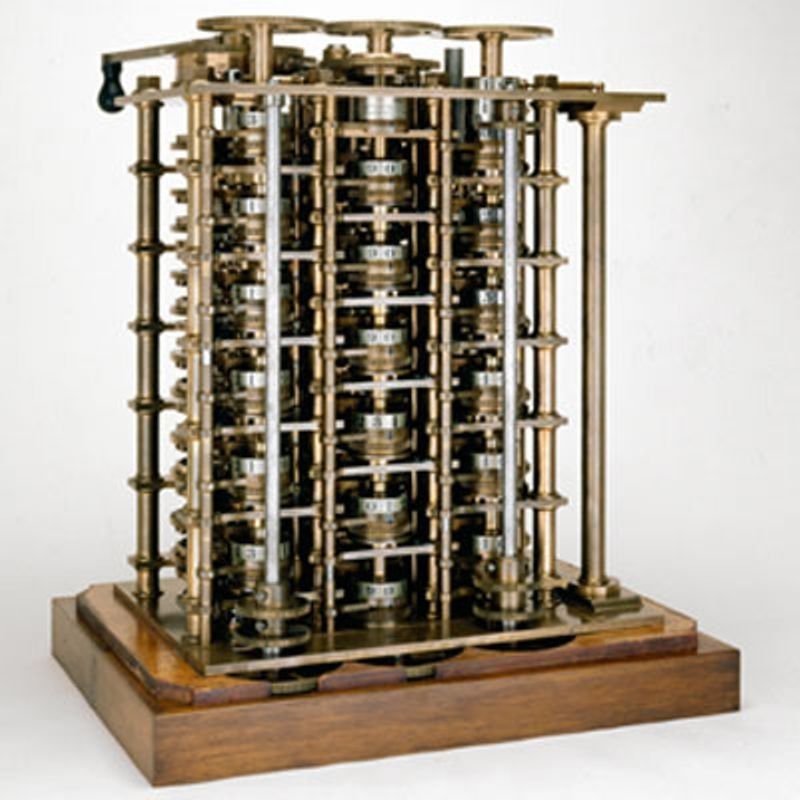
  :root {
    --color-white: #fff;
    --color-lighter-gray: rgba(0,0,0,.05);
    --color-light-gray: #e6e6e6;
    --color-mid-gray: #ccc;
    --color-dark-gray: #444;
    --color-darker-gray: #15171a;
    --color-black: #000;
    --color-primary-text: var(--color-darker-gray);
    --color-secondary-text: rgba(0,0,0,.55);
    --color-border: rgba(0,0,0,.08);
    --color-dark-border: rgba(0,0,0,.55);
    --font-sans: Inter,-apple-system,BlinkMacSystemFont,"Segoe UI","Roboto","Oxygen","Ubuntu","Cantarell","Fira Sans","Droid Sans","Helvetica Neue",sans-serif;
    --font-serif: "EB Garamond",Georgia,Times,serif;
    --font-serif-alt: Georgia,Times,serif;
    --font-mono: "JetBrains Mono",Menlo,Consolas,Monaco,"Liberation Mono","Lucida Console",monospace;
    --container-width: 1320px;
    --container-gap: clamp(24px,1.7032rem + 1.9355vw,48px);
    --grid-gap: 42px
}

:is(.gh-navigation,.gh-footer).has-accent-color,:root.has-light-text {
    --color-lighter-gray: hsla(0,0%,100%,.1);
    --color-darker-gray: #fff;
    --color-secondary-text: hsla(0,0%,100%,.64);
    --color-border: hsla(0,0%,100%,.15);
    --color-dark-border: hsla(0,0%,100%,.5)
}

*,:after,:before {
    box-sizing: border-box
}

* {
    margin: 0
}

html {
    font-size: 62.5%
}

body {
    -webkit-font-smoothing: antialiased;
    -moz-osx-font-smoothing: grayscale;
    line-height: 1.6
}

canvas,img,picture,svg,video {
    display: block;
    height: auto;
    max-width: 100%
}

iframe {
    display: block
}

button,input,select,textarea {
    font: inherit
}

h1,h2,h3,h4,h5,h6,p {
    overflow-wrap: break-word
}

h1,h2,h3,h4,h5,h6 {
    line-height: 1.2
}

body {
    background-color: var(--background-color);
    color: var(--color-primary-text);
    font-family: var(--font-sans);
    font-size: 1.6rem
}

a {
    color: var(--color-darker-gray);
    text-decoration: none
}

a:hover {
    opacity: .8
}

.gh-button {
    align-items: center;
    background-color: var(--ghost-accent-color);
    border: 0;
    border-radius: 100px;
    color: var(--color-white);
    cursor: pointer;
    display: inline-flex;
    font-size: 1.5rem;
    font-weight: 600;
    gap: .4em;
    justify-content: center;
    letter-spacing: -.004em;
    line-height: 1;
    padding: .8em 1.4em
}

.gh-button:hover {
    opacity: .95
}

.gh-icon-button {
    align-items: center;
    background-color: transparent;
    border: 0;
    color: var(--color-darker-gray);
    cursor: pointer;
    display: inline-flex;
    height: 32px;
    justify-content: center;
    outline: none;
    padding: 0;
    width: 32px
}

.gh-icon-button:hover :is(svg,span) {
    opacity: .8
}

.gh-icon-button svg {
    height: 20px;
    width: 20px
}

.gh-form {
    align-items: center;
    background-color: var(--color-lighter-gray);
    border-radius: 40px;
    display: flex;
    font-size: 1.7rem;
    font-weight: 450;
    height: 56px;
    letter-spacing: -.008em;
    max-width: 560px;
    position: relative;
    transition: background-color .2s ease;
    width: 100%
}

.gh-form.success {
    pointer-events: none
}

.gh-form.error {
    box-shadow: 0 0 0 1px red
}

.gh-form:hover {
    background-color: rgba(0,0,0,.065)
}

.gh-footer.has-accent-color .gh-form:hover,.has-light-text .gh-form:hover {
    background-color: hsla(0,0%,100%,.15)
}

.gh-form-input {
    background-color: transparent;
    border: 0;
    border-radius: 40px;
    font-size: inherit;
    height: 100%;
    inset: 0;
    letter-spacing: inherit;
    line-height: 1.1;
    outline: none;
    padding-inline:26px;position: absolute;
    transition: .3s ease-in-out;
    width: 100%
}

.gh-form-input::-moz-placeholder {
    color: rgba(0,0,0,.3)
}

.gh-form-input::placeholder,button.gh-form-input {
    color: rgba(0,0,0,.3)
}

:is(.has-serif-title,.has-mono-title) .gh-form-input {
    padding-inline:20px}

.gh-form.gh-form.success .gh-form-input {
    opacity: .5
}

.gh-footer.has-accent-color .gh-form-input,.has-light-text .gh-form-input {
    color: #fff
}

.gh-footer.has-accent-color .gh-form-input::-moz-placeholder,.has-light-text .gh-form-input::-moz-placeholder {
    color: hsla(0,0%,100%,.55)
}

.gh-footer.has-accent-color .gh-form-input::placeholder,.has-light-text .gh-form-input::placeholder,.has-light-text button.gh-form-input {
    color: hsla(0,0%,100%,.55)
}

.gh-header.is-classic.has-image .gh-form-input {
    color: #15171a
}

.gh-header.is-classic.has-image .gh-form-input::-moz-placeholder {
    color: rgba(0,0,0,.5)
}

.gh-header.is-classic.has-image .gh-form-input::placeholder,.gh-header.is-classic.has-image .gh-form>svg,.gh-header.is-classic.has-image button.gh-form-input {
    color: rgba(0,0,0,.5)
}

button.gh-form-input {
    -webkit-padding-start: 56px;
    color: var(--color-secondary-text);
    cursor: pointer;
    padding-inline-start:56px;text-align: left
}

:is(.has-serif-title,.has-mono-title) button.gh-form-input {
    -webkit-padding-start: 50px;
    padding-inline-start:50px}

.gh-form .gh-button {
    font-size: inherit;
    height: 44px;
    padding-inline:32px;position: absolute;
    right: 6px
}

.gh-form>svg {
    color: var(--color-secondary-text);
    height: 20px;
    left: 22px;
    position: relative;
    width: 20px
}

:is(.has-serif-title,.has-mono-title) .gh-form>svg {
    left: 16px
}

.gh-form .gh-button svg {
    display: none;
    margin-top: 1px;
    position: absolute
}

.gh-form:is(.loading,.success) .gh-button span {
    visibility: hidden
}

.gh-form.loading .gh-button svg:first-of-type,.gh-form.success .gh-button svg:last-of-type {
    display: block
}

.gh-form [data-members-error] {
    font-size: 1.4rem;
    line-height: 1.4;
    margin-top: 10px;
    position: absolute;
    top: 100%;
    width: 100%
}

@media (max-width: 576px) {
    .gh-form {
        font-size:1.6rem
    }

    .gh-form .gh-button {
        padding-inline:12px}

    .gh-form .gh-button span span {
        display: none
    }

    .gh-form .gh-button span svg {
        display: inline;
        height: 20px;
        margin-top: 2px;
        position: static;
        width: 20px
    }
}

.gh-viewport {
    display: flex;
    flex-direction: column;
    min-height: 100vh;
    position: relative
}

.gh-outer {
    padding: 0 max(4vmin,20px)
}

.gh-outer .gh-outer {
    padding: 0
}

.gh-inner {
    margin: 0 auto;
    max-width: var(--container-width);
    width: 100%
}

.gh-main {
    flex-grow: 1
}

.gh-canvas,.kg-width-full.kg-content-wide {
    --main: min(var(--content-width,720px),100% - var(--container-gap) * 2);
    --wide: minmax(0,calc((var(--container-width, 1200px) - var(--content-width, 720px))/2));
    --full: minmax(var(--container-gap),1fr);
    display: grid;
    grid-template-columns: [full-start] var(--full) [wide-start] var(--wide) [main-start] var(--main) [main-end] var(--wide) [wide-end] var(--full) [full-end]
}

.gh-canvas>* {
    grid-column: main
}

.kg-content-wide>div,.kg-width-wide {
    grid-column: wide
}

.kg-width-full {
    grid-column: full
}

.gh-navigation {
    background-color: var(--background-color);
    color: var(--color-darker-gray);
    font-size: 1.5rem;
    font-weight: 550;
    height: 100px
}

.gh-navigation :is(.gh-navigation-logo,a:not(.gh-button),.gh-icon-button) {
    color: inherit
}

.gh-navigation-inner {
    align-items: center;
    -moz-column-gap: 24px;
    column-gap: 24px;
    display: grid;
    grid-auto-flow: row dense;
    height: 100%
}

.gh-navigation-brand {
    line-height: 1
}

.gh-navigation-logo {
    font-size: calc(2.4rem*var(--factor, 1));
    font-weight: 725;
    letter-spacing: -.015em;
    position: relative;
    white-space: nowrap
}

.gh-navigation-logo img {
    max-height: 40px
}

.gh-navigation-menu {
    align-items: center;
    display: flex;
    gap: 24px
}

.gh-navigation .nav {
    align-items: center;
    display: inline-flex;
    gap: 28px;
    list-style: none;
    margin: 0;
    padding: 0;
    white-space: nowrap
}

.gh-navigation .gh-more-toggle {
    font-size: inherit;
    margin: 0 -6px;
    position: relative;
    text-transform: inherit
}

.gh-navigation .gh-more-toggle svg {
    height: 24px;
    width: 24px
}

.gh-navigation-actions {
    align-items: center;
    background-color: var(--background-color);
    display: flex;
    gap: 24px;
    justify-content: flex-end
}

.gh-navigation.has-accent-color .gh-navigation-actions {
    background-color: var(--ghost-accent-color)
}

.gh-navigation-members {
    align-items: center;
    display: flex;
    gap: 20px;
    white-space: nowrap
}

.gh-navigation-members .gh-button {
    font-size: inherit;
    font-weight: 600
}

.gh-search {
    margin-left: -2px;
    margin-right: -2px
}

@media (max-width: 767px) {
    .gh-navigation-logo {
        white-space:normal
    }

    .gh-navigation-members {
        flex-direction: column-reverse;
        gap: 16px;
        width: 100%
    }

    .gh-navigation-actions .gh-search {
        display: none
    }
}

@media (min-width: 768px) {
    .gh-navigation-brand .gh-search {
        display:none
    }

    .gh-navigation:not(.is-dropdown-loaded) .gh-navigation-menu .nav>li {
        opacity: 0
    }
}

.gh-navigation.has-accent-color {
    background-color: var(--ghost-accent-color)
}

.gh-navigation.has-accent-color .gh-button {
    background-color: #fff;
    color: #15171a
}

.gh-navigation.is-left-logo .gh-navigation-inner {
    grid-template-columns: auto 1fr auto
}

@media (min-width: 768px) {
    .gh-navigation.is-left-logo .gh-navigation-logo:not(:has(img)) {
        top:-2px
    }
}

@media (min-width: 992px) {
    .gh-navigation.is-left-logo .gh-navigation-menu {
        margin-left:16px;
        margin-right: 100px
    }
}

.gh-navigation.is-middle-logo .gh-navigation-inner {
    grid-template-columns: 1fr auto 1fr
}

.gh-navigation.is-middle-logo .gh-navigation-brand {
    grid-column-start: 2
}

.gh-navigation.is-middle-logo .gh-navigation-actions {
    gap: 28px
}

@media (min-width: 992px) {
    .gh-navigation.is-middle-logo .gh-navigation-menu {
        margin-right:64px
    }
}

.gh-navigation.is-stacked {
    height: auto;
    position: relative
}

.gh-navigation.is-stacked .gh-navigation-inner {
    grid-template-columns: 1fr auto 1fr
}

.gh-navigation.is-stacked .gh-navigation-brand {
    align-items: center;
    display: flex;
    grid-column-start: 2;
    grid-row-start: 1;
    min-height: 80px
}

@media (max-width: 767px) {
    .gh-navigation.is-stacked .gh-navigation-brand {
        min-height:unset
    }
}

@media (min-width: 992px) {
    .gh-navigation.is-stacked .gh-navigation-inner {
        padding:0
    }

    .gh-navigation.is-stacked .gh-navigation-brand {
        align-items: center;
        display: flex;
        height: 80px
    }

    .gh-navigation.is-stacked .gh-navigation-menu {
        grid-column: 1/4;
        grid-row-start: 2;
        height: 60px;
        justify-content: center;
        margin: 0 48px
    }

    .gh-navigation.is-stacked .gh-navigation-menu:after,.gh-navigation.is-stacked .gh-navigation-menu:before {
        background-color: var(--color-border);
        content: "";
        height: 1px;
        left: 0;
        position: absolute;
        top: 80px;
        width: 100%
    }

    .gh-navigation.is-stacked .gh-navigation-menu:after {
        top: 140px
    }

    .gh-navigation.is-stacked .gh-navigation-actions {
        grid-column: 1/4;
        grid-row-start: 1;
        justify-content: space-between
    }

    .gh-navigation.is-stacked .gh-navigation-actions .gh-search {
        display: flex;
        gap: 10px;
        width: auto
    }
}

.gh-dropdown {
    background-color: #fff;
    border-radius: 5px;
    box-shadow: 0 0 0 1px rgba(0,0,0,.04),0 7px 20px -5px rgba(0,0,0,.15);
    margin-top: 24px;
    opacity: 0;
    padding: 12px 0;
    position: absolute;
    right: -16px;
    text-align: left;
    top: 100%;
    transform: translate3d(0,6px,0);
    transition: opacity .3s,transform .2s;
    visibility: hidden;
    width: 200px;
    z-index: 90
}

.gh-dropdown.is-left {
    left: -16px;
    right: auto
}

.is-dropdown-mega .gh-dropdown {
    -moz-column-gap: 40px;
    column-gap: 40px;
    display: grid;
    grid-auto-flow: column;
    grid-template-columns: 1fr 1fr;
    padding: 20px 32px;
    width: auto
}

.is-dropdown-open .gh-dropdown {
    opacity: 1;
    transform: translateY(0);
    visibility: visible
}

.gh-dropdown li a {
    color: #15171a!important;
    display: block;
    line-height: 1.5;
    padding: 7px 20px;
    white-space: normal
}

.is-dropdown-mega .gh-dropdown li a {
    padding: 8px 0
}

.gh-burger {
    align-items: center;
    display: flex;
    display: none;
    justify-content: center;
    margin-left: 4px;
    margin-right: -7px;
    position: relative
}

.gh-burger svg {
    height: 24px;
    width: 24px
}

.gh-burger svg:last-child,.is-open .gh-burger svg:first-child {
    display: none
}

.is-open .gh-burger svg:last-child {
    display: block
}

@media (max-width: 767px) {
    .gh-burger {
        display:flex
    }

    #gh-navigation {
        height: 64px
    }

    #gh-navigation .gh-navigation-inner {
        gap: 48px;
        grid-template-columns: 1fr;
        grid-template-rows: auto 1fr auto
    }

    #gh-navigation .gh-navigation-brand {
        align-items: center;
        display: grid;
        grid-column-start: 1;
        grid-template-columns: 1fr auto auto;
        height: 64px
    }

    #gh-navigation .gh-navigation-logo {
        font-size: 2.2rem
    }

    #gh-navigation .gh-navigation-actions,#gh-navigation .gh-navigation-menu {
        justify-content: center;
        opacity: 0;
        position: fixed;
        visibility: hidden
    }

    #gh-navigation .gh-navigation-menu {
        transform: translateY(0);
        transition: none
    }

    #gh-navigation .nav {
        align-items: center;
        gap: 20px;
        line-height: 1.4
    }

    #gh-navigation .nav a {
        font-size: 1.75rem;
        font-weight: 600;
        text-transform: none
    }

    #gh-navigation .nav li {
        opacity: 0;
        transform: translateY(-4px)
    }

    #gh-navigation .gh-navigation-actions {
        text-align: center
    }

    #gh-navigation :is(.gh-button,a[data-portal=signin]) {
        opacity: 0;
        transform: translateY(8px)
    }

    #gh-navigation .gh-button {
        font-size: 1.75rem;
        text-transform: none;
        width: 100%
    }

    #gh-navigation a[data-portal=signin] {
        font-size: 1.75rem
    }

    #gh-main {
        transition: opacity .4s
    }

    .is-open#gh-navigation {
        -webkit-overflow-scrolling: touch;
        height: 100%;
        inset: 0;
        overflow-y: scroll;
        position: fixed;
        z-index: 3999999
    }

    .is-open#gh-navigation .gh-navigation-actions,.is-open#gh-navigation .gh-navigation-menu {
        opacity: 1;
        position: static;
        visibility: visible
    }

    .is-open#gh-navigation .nav {
        display: flex;
        flex-direction: column
    }

    .is-open#gh-navigation .nav li {
        opacity: 1;
        transform: translateY(0);
        transition: transform .2s,opacity .2s
    }

    .is-open#gh-navigation .gh-navigation-actions {
        align-items: center;
        bottom: 0;
        display: inline-flex;
        flex-direction: column;
        gap: 12px;
        left: 0;
        padding: var(--container-gap) 0;
        position: sticky;
        right: 0
    }

    .is-open#gh-navigation :is(.gh-button,a[data-portal=signin]) {
        opacity: 1;
        transform: translateY(0);
        transition: transform .4s,opacity .4s;
        transition-delay: .2s
    }

    .is-open#gh-navigation a[data-portal=signin] {
        transition-delay: .4s
    }

    .is-open#gh-main {
        opacity: 0
    }
}

.gh-card {
    position: relative
}

.gh-card-link {
    display: flex;
    flex-direction: column;
    gap: 20px
}

.gh-card-link:hover {
    opacity: 1
}

.gh-card-image {
    aspect-ratio: 16/9;
    flex-shrink: 0;
    position: relative
}

.gh-card-image img {
    height: 100%;
    inset: 0;
    -o-object-fit: cover;
    object-fit: cover;
    position: absolute;
    width: 100%
}

.gh-card-wrapper {
    flex-grow: 1
}

.gh-card-tag {
    display: none;
    font-size: 1.2rem;
    font-weight: 500;
    letter-spacing: .01em;
    margin-bottom: 4px;
    text-transform: uppercase
}

.gh-card-title {
    font-size: calc(1.9rem*var(--factor, 1));
    font-weight: 725;
    letter-spacing: -.014em;
    line-height: 1.3
}

.gh-card-link:hover .gh-card-title {
    opacity: .8
}

.gh-card-excerpt {
    -webkit-line-clamp: 2;
    -webkit-box-orient: vertical;
    display: -webkit-box;
    font-size: 1.45rem;
    line-height: 1.4;
    margin-top: 8px;
    overflow-y: hidden
}

.gh-card-meta {
    align-items: center;
    color: var(--color-secondary-text);
    display: flex;
    flex-wrap: wrap;
    font-size: 1.25rem;
    font-weight: 500;
    gap: 4px;
    letter-spacing: -.004em;
    line-height: 1.05;
    padding-bottom: 1px
}

.gh-card-meta svg {
    height: 16px;
    margin-right: 2px;
    margin-top: -2px;
    width: 16px
}

.gh-card-meta:not(:empty) {
    margin-top: 12px
}

.gh-card-author+.gh-card-date:before {
    content: "—";
    margin-right: 4px
}

.gh-header {
    margin-top: 40px;
    position: relative
}

.gh-header-inner {
    overflow: hidden;
    position: relative
}

.gh-header.is-magazine .gh-header-inner {
    display: grid;
    gap: var(--grid-gap);
    grid-template-columns: repeat(16,1fr)
}

.gh-header.is-magazine .gh-header-inner>div {
    display: flex;
    flex-direction: column;
    gap: var(--grid-gap);
    grid-row: 1
}

.gh-header.is-magazine .gh-header-left {
    grid-column: 1/span 4
}

.gh-header.is-magazine .gh-header-inner>.gh-card {
    grid-column: 5/span 8;
    position: relative
}

.gh-header.is-magazine .gh-header-right {
    grid-column: 13/-1
}

.gh-header.is-magazine .gh-header-inner>.gh-card .gh-card-link {
    gap: 28px
}

.gh-header.is-magazine .gh-header-inner>.gh-card .gh-card-image {
    aspect-ratio: 1.618033
}

.gh-header.is-magazine .gh-header-inner>.gh-card .gh-card-tag {
    display: block;
    margin-bottom: 12px
}

.gh-header.is-magazine .gh-header-inner>.gh-card .gh-card-title {
    font-size: clamp(2.8rem,1.36vw + 2.25rem,4rem);
    font-weight: 700;
    letter-spacing: -.022em;
    line-height: 1.1
}

.gh-header.is-magazine .gh-header-inner>.gh-card .gh-card-excerpt {
    font-size: 1.8rem;
    letter-spacing: -.02em;
    margin-top: clamp(12px,.45vw + 10.18px,16px);
    max-width: 90%
}

.gh-header.is-magazine .gh-header-inner>.gh-card .gh-card-meta:not(:empty) {
    margin-top: 14px
}

.gh-header.is-magazine :is(.gh-header-left,.gh-header-right) .gh-card:last-child .gh-card-image {
    display: none
}

.gh-header.is-magazine .gh-header-inner>div .gh-card-excerpt {
    display: none
}

.gh-header.is-magazine .gh-header-inner>.gh-card:after,.gh-header.is-magazine .gh-header-inner>.gh-card:before {
    background-color: var(--color-border);
    content: "";
    height: 100%;
    left: calc(var(--grid-gap)/-2);
    position: absolute;
    top: 0;
    width: 1px
}

.gh-header.is-magazine .gh-header-inner>.gh-card:after {
    left: auto;
    right: calc(var(--grid-gap)/-2)
}

.gh-header.is-magazine .gh-header-inner>div .gh-card+.gh-card:before {
    background-color: var(--color-border);
    content: "";
    height: 1px;
    left: 0;
    position: absolute;
    top: calc(var(--grid-gap)/-2);
    width: 100%
}

@media (max-width: 1199px) {
    .gh-header.is-magazine .gh-header-inner {
        grid-template-columns:repeat(12,1fr)
    }

    .gh-header.is-magazine .gh-header-inner>.gh-card {
        grid-column: 1/span 8
    }

    .gh-header.is-magazine .gh-header-left {
        grid-column: 9/-1
    }

    .gh-header.is-magazine .gh-header-inner>div.gh-header-right {
        flex-direction: row;
        grid-column: 1/-1;
        grid-row: 2
    }

    .gh-header.is-magazine .gh-header-right .gh-card {
        flex: 1
    }

    .gh-header.is-magazine .gh-header-right .gh-card:last-child .gh-card-image {
        display: block
    }

    .gh-header.is-magazine .gh-header-right {
        position: relative
    }

    .gh-header.is-magazine .gh-header-right:before {
        background-color: var(--color-border);
        content: "";
        height: 1px;
        left: 0;
        position: absolute;
        top: calc(var(--grid-gap)/-2);
        width: 100%
    }

    .gh-header.is-magazine .gh-header-right .gh-card:before {
        display: none
    }

    .gh-header.is-magazine .gh-header-right .gh-card:after {
        background-color: var(--color-border);
        content: "";
        height: 100%;
        position: absolute;
        right: calc(var(--grid-gap)/-2);
        top: 0;
        width: 1px
    }
}

@media (max-width: 991px) {
    .gh-header.is-magazine .gh-header-left .gh-card:nth-child(2) .gh-card-image {
        display:none
    }
}

@media (max-width: 767px) {
    .gh-header.is-magazine .gh-header-inner {
        display:flex;
        flex-direction: column;
        gap: var(--grid-gap)
    }

    .gh-header.is-magazine .gh-header-inner>div.gh-header-right {
        flex-direction: column
    }

    .gh-header.is-magazine .gh-card-image {
        display: block!important
    }

    .gh-header.is-magazine .gh-card:before {
        background-color: var(--color-border);
        content: "";
        display: block!important;
        height: 1px;
        left: 0;
        position: absolute;
        top: calc(var(--grid-gap)/-2);
        width: 100%
    }
}

.gh-header.is-highlight .gh-header-inner {
    display: grid;
    gap: var(--grid-gap);
    grid-template-columns: repeat(16,1fr)
}

.gh-header.is-highlight .gh-header-left {
    grid-column: span 8;
    position: relative
}

.gh-header.is-highlight .gh-header-left .gh-card {
    grid-column: span 8;
    grid-row: span 3
}

.gh-header.is-highlight .gh-header-left .gh-card .gh-card-link {
    gap: 28px
}

.gh-header.is-highlight .gh-header-left .gh-card .gh-card-image {
    aspect-ratio: 3/2
}

.gh-header.is-highlight .gh-header-left .gh-card .gh-card-tag {
    display: block;
    margin-bottom: 12px
}

.gh-header.is-highlight .gh-header-left .gh-card .gh-card-title {
    font-size: clamp(2.8rem,1.36vw + 2.25rem,4rem);
    font-weight: 700;
    letter-spacing: -.022em;
    line-height: 1.1
}

.gh-header.is-highlight .gh-header-left .gh-card .gh-card-excerpt {
    font-size: 1.8rem;
    margin-top: clamp(12px,.45vw + 10.18px,16px)
}

.gh-header.is-highlight .gh-header-left .gh-card .gh-card-meta:not(:empty) {
    margin-top: 14px
}

.gh-header.is-highlight .gh-header-middle {
    display: flex;
    flex-direction: column;
    gap: var(--grid-gap);
    grid-column: 9/span 4;
    position: relative
}

.gh-header.is-highlight .gh-header-middle .gh-card .gh-card-excerpt,.gh-header.is-highlight .gh-header-middle .gh-card:last-child .gh-card-image {
    display: none
}

.gh-header.is-highlight .gh-header-right {
    grid-column: 13/-1
}

.gh-header.is-highlight .gh-featured {
    margin-top: 0;
    padding: 0
}

.gh-header.is-highlight .gh-featured-feed {
    display: flex;
    flex-direction: column
}

.gh-header.is-highlight .gh-featured-feed .gh-card-title {
    font-size: clamp(1.4rem,.23vw + 1.31rem,1.6rem)
}

.gh-header.is-highlight .gh-header-left:after,.gh-header.is-highlight .gh-header-middle:after {
    background-color: var(--color-border);
    content: "";
    height: 100%;
    position: absolute;
    right: calc(var(--grid-gap)/-2);
    top: 0;
    width: 1px
}

.gh-header.is-highlight .gh-card:before {
    background-color: var(--color-border);
    content: "";
    height: 1px;
    left: 0;
    position: absolute;
    top: calc(var(--grid-gap)/-2);
    width: 100%
}

.gh-header.is-highlight .gh-featured .gh-card:first-child:before {
    display: none
}

@media (max-width: 1199px) {
    .gh-header.is-highlight .gh-header-inner {
        grid-template-columns:repeat(9,1fr)
    }

    .gh-header.is-highlight .gh-header-left {
        grid-column: span 6
    }

    .gh-header.is-highlight .gh-header-middle {
        grid-column: 7/-1
    }

    .gh-header.is-highlight .gh-header-right {
        grid-column: 1/-1
    }

    .gh-header.is-highlight .gh-featured-feed {
        display: grid;
        grid-template-columns: repeat(3,1fr)
    }

    .gh-header.is-highlight .gh-featured-feed .gh-card:before {
        width: calc(100% + var(--grid-gap))
    }

    .gh-header.is-highlight .gh-featured-feed .gh-card:after {
        background-color: var(--color-border);
        content: "";
        height: 100%;
        left: calc(var(--grid-gap)/-2);
        position: absolute;
        top: 0;
        width: 1px
    }
}

@media (max-width: 991px) {
    .gh-header.is-highlight .gh-header-middle .gh-card:nth-child(2) .gh-card-image {
        display:none
    }
}

@media (max-width: 767px) {
    .gh-header.is-highlight .gh-header-inner {
        display:flex;
        flex-direction: column
    }

    .gh-header.is-highlight .gh-featured-feed {
        display: flex
    }

    .gh-header.is-highlight .gh-card-image {
        display: block!important
    }

    .gh-header.is-highlight .gh-header-middle .gh-card .gh-card-excerpt {
        display: -webkit-box
    }
}

.gh-header.is-classic {
    display: flex;
    margin-top: 0;
    padding-block:160px}

.gh-header.is-classic .gh-header-inner {
    align-items: center;
    display: flex;
    flex-direction: column;
    gap: 48px;
    margin: auto;
    max-width: 1020px;
    overflow: unset;
    text-align: center
}

.gh-header.is-classic .gh-header-title {
    font-size: calc(clamp(3rem, 1.82vw + 2.27rem, 4.6rem)*var(--factor, 1));
    letter-spacing: -.028em;
    line-height: 1.1
}

.gh-header.is-classic.has-image {
    margin-top: 0
}

.gh-header.is-classic.has-image:before {
    background-color: var(--color-black);
    content: "";
    inset: 0;
    opacity: .3;
    position: absolute;
    transition: opacity 1.5s ease
}

.gh-header.is-classic.has-image .gh-header-inner {
    color: #fff
}

.gh-header.is-classic.has-image .gh-header-image {
    height: 100%;
    inset: 0;
    -o-object-fit: cover;
    object-fit: cover;
    position: absolute;
    width: 100%;
    z-index: -1
}

.gh-header.is-classic.has-image .gh-form {
    background-color: #fff
}

.gh-cta {
    display: none;
    margin-top: max(4vw,40px)
}

.gh-header:is(.is-highlight,.is-magazine)+.gh-cta {
    display: block
}

.gh-cta-inner {
    align-items: center;
    background-color: var(--color-lighter-gray);
    display: flex;
    flex-direction: column;
    gap: 36px;
    overflow: hidden;
    padding: clamp(48px,3.64vw + 33.45px,80px) clamp(40px,2.73vw + 29.09px,64px);
    position: relative;
    text-align: center
}

.gh-cta-content {
    max-width: 640px
}

.gh-cta-title {
    font-size: clamp(2.8rem,1.36vw + 2.25rem,4rem);
    font-weight: 700;
    letter-spacing: -.021em;
    line-height: 1.1
}

.gh-cta-description {
    font-size: 1.8rem;
    letter-spacing: -.015em;
    line-height: 1.4;
    margin-top: 12px
}

.gh-featured {
    margin-top: 100px
}

.gh-navigation+.gh-featured {
    margin-top: 64px
}

.gh-header.is-classic:not(.has-image)+.gh-featured {
    margin-top: 0
}

.gh-featured-inner {
    overflow: hidden
}

.gh-featured-title {
    border-bottom: 1px solid var(--color-border);
    font-size: 1.2rem;
    font-weight: 550;
    letter-spacing: .025em;
    margin-bottom: 20px;
    padding-bottom: 12px;
    text-transform: uppercase
}

.gh-featured-feed {
    display: grid;
    gap: var(--grid-gap);
    grid-template-columns: repeat(4,1fr)
}

.gh-featured-feed .gh-card {
    container-name: featured-card;
    container-type: inline-size
}

.gh-featured-feed .gh-card-link {
    align-items: flex-start;
    display: flex;
    flex-direction: row-reverse
}

.gh-featured-feed .gh-card-image {
    aspect-ratio: 1;
    width: 72px
}

@container featured-card (width < 240px) {
    .gh-featured-feed .gh-card-image {
        display: none
    }
}

@container featured-card (240px <= width <= 270px) {
    .gh-featured-feed .gh-card-image {
        width: 64px
    }
}

.gh-featured-feed .gh-card-wrapper {
    container-name: featured-card-wrapper;
    container-type: inline-size
}

.gh-featured-feed .gh-card-title {
    font-size: 1.6rem;
    font-weight: 650;
    letter-spacing: -.011em
}

@container featured-card-wrapper (width < 170px) {
    .gh-featured-feed .gh-card-title {
        font-size: 1.6rem
    }
}

.gh-featured-feed .gh-card-excerpt {
    display: none
}

.gh-featured-feed .gh-card-meta:not(:empty) {
    margin-top: 10px
}

.gh-featured-feed .gh-card:before {
    background-color: var(--color-border);
    content: "";
    height: 100%;
    left: calc(var(--grid-gap)/-2);
    position: absolute;
    top: 0;
    width: 1px
}

@media (max-width: 1199px) {
    .gh-viewport>.gh-featured .gh-featured-feed {
        grid-template-columns:repeat(3,1fr)
    }

    .gh-viewport>.gh-featured .gh-featured-feed .gh-card:nth-child(4) {
        display: none
    }
}

@media (max-width: 767px) {
    .gh-viewport>.gh-featured .gh-featured-feed {
        display:flex;
        flex-direction: column
    }
}

.gh-container {
    flex-grow: 1;
    margin-top: 64px
}

.gh-container-inner {
    -moz-column-gap: var(--grid-gap);
    column-gap: var(--grid-gap);
    display: grid;
    grid-template-columns: repeat(16,1fr)
}

:is(.gh-featured,.gh-cta)+.gh-container {
    margin-top: max(4vw,40px)
}

.gh-header.is-classic:not(.has-image)+.gh-container {
    margin-top: 0
}

.gh-navigation+.gh-container .gh-container-title,:is(.paged,.tag-template,.author-template) .gh-container:not(.has-sidebar) .gh-container-title {
    display: none
}

.gh-more {
    display: none;
    font-size: calc(1.9rem*var(--factor, 1));
    font-weight: 725;
    grid-column: 1/-1;
    letter-spacing: -.014em;
    margin-top: 48px
}

.gh-container.has-sidebar .gh-more {
    grid-column: span 12
}

.home-template .gh-feed:has(>:nth-child(12):last-child)~.gh-more {
    display: block
}

.gh-more a {
    align-items: center;
    display: flex;
    gap: 4px
}

.gh-more svg {
    height: 18px;
    margin-top: -1px;
    width: 18px
}

.has-serif-title .gh-more svg {
    margin-top: 0
}

.gh-container.has-sidebar .gh-main {
    grid-column: 1/span 12;
    position: relative
}

.gh-container.has-sidebar .gh-sidebar {
    grid-column: 13/-1
}

.gh-container.has-sidebar .gh-main:after {
    background-color: var(--color-border);
    content: "";
    height: 100%;
    position: absolute;
    right: calc(var(--grid-gap)/-2);
    top: 0;
    width: 1px
}

.gh-container:not(.has-sidebar) :is(.gh-container-title,.gh-main,.gh-more) {
    grid-column: 3/span 12
}

.gh-container.is-list.no-image:not(.has-sidebar) :is(.gh-container-title,.gh-main,.gh-more) {
    grid-column: 4/span 10
}

.gh-header:is(.is-highlight,.is-magazine)~.gh-container.is-grid:not(.has-sidebar) :is(.gh-container-title,.gh-main,.gh-more) {
    grid-column: 1/-1
}

@media (max-width: 1199px) {
    .gh-container-inner {
        display:block;
        overflow: hidden
    }

    .gh-container.has-sidebar .gh-sidebar {
        display: none
    }
}

.gh-container-title {
    border-bottom: 1px solid var(--color-border);
    font-size: 1.2rem;
    font-weight: 550;
    grid-column: 1/-1;
    letter-spacing: .025em;
    margin-bottom: calc(var(--grid-gap)/2);
    padding-bottom: 12px;
    text-transform: uppercase
}

.gh-container:not(:has(.gh-card)) .gh-container-title {
    display: none
}

.gh-container .gh-feed {
    gap: var(--grid-gap)
}

.gh-container .gh-card-meta:not(:empty) {
    margin-top: 16px
}

.gh-container.is-list .gh-feed {
    container-name: list-feed;
    container-type: inline-size;
    display: flex;
    flex-direction: column
}

.gh-container.is-list .gh-card-link {
    align-items: center;
    flex-direction: row;
    gap: 24px
}

.gh-container.is-list .no-image .gh-card-link {
    padding-block:20px}

.gh-container.is-list .gh-card-image {
    aspect-ratio: 1.618033;
    flex-shrink: 0;
    width: 220px
}

@container list-feed (width < 600px) {
    .gh-container.is-list .gh-card-image {
        width: 160px
    }
}

.gh-container.is-list .gh-card:not(.no-image) .gh-card-wrapper {
    max-width: 600px
}

.gh-container.is-list .gh-card-title {
    --factor: 1.05
}

.gh-container.is-list .no-image .gh-card-title {
    --factor: 1.2
}

.gh-container.is-list .gh-card-excerpt {
    margin-top: 6px
}

.gh-container.is-list .gh-card+.gh-card:before {
    background-color: var(--color-border);
    content: "";
    height: 1px;
    left: 0;
    position: absolute;
    top: calc(var(--grid-gap)/-2);
    width: 100%
}

.home-template .gh-container.is-list .gh-card:first-child:before {
    display: none
}

@media (max-width: 767px) {
    .gh-container.is-list .gh-card-link {
        align-items:flex-start;
        flex-direction: column
    }

    .gh-container.is-list .gh-card-image {
        width: 100%
    }
}

.gh-container.is-grid .gh-feed {
    display: grid;
    grid-template-columns: repeat(auto-fit,minmax(248px,1fr));
    overflow: hidden;
    row-gap: calc(var(--grid-gap)*1.5)
}

.gh-container.is-grid .gh-card:before {
    height: 1px;
    right: calc(var(--grid-gap)/-2);
    top: calc(var(--grid-gap)/-2)
}

.gh-container.is-grid .gh-card:after,.gh-container.is-grid .gh-card:before {
    background-color: var(--color-border);
    content: "";
    left: calc(var(--grid-gap)/-2);
    position: absolute
}

.gh-container.is-grid .gh-card:after {
    height: 100%;
    top: 0;
    width: 1px
}

@media (max-width: 767px) {
    .gh-container.is-grid .gh-feed {
        grid-template-columns:repeat(2,1fr)
    }
}

@media (max-width: 576px) {
    .gh-container.is-grid .gh-feed {
        display:flex;
        flex-direction: column
    }
}

.gh-container.is-list.no-image .gh-card-image {
    display: none
}

.gh-sidebar-inner {
    position: sticky;
    top: calc(var(--grid-gap)/2)
}

.gh-sidebar-title {
    border-bottom: 1px solid var(--color-border);
    font-size: 1.2rem;
    font-weight: 550;
    grid-column: 1/-1;
    letter-spacing: .025em;
    margin-bottom: calc(var(--grid-gap)/2);
    padding-bottom: 12px;
    text-transform: uppercase
}

.gh-about {
    align-items: center;
    background-color: var(--color-lighter-gray);
    display: flex;
    flex-direction: column;
    justify-content: center;
    min-height: 380px;
    padding: 48px 24px;
    text-align: center
}

.gh-about-icon {
    border-radius: 50%;
    height: 60px;
    margin-bottom: 24px;
    width: 60px
}

.gh-about-title {
    font-size: calc(2.4rem*var(--factor, 1));
    font-weight: 700;
    letter-spacing: -.019em
}

.gh-about-description {
    font-size: 1.45rem;
    line-height: 1.4;
    margin-top: 12px
}

.gh-about .gh-button {
    margin-top: 32px
}

.gh-recommendations {
    margin-top: 48px
}

.gh-recommendations .recommendations {
    display: flex;
    flex-direction: column;
    gap: 26px;
    list-style-type: none;
    margin: 0;
    padding: 0
}

.gh-recommendations .recommendation:first-child {
    margin-top: 4px
}

.gh-recommendations .recommendation a {
    display: grid;
    gap: 4px 12px;
    grid-template-columns: 24px auto
}

.gh-recommendations .recommendation a:hover {
    opacity: 1
}

.gh-recommendations .recommendation-favicon {
    border-radius: 4px;
    grid-row: span 2;
    width: 100%
}

.gh-recommendations .recommendation-title {
    font-size: 1.5rem;
    font-weight: 650;
    letter-spacing: -.009em;
    margin-top: -2px
}

.gh-recommendations .recommendation a:hover .recommendation-title {
    opacity: .8
}

.gh-recommendations .recommendation-url {
    color: var(--color-secondary-text);
    font-size: 1.4rem;
    line-height: 1.25;
    order: 1;
    overflow: hidden;
    text-overflow: ellipsis
}

.gh-recommendations .recommendation-description {
    -webkit-line-clamp: 2;
    -webkit-box-orient: vertical;
    color: var(--color-secondary-text);
    display: -webkit-box;
    display: none;
    font-size: 1.4rem;
    grid-column: 2;
    line-height: 1.4;
    overflow-y: hidden
}

.gh-recommendations button {
    align-items: center;
    background-color: transparent;
    border: 0;
    cursor: pointer;
    display: inline-flex;
    font-size: 1.2rem;
    font-weight: 550;
    gap: 2px;
    letter-spacing: .025em;
    margin-top: 24px;
    padding: 0;
    text-transform: uppercase
}

.gh-recommendations button svg {
    margin-top: -1px;
    width: 12px
}

.gh-recommendations button:hover {
    opacity: .8
}

.gh-article {
    --container-width: 1120px;
    word-break: break-word
}

.gh-article-header {
    margin: clamp(40px,3.64vw + 25.45px,72px) 0 40px
}

.gh-article-tag {
    color: var(--ghost-accent-color);
    font-size: 1.3rem;
    font-weight: 500;
    letter-spacing: .01em;
    margin-bottom: 12px;
    text-transform: uppercase
}

.gh-article-title {
    font-size: calc(clamp(3.4rem, 1.36vw + 2.85rem, 4.6rem)*var(--factor, 1));
    letter-spacing: -.022em;
    line-height: 1.1
}

.gh-article-excerpt {
    font-size: clamp(1.5rem,.45vw + 1.32rem,1.9rem);
    letter-spacing: -.018em;
    line-height: 1.4;
    margin-top: clamp(12px,.45vw + 10.18px,16px);
    max-width: 720px
}

.gh-article-meta {
    align-items: center;
    display: flex;
    gap: 8px;
    margin-left: 6px;
    margin-top: 20px
}

.gh-article-author-image {
    display: flex;
    margin-right: 8px
}

.gh-article-author-image a {
    background-color: var(--color-light-gray);
    border: 3px solid var(--background-color);
    border-radius: 50%;
    height: 56px;
    margin: 0 -8px;
    overflow: hidden;
    position: relative;
    width: 56px
}

.gh-article-author-image a:first-child {
    z-index: 10
}

.gh-article-author-image a:nth-child(2) {
    z-index: 9
}

.gh-article-author-image a:nth-child(3) {
    z-index: 8
}

.gh-article-author-image :is(img,svg) {
    height: 100%;
    inset: 0;
    -o-object-fit: cover;
    object-fit: cover;
    position: absolute;
    width: 100%
}

.gh-article-meta-wrapper {
    display: flex;
    flex-direction: column;
    gap: 4px
}

.gh-article-author-name {
    font-size: 1.6rem;
    font-weight: 650;
    letter-spacing: -.013em
}

.gh-article-meta-content {
    color: var(--color-secondary-text);
    font-size: 1.35rem;
    font-weight: 500;
    letter-spacing: -.006em;
    line-height: 1.2
}

.gh-article-image {
    grid-column: wide;
    margin-top: 40px
}

.gh-article-image img {
    width: 100%
}

.page-template .gh-article-header {
    margin-block:72px 32px}

.page-template .gh-content:only-child>:first-child:not(.kg-width-full) {
    margin-top: 64px
}

.page-template .gh-content>:last-child:not(.kg-width-full) {
    margin-bottom: 6vw
}

.page-template .gh-footer {
    margin-top: 0
}

.gh-content {
    font-size: var(--content-font-size,1.7rem);
    letter-spacing: -.01em
}

.gh-content>*+* {
    margin-bottom: 0;
    margin-top: calc(28px*var(--content-spacing-factor, 1))
}

.gh-content>.kg-width-full+.kg-width-full:not(.kg-width-full.kg-card-hascaption+.kg-width-full) {
    margin-top: 0
}

.gh-content>[id]:not(:first-child) {
    margin-top: calc(56px*var(--content-spacing-factor, 1))
}

.post-template .gh-content.drop-cap>p:first-of-type:first-letter {
    float: left;
    font-size: 3.1em;
    font-weight: 700;
    line-height: 1;
    margin: 0 .2em 0 -1px
}

.has-serif-body.post-template .gh-content.drop-cap>p:first-of-type:first-letter {
    font-size: 3.2em
}

.gh-content>[id]+p {
    margin-top: calc(12px*var(--content-spacing-factor, 1))
}

.gh-content>:is(hr,blockquote,iframe) {
    margin-top: calc(48px*var(--content-spacing-factor, 1))!important;
    position: relative
}

.gh-content>:is(hr,blockquote,iframe)+* {
    margin-top: calc(48px*var(--content-spacing-factor, 1))!important
}

.gh-content h1 {
    font-size: calc(2.2em*var(--factor, 1));
    letter-spacing: -.02em
}

.gh-content h2 {
    font-size: calc(1.6em*var(--factor, 1));
    letter-spacing: -.02em
}

.gh-content h3 {
    font-size: calc(1.3em*var(--factor, 1));
    letter-spacing: -.017em
}

.gh-content a {
    color: var(--ghost-accent-color);
    text-decoration: underline
}

.gh-content .kg-callout-card .kg-callout-text,.gh-content .kg-toggle-card .kg-toggle-content>:is(ul,ol,p) {
    font-size: .95em
}

.has-serif-body .gh-content .kg-callout-text,.has-serif-body .gh-content .kg-toggle-content>ol,.has-serif-body .gh-content .kg-toggle-content>p,.has-serif-body .gh-content .kg-toggle-content>ul,.has-serif-body .gh-content>blockquote,.has-serif-body .gh-content>dl,.has-serif-body .gh-content>ol,.has-serif-body .gh-content>p,.has-serif-body .gh-content>ul {
    font-family: var(--font-serif-alt)
}

.gh-content :is(ul,ol) {
    padding-left: 28px
}

.gh-content :is(li+li,li :is(ul,ol)) {
    margin-top: 8px
}

.gh-content ol ol li {
    list-style-type: lower-alpha
}

.gh-content ol ol ol li {
    list-style-type: lower-roman
}

.gh-content hr {
    background-color: var(--color-border);
    border: 0;
    height: 1px;
    width: 100%
}

.gh-content .gh-table {
    -webkit-overflow-scrolling: touch;
    overflow-x: scroll
}

.gh-content .gh-table table {
    border-collapse: collapse;
    border-spacing: 0;
    font-family: var(--font-sans);
    font-size: 1.5rem;
    vertical-align: top;
    white-space: nowrap;
    width: 100%
}

.gh-content .gh-table table th {
    color: var(--color-darkgrey);
    font-size: 1.2rem;
    font-weight: 700;
    letter-spacing: .2px;
    text-align: left;
    text-transform: uppercase
}

.gh-content .gh-table table :is(th,td),.gh-content .gh-table table td {
    border-bottom: 1px solid var(--color-border);
    padding: 6px 12px
}

.gh-content .gh-table table :is(th,td):first-child {
    padding-left: 0
}

.gh-content .gh-table table :is(th,td):last-child {
    padding-right: 0
}

.gh-content pre {
    border-radius: 6px;
    font-size: 1.5rem;
    line-height: 1.5em;
    overflow: auto;
    padding: 16px
}

.gh-content :not(pre)>code,.gh-content pre {
    background: var(--color-lighter-gray);
    font-family: var(--font-mono)
}

.gh-content :not(pre)>code {
    border-radius: .25em;
    font-size: .95em;
    font-weight: 400;
    line-height: 1em;
    padding: .15em .4em;
    vertical-align: baseline
}

.gh-content :not(.kg-card):not(table):not([id])+:is(.kg-card,table) {
    margin-top: calc(48px*var(--content-spacing-factor, 1))
}

.gh-content :is(.kg-card,table)+:not(.kg-card):not(table):not([id]) {
    margin-top: calc(48px*var(--content-spacing-factor, 1))
}

.gh-content .kg-card.kg-width-full+:not(.kg-card):not([id]),.gh-content :not(.kg-card):not([id])+.kg-card.kg-width-full {
    margin-top: calc(68px*var(--content-spacing-factor, 1))
}

.kg-image {
    margin-left: auto;
    margin-right: auto
}

.kg-embed-card {
    align-items: center;
    display: flex;
    flex-direction: column;
    width: 100%
}

.kg-gallery-image,.kg-image[width][height] {
    cursor: pointer
}

.kg-gallery-image a:hover,.kg-image-card a:hover {
    opacity: 1!important
}

.kg-card.kg-toggle-card .kg-toggle-heading-text {
    font-size: 2rem;
    font-weight: 700
}

.has-serif-title .kg-toggle-card .kg-toggle-heading-text {
    font-family: var(--font-serif)
}

.has-mono-title .kg-toggle-card .kg-toggle-heading-text {
    font-family: var(--font-mono)
}

.kg-callout-card.kg-card {
    border-radius: .25em
}

.kg-callout-card-accent a {
    text-decoration: underline
}

blockquote:not([class]) {
    border-left: 4px solid var(--ghost-accent-color);
    padding-left: 2rem
}

blockquote.kg-blockquote-alt {
    color: var(--color-secondary-text);
    font-style: normal;
    font-weight: 400
}

.kg-card.kg-button-card .kg-btn {
    font-size: 1em;
    height: unset;
    line-height: 1.2em;
    padding: .6em 1.2em;
    text-align: center
}

.has-serif-title .kg-card.kg-header-card h2.kg-header-card-header {
    font-family: var(--font-serif)
}

.has-mono-title .kg-card.kg-header-card h2.kg-header-card-header {
    font-family: var(--font-mono)
}

.has-serif-body .kg-header-card h3.kg-header-card-subheader {
    font-family: var(--font-serif)
}

.kg-bookmark-card .kg-bookmark-container {
    border-radius: .25em!important
}

.kg-bookmark-card .kg-bookmark-container:hover {
    opacity: 1
}

.kg-bookmark-card a.kg-bookmark-container,.kg-bookmark-card a.kg-bookmark-container:hover {
    background: var(--background-color)!important;
    color: var(--color-darker-gray)!important
}

.kg-bookmark-card .kg-bookmark-content {
    padding: 1.15em
}

.kg-bookmark-card .kg-bookmark-title {
    font-size: .9em
}

.kg-bookmark-card .kg-bookmark-description {
    font-size: .8em;
    margin-top: .3em;
    max-height: none
}

.kg-bookmark-card .kg-bookmark-metadata {
    font-size: .8em
}

.kg-bookmark-card .kg-bookmark-thumbnail img {
    border-radius: 0 .2em .2em 0
}

.kg-product-card.kg-card .kg-product-card-image {
    margin-bottom: 12px
}

.kg-product-card.kg-card a.kg-product-card-button {
    height: 2.8em;
    margin-top: 12px
}

.has-serif-title .kg-product-card.kg-card .kg-product-card-title {
    font-family: var(--font-serif)
}

.has-mono-title .kg-product-card.kg-card .kg-product-card-title {
    font-family: var(--font-mono)
}

.has-serif-body .kg-product-card-description :is(p,ul,ol) {
    font-family: var(--font-serif-alt)
}

.kg-file-card.kg-card .kg-file-card-container {
    padding: .6em
}

.kg-file-card.kg-card .kg-file-card-contents {
    margin: 4px 8px 6px
}

.kg-file-card.kg-card .kg-file-card-metadata {
    font-size: .9em
}

.kg-file-card.kg-card .kg-file-card-filesize:before {
    margin-left: 6px;
    margin-right: 6px
}

figcaption {
    font-size: 1.4rem;
    margin-top: 12px;
    text-align: center
}

.kg-card.kg-width-full figcaption {
    padding: 0 16px
}

figcaption a {
    color: var(--ghost-accent-color);
    text-decoration: underline
}

.gh-comments {
    margin-top: 48px
}

.post-template .gh-container {
    margin-top: 120px
}

.post-template .gh-container-inner {
    display: block
}

.post-template .gh-container.is-grid .gh-feed {
    grid-template-columns: repeat(4,1fr)
}

.post-template .gh-container .gh-container-title {
    display: block
}

.gh-archive {
    display: grid;
    gap: var(--grid-gap);
    grid-template-columns: repeat(16,1fr);
    margin-block:80px 24px}

.gh-archive.has-image {
    margin-top: 48px
}

.gh-archive-inner {
    border-bottom: 1px solid var(--color-border);
    display: grid;
    gap: var(--grid-gap);
    grid-column: 1/-1;
    grid-template-columns: 1fr 1fr;
    padding-bottom: clamp(40px,2.73vw + 29.09px,64px)
}

.gh-archive.has-image .gh-archive-inner {
    align-items: center;
    grid-column: 1/-1
}

.gh-archive:not(.has-sidebar):not(.has-image) .gh-archive-inner {
    grid-column: 3/span 12
}

.gh-archive .gh-article-image {
    grid-column: auto;
    margin-top: 0
}

:is(.tag-template,.author-template) .gh-container {
    margin-top: 0
}

.author-template .gh-archive-inner {
    display: flex;
    flex-direction: row-reverse;
    gap: 24px;
    justify-content: flex-end
}

.author-template .gh-article-image {
    border-radius: 50%;
    height: 120px;
    margin-top: 0;
    -o-object-fit: cover;
    object-fit: cover;
    width: 120px
}

.author-template .gh-article-title {
    font-size: 3.6rem
}

.gh-author-meta {
    color: var(--color-secondary-text);
    display: flex;
    font-size: 1.5rem;
    font-weight: 550;
    gap: 10px;
    margin-top: 14px
}

.gh-author-meta a {
    color: inherit
}

.gh-author-social {
    align-items: center;
    display: flex;
    gap: 10px;
    padding-left: 3px
}

.gh-author-social svg {
    height: 20px;
    width: 20px
}

@media (max-width: 1199px) {
    .gh-archive {
        display:block
    }
}

@media (max-width: 767px) {
    .gh-archive-inner {
        align-items:flex-start;
        display: flex
    }

    .author-template .gh-archive-inner,.gh-archive-inner {
        flex-direction: column-reverse
    }
}

.has-serif-title {
    --factor: 1.15
}

.has-mono-title {
    --factor: 1.1
}

.has-sans-title :is(.is-title,.gh-content :is(h2,h3)) {
    font-family: var(--font-sans)
}

.has-serif-title :is(.is-title,.gh-content :is(h2,h3)) {
    font-family: var(--font-serif);
    font-weight: 550
}

.has-mono-title :is(.is-title,.gh-content :is(h2,h3)) {
    font-family: var(--font-mono)
}

.has-sans-body .is-body {
    font-family: var(--font-sans)
}

.has-serif-body .is-body {
    font-family: var(--font-serif-alt)
}

.has-serif-title .gh-header.is-classic .gh-header-title {
    font-weight: 550;
    letter-spacing: -.015em
}

.has-mono-title .gh-header.is-classic .gh-header-title {
    letter-spacing: -.01em
}

.has-serif-title .gh-form {
    border-radius: 0
}

.has-serif-title .gh-card-title {
    font-size: calc(2rem*var(--factor, 1));
    letter-spacing: -.006em;
    line-height: 1.15
}

.has-serif-title .gh-featured-feed .gh-card-title {
    font-size: calc(1.6rem*var(--factor, 1))
}

.has-mono-title .gh-featured-feed .gh-card-title {
    font-size: calc(1.5rem*var(--factor, 1));
    letter-spacing: 0
}

.has-serif-title .gh-header.is-highlight .gh-featured-feed .gh-card-title {
    font-size: clamp(1.6rem,.23vw + 1.51rem,1.8rem)
}

.has-mono-title .gh-card-title {
    font-size: calc(1.8rem*var(--factor, 1));
    line-height: 1.2
}

.has-serif-title .gh-about-title {
    letter-spacing: -.009em
}

.has-serif-title .gh-article-title,.has-serif-title .gh-footer-signup-header {
    letter-spacing: -.019em
}

.has-serif-body {
    --content-font-size: 1.9rem
}

.has-serif-body .gh-card-excerpt {
    font-size: 1.65rem;
    letter-spacing: .0005em;
    line-height: 1.4
}

.has-serif-body .gh-header.is-highlight .gh-card:first-child .gh-card-excerpt,.has-serif-body .gh-header.is-magazine .gh-header-inner>.gh-card .gh-card-excerpt {
    font-size: 1.8rem;
    letter-spacing: -.001em
}

.has-serif-title .gh-header.is-highlight .gh-header-left .gh-card-title,.has-serif-title .gh-header.is-magazine .gh-header-inner>.gh-card .gh-card-title {
    font-size: clamp(3.2rem,1.82vw + 2.47rem,4.9rem);
    font-weight: 550
}

.has-serif-body .gh-about-description {
    font-size: 1.6rem
}

.has-serif-body .gh-article-excerpt,.has-serif-body .gh-footer-signup-subhead {
    letter-spacing: 0
}

.has-serif-title :is(.gh-button,.gh-form,.gh-form-input) {
    border-radius: 0
}

.has-mono-title :is(.gh-button) {
    border-radius: 0
}

.has-mono-title :is(.gh-form) {
    border-radius: 0
}

.has-serif-title .gh-cta-title {
    font-size: 4.8rem
}

.gh-footer {
    color: var(--color-darker-gray);
    font-size: 1.5rem;
    margin-top: 12vw
}

.gh-footer a:not(.gh-button) {
    color: inherit
}

.gh-footer.has-accent-color {
    background-color: var(--ghost-accent-color)
}

.gh-footer.has-accent-color .gh-footer-bar {
    border-top: 0
}

.gh-footer.has-accent-color .gh-button {
    background-color: #fff;
    color: #15171a
}

.gh-footer-bar {
    align-items: center;
    border-block:1px solid var(--color-border);-moz-column-gap: 32px;
    column-gap: 32px;
    display: grid;
    font-weight: 550;
    grid-template-columns: 1fr auto 1fr;
    margin-bottom: 100px;
    padding-block:28px}

.gh-footer-logo {
    font-size: calc(2.4rem*var(--factor, 1));
    font-weight: 725;
    letter-spacing: -.015em;
    position: relative;
    white-space: nowrap
}

.gh-footer-logo img {
    max-height: 40px
}

.gh-footer-menu .nav {
    display: flex;
    flex-wrap: wrap;
    gap: 8px 28px;
    justify-content: center;
    list-style-type: none;
    margin: 0;
    padding: 0
}

.gh-footer-copyright {
    text-align: right;
    white-space: nowrap
}

.gh-footer-copyright a {
    text-decoration: underline
}

.gh-footer-signup {
    align-items: center;
    display: flex;
    flex-direction: column;
    padding-bottom: 160px;
    text-align: center
}

.gh-footer-signup-header {
    font-size: calc(clamp(2.8rem,1.36vw + 2.25rem,4rem)*var(--factor, 1));
    font-weight: 700;
    letter-spacing: -.03em
}

.gh-footer-signup-subhead {
    font-size: 1.8rem;
    font-weight: 450;
    letter-spacing: -.014em;
    line-height: 1.4;
    margin-top: 12px;
    max-width: 640px;
    opacity: .75
}

.gh-footer-signup .gh-form {
    margin-top: 40px
}

@media (max-width: 991px) {
    .gh-footer-bar {
        display:flex;
        flex-direction: column;
        gap: 20px
    }
}

.pswp {
    -webkit-text-size-adjust: 100%;
    backface-visibility: hidden;
    display: none;
    height: 100%;
    left: 0;
    outline: none;
    overflow: hidden;
    position: absolute;
    top: 0;
    touch-action: none;
    width: 100%;
    z-index: 3999999
}

.pswp img {
    max-width: none
}

.pswp--animate_opacity {
    opacity: .001;
    transition: opacity 333ms cubic-bezier(.4,0,.22,1);
    will-change: opacity
}

.pswp--open {
    display: block
}

.pswp--zoom-allowed .pswp__img {
    cursor: zoom-in
}

.pswp--zoomed-in .pswp__img {
    cursor: grab
}

.pswp--dragging .pswp__img {
    cursor: grabbing
}

.pswp__bg {
    backface-visibility: hidden;
    background-color: rgba(0,0,0,.85);
    opacity: 0;
    transform: translateZ(0);
    transition: opacity 333ms cubic-bezier(.4,0,.22,1);
    will-change: opacity
}

.pswp__bg,.pswp__scroll-wrap {
    height: 100%;
    left: 0;
    position: absolute;
    top: 0;
    width: 100%
}

.pswp__scroll-wrap {
    overflow: hidden
}

.pswp__container,.pswp__zoom-wrap {
    backface-visibility: hidden;
    bottom: 0;
    left: 0;
    position: absolute;
    right: 0;
    top: 0;
    touch-action: none
}

.pswp__container,.pswp__img {
    -webkit-tap-highlight-color: transparent;
    -webkit-touch-callout: none;
    -webkit-user-select: none;
    -moz-user-select: none;
    user-select: none
}

.pswp__zoom-wrap {
    position: absolute;
    transform-origin: left top;
    transition: transform 333ms cubic-bezier(.4,0,.22,1);
    width: 100%
}

.pswp--animated-in .pswp__bg,.pswp--animated-in .pswp__zoom-wrap {
    transition: none
}

.pswp__item {
    bottom: 0;
    overflow: hidden;
    right: 0
}

.pswp__img,.pswp__item {
    left: 0;
    position: absolute;
    top: 0
}

.pswp__img {
    height: auto;
    width: auto
}

.pswp__img--placeholder {
    backface-visibility: hidden
}

.pswp__img--placeholder--blank {
    background: var(--color-black)
}

.pswp--ie .pswp__img {
    height: auto!important;
    left: 0;
    top: 0;
    width: 100%!important
}

.pswp__error-msg {
    color: var(--color-secondary-text);
    font-size: 14px;
    left: 0;
    line-height: 16px;
    margin-top: -8px;
    position: absolute;
    text-align: center;
    top: 50%;
    width: 100%
}

.pswp__error-msg a {
    color: var(--color-secondary-text);
    text-decoration: underline
}

.pswp__button {
    -webkit-appearance: none;
    -moz-appearance: none;
    appearance: none;
    background: none;
    border: 0;
    box-shadow: none;
    cursor: pointer;
    display: block;
    float: right;
    height: 44px;
    margin: 0;
    overflow: visible;
    padding: 0;
    position: relative;
    transition: opacity .2s;
    width: 44px
}

.pswp__button:focus,.pswp__button:hover {
    opacity: 1
}

.pswp__button:active {
    opacity: .9;
    outline: none
}

.pswp__button::-moz-focus-inner {
    border: 0;
    padding: 0
}

.pswp__ui--over-close .pswp__button--close {
    opacity: 1
}

.pswp__button,.pswp__button--arrow--left:before,.pswp__button--arrow--right:before {
    background: url(/web/20240818142123im_/https://womeninhistory.education/assets/images/default-skin.png) 0 0 no-repeat;
    background-size: 264px 88px;
    height: 44px;
    width: 44px
}

@media (-webkit-min-device-pixel-ratio: 1.09375),(-webkit-min-device-pixel-ratio:1.1),(min-resolution:1.1dppx),(min-resolution:105dpi) {
    .pswp--svg .pswp__button,.pswp--svg .pswp__button--arrow--left:before,.pswp--svg .pswp__button--arrow--right:before {
        background-image:url(/web/20240818142123im_/https://womeninhistory.education/assets/images/default-skin.svg)
    }

    .pswp--svg .pswp__button--arrow--left,.pswp--svg .pswp__button--arrow--right {
        background: none
    }
}

.pswp__button--close {
    background-position: 0 -44px
}

.pswp__button--share {
    background-position: -44px -44px
}

.pswp__button--fs {
    display: none
}

.pswp--supports-fs .pswp__button--fs {
    display: block
}

.pswp--fs .pswp__button--fs {
    background-position: -44px 0
}

.pswp__button--zoom {
    background-position: -88px 0;
    display: none
}

.pswp--zoom-allowed .pswp__button--zoom {
    display: block
}

.pswp--zoomed-in .pswp__button--zoom {
    background-position: -132px 0
}

.pswp--touch .pswp__button--arrow--left,.pswp--touch .pswp__button--arrow--right {
    visibility: hidden
}

.pswp__button--arrow--left,.pswp__button--arrow--right {
    background: none;
    height: 100px;
    margin-top: -50px;
    position: absolute;
    top: 50%;
    width: 70px
}

.pswp__button--arrow--left {
    left: 0
}

.pswp__button--arrow--right {
    right: 0
}

.pswp__button--arrow--left:before,.pswp__button--arrow--right:before {
    content: "";
    height: 30px;
    position: absolute;
    top: 35px;
    width: 32px
}

.pswp__button--arrow--left:before {
    background-position: -138px -44px;
    left: 6px
}

.pswp__button--arrow--right:before {
    background-position: -94px -44px;
    right: 6px
}

.pswp__counter {
    color: var(--color-white);
    font-size: 11px;
    font-weight: 700;
    height: 44px;
    left: 0;
    line-height: 44px;
    padding: 0 15px;
    position: absolute;
    top: 0;
    -webkit-user-select: none;
    -moz-user-select: none;
    user-select: none
}

.pswp__caption {
    bottom: 0;
    left: 0;
    min-height: 44px;
    position: absolute;
    width: 100%
}

.pswp__caption__center {
    color: var(--color-white);
    font-size: 11px;
    line-height: 1.6;
    margin: 0 auto;
    max-width: 420px;
    padding: 25px 15px 30px;
    text-align: center
}

.pswp__caption__center .post-caption-title {
    font-size: 15px;
    font-weight: 500;
    margin-bottom: 7px;
    text-transform: uppercase
}

.pswp__caption__center .post-caption-meta-item+.post-caption-meta-item:before {
    content: "\02022";
    padding: 0 4px
}

.pswp__caption--empty {
    display: none
}

.pswp__caption--fake {
    visibility: hidden
}

.pswp__preloader {
    direction: ltr;
    height: 44px;
    left: 50%;
    margin-left: -22px;
    opacity: 0;
    position: absolute;
    top: 0;
    transition: opacity .25s ease-out;
    width: 44px;
    will-change: opacity
}

.pswp__preloader__icn {
    height: 20px;
    margin: 12px;
    width: 20px
}

.pswp__preloader--active {
    opacity: 1
}

.pswp__preloader--active .pswp__preloader__icn {
    background: url(/web/20240818142123im_/https://womeninhistory.education/assets/images/preloader.gif) 0 0 no-repeat
}

.pswp--css_animation .pswp__preloader--active {
    opacity: 1
}

.pswp--css_animation .pswp__preloader--active .pswp__preloader__icn {
    animation: clockwise .5s linear infinite
}

.pswp--css_animation .pswp__preloader--active .pswp__preloader__donut {
    animation: donut-rotate 1s cubic-bezier(.4,0,.22,1) infinite
}

.pswp--css_animation .pswp__preloader__icn {
    background: none;
    height: 14px;
    left: 15px;
    margin: 0;
    opacity: .75;
    position: absolute;
    top: 15px;
    width: 14px
}

.pswp--css_animation .pswp__preloader__cut {
    height: 14px;
    overflow: hidden;
    position: relative;
    width: 7px
}

.pswp--css_animation .pswp__preloader__donut {
    background: none;
    border-bottom: 2px solid transparent;
    border-left: 2px solid transparent;
    border-radius: 50%;
    border-right: 2px solid var(--color-white);
    border-top: 2px solid var(--color-white);
    box-sizing: border-box;
    height: 14px;
    left: 0;
    margin: 0;
    position: absolute;
    top: 0;
    width: 14px
}

@media screen and (max-width: 1024px) {
    .pswp__preloader {
        float:right;
        left: auto;
        margin: 0;
        position: relative;
        top: auto
    }
}

@keyframes clockwise {
    0% {
        transform: rotate(0deg)
    }

    to {
        transform: rotate(1turn)
    }
}

@keyframes donut-rotate {
    0% {
        transform: rotate(0)
    }

    50% {
        transform: rotate(-140deg)
    }

    to {
        transform: rotate(0)
    }
}

.pswp__ui {
    -webkit-font-smoothing: auto;
    opacity: 1;
    visibility: visible;
    z-index: 1550
}

.pswp__top-bar {
    height: 44px;
    left: 0;
    position: absolute;
    top: 0;
    width: 100%
}

.pswp--has_mouse .pswp__button--arrow--left,.pswp--has_mouse .pswp__button--arrow--right,.pswp__caption,.pswp__top-bar {
    backface-visibility: hidden;
    transition: opacity 333ms cubic-bezier(.4,0,.22,1);
    will-change: opacity
}

.pswp--has_mouse .pswp__button--arrow--left,.pswp--has_mouse .pswp__button--arrow--right {
    visibility: visible
}

.pswp__ui--idle .pswp__button--arrow--left,.pswp__ui--idle .pswp__button--arrow--right,.pswp__ui--idle .pswp__top-bar {
    opacity: 0
}

.pswp__ui--hidden .pswp__button--arrow--left,.pswp__ui--hidden .pswp__button--arrow--right,.pswp__ui--hidden .pswp__caption,.pswp__ui--hidden .pswp__top-bar {
    opacity: .001
}

.pswp__ui--one-slide .pswp__button--arrow--left,.pswp__ui--one-slide .pswp__button--arrow--right,.pswp__ui--one-slide .pswp__counter {
    display: none
}

.pswp__element--disabled {
    display: none!important
}

.pswp--minimal--dark .pswp__top-bar {
    background: none
}

/*# sourceMappingURL=screen.css.map */
/*
     FILE ARCHIVED ON 14:21:23 Aug 18, 2024 AND RETRIEVED FROM THE
     INTERNET ARCHIVE ON 17:27:02 Aug 30, 2026.
     JAVASCRIPT APPENDED BY WAYBACK MACHINE, COPYRIGHT INTERNET ARCHIVE.

     ALL OTHER CONTENT MAY ALSO BE PROTECTED BY COPYRIGHT (17 U.S.C.
     SECTION 108(a)(3)).
*/
/*
playback timings (ms):
  capture_cache.get: 0.455
  load_resource: 83.243
  PetaboxLoader3.resolve: 49.229
  PetaboxLoader3.datanode: 24.889 (2)
  loaddict: 22.102
*/


* {
    opacity: 1 !important;
}
</style>